
811 Marked the Site. So Why Doesn’t Anything Match the Plans?
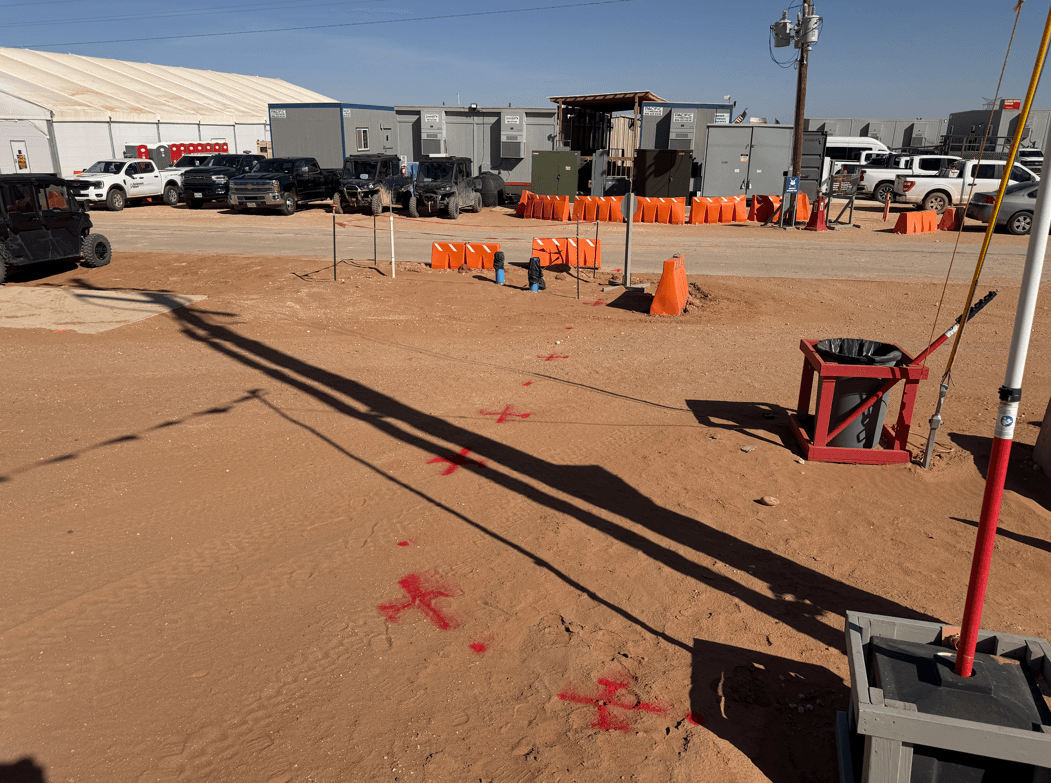
You called 811.
You waited.
The site got marked.
Now the crew is standing onsite looking at paint marks that don’t line up with the plans.
The drawings show storm, electric, communications, private power, building feeds, lighting circuits, and utility crossings. But the field marks only show part of it.
Now the trench crew is waiting.
The drill operator is asking questions.
And nobody wants to be the one who hits the line that was never marked.
That is usually the point where private utility locating gets called in.
Before trenching. Before drilling. Before excavation starts.
Because once the bucket goes in the ground, guessing gets expensive fast.
Why 811 Alone Is Not Always Enough
811 is an important first step, but it has limits.
Most 811 locates only cover participating public utility owners. In many cases, they do not include:
Private power
Secondary electrical feeds
Owner-installed communications
Parking lot lighting
Irrigation
Security systems
Building-to-building utilities
Utilities beyond the meter
Unknown abandoned lines
That becomes a major problem on commercial properties, remodels, industrial facilities, campuses, and older developed sites where infrastructure has changed multiple times over the years.
The plans may show one thing.
The ground may contain something completely different.
That mismatch is where utility strikes happen.
What Private Utility Locating Actually Does
Private utility locating is verification before excavation begins.
A technician uses electromagnetic locating equipment and ground penetrating radar (GPR) to identify buried infrastructure within the work zone.
Utilities are marked live onsite as they are located.
That means your crews can immediately see:
Utility paths
Crossings
Depth estimates
Conflict areas
Unknown lines
Utilities missed by 811
Instead of relying on incomplete records or assumptions, crews can make decisions based on actual field conditions.
That keeps trenching, drilling, saw cutting, and excavation moving safely.
What Does Private Utility Locating Cost?
Most private utility locating jobs typically fall into a few common ranges:
Half-day utility locating: $995–$1,200
Full-day or congested sites: $1,800+
Small verification jobs: $200/hour with a 2-hour minimum
Same-day or next-day mobilization is available in many cases.
Most projects are completed in a single site visit with field markings provided immediately onsite.
What Affects Pricing?
Every site is different.
An open dirt lot with a few utilities is not the same as a congested commercial property with unknown infrastructure crossing every direction underground.
Pricing usually depends on:
Site size
Utility congestion
Existing utility records or as-builts
Amount of missing or unknown infrastructure
Traffic control requirements
Restricted access conditions
Active construction activity
Scheduling urgency
The more uncertainty onsite, the more verification work is usually required before excavation can safely proceed.
What You Are Really Paying For
You are paying to reduce risk before the excavation starts.
Because one missed utility can stop production immediately.
Now crews are standing around.
Equipment is idle.
Schedules start slipping.
Project managers are making calls.
Utility owners get involved.
Damage investigations begin.
And suddenly a small unknown line becomes a very expensive problem.
Most excavation delays are not caused by digging itself.
They are caused by uncertainty before digging starts.
Private utility locating helps eliminate that uncertainty.
What Happens During the Site Visit
Once onsite, the locator sweeps the work area using EM locating equipment and GPR scanning.
Utilities are identified and marked directly on the ground in real time.
Depending on project scope, crews may receive:
Paint markings
Utility flags
Depth estimates
Conflict zone identification
GPS or GIS data
Photos
KMZ files
CAD-ready documentation
Most utility locating jobs take between 2–8 hours onsite depending on utility density and project size.
When You Should Schedule Utility Verification
Private utility locating is commonly used:
Before trenching
Before directional boring
Before drilling
Before excavation
Before saw cutting
When 811 marks do not match plans
On private property with limited 811 coverage
During remodel projects with unknown conditions
In congested utility corridors
Near critical infrastructure
Anytime crews need verification before breaking ground
If the Marks Do Not Match the Plans, Stop and Verify
If something onsite does not add up, do not guess.
Verify the utilities before excavation starts.
One utility strike can shut down production, delay schedules, damage infrastructure, and leave crews waiting while responsibility gets sorted out.
Getting the site properly located and verified before digging helps crews trench and drill with confidence instead of assumptions.
Related Services
Utility Locating: SiteTwin Related Services
GPR Scanning:SiteTwin Subsurface Utility Locating & GPR
Schedule Utility Verification
Send the project address and scope here to get the site scheduled before excavation begins:
Request Utility Locating Service
For more excavation risk, utility locating, and underground infrastructure content, check out our SiteTwin Newsletter: The Damage Report Newsletter