
Locate Cost vs the Cost of a Utility Strike
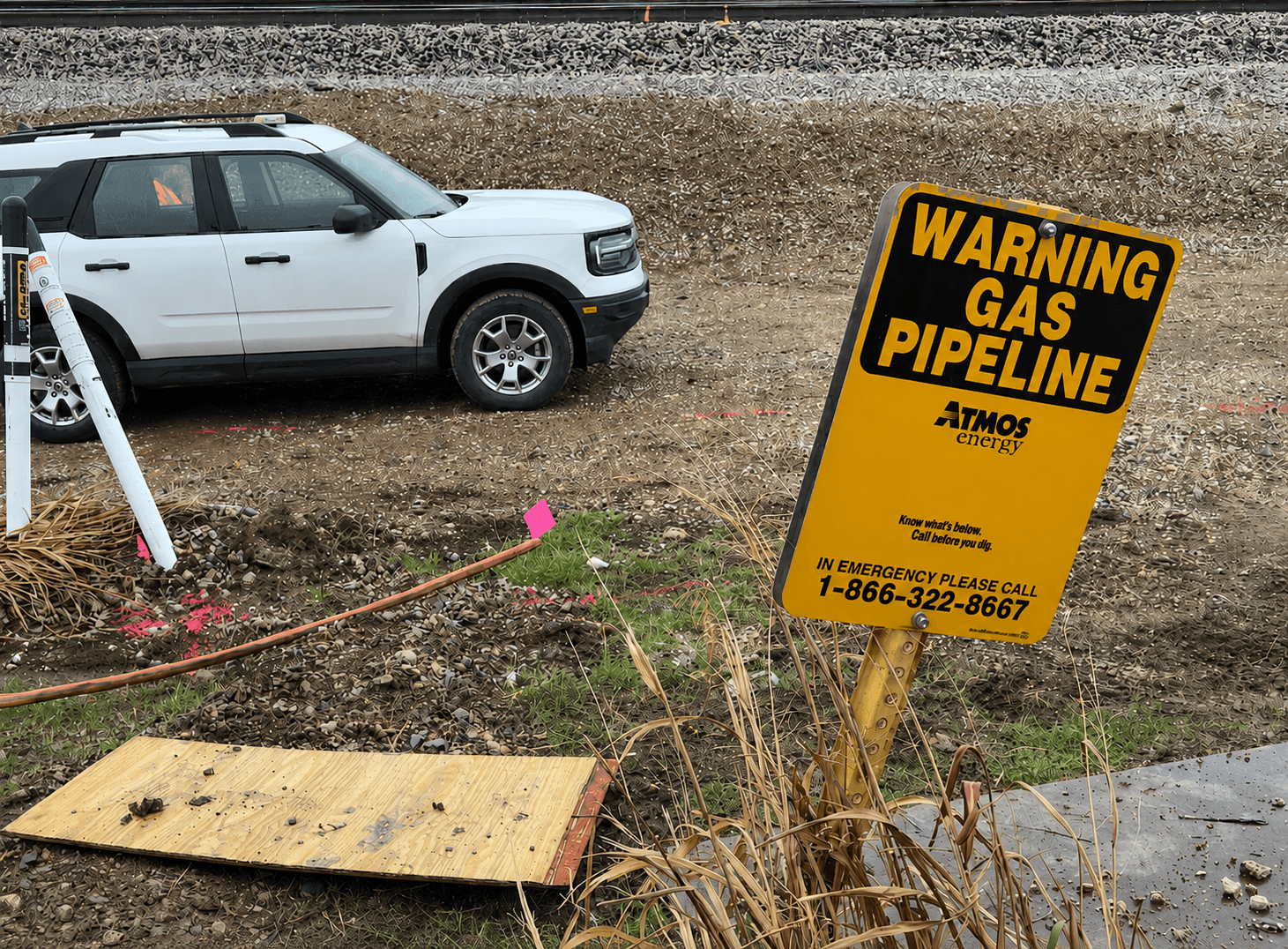
Skipping a utility locate can feel like saving money.
The trench is short. The bore path looks clear. Maybe 811 marked a few lines and nothing immediately looks risky.
So the temptation is to move forward and keep the schedule moving.
Then the bucket catches something underground.
Now the job is shut down.
Crews are standing around. Equipment is idle. Phones start ringing. Everyone is trying to figure out what got hit, how bad the damage is, and how long the repair will take.
That “saved money” disappears fast.
What Does This Cost?
Private utility locating typically costs $995–$1,200 for a half day.
Larger or more congested projects generally start around $1,800+ for full-day work.
Small targeted verification work may also be handled at $200/hr with a 2-hour minimum.
Compare that to a utility strike.
One utility hit can easily cost $5,000–$50,000+ depending on the utility involved, emergency response, downtime, repair costs, and project delays.
A major fiber strike or gas hit can shut down far more than your own jobsite.
What Affects the Price?
For utility locating, pricing depends on:
Site size
Utility congestion
Scope of excavation
Existing records versus unknown conditions
Access limitations
For a utility strike, the costs multiply quickly depending on:
Type of utility hit
Severity of damage
Emergency repair response
Crew downtime
Equipment idle time
Schedule impacts
Liability exposure
Safety incidents or fines
A single underground hit can stop production immediately and create delays that last far longer than the locate would have taken.
What You’re Actually Paying For
You are paying to reduce risk before excavation starts.
That includes identifying utilities before trenching, drilling, or boring begins so crews can work safely without guessing underground.
You are also paying to avoid shutdowns, emergency repairs, and rework.
One strike can turn into days of downtime while utilities are repaired and approvals are cleared to continue work.
That delay costs more than the locate ever would.
Locating also protects crews from dangerous hits involving gas, electric, or high-voltage infrastructure.
It is also important to understand that 811 is not full coverage.
811 typically marks participating public utilities. It often does not include private utilities, owner-installed lines, interior systems, or many site-specific conditions.
Those are often the exact utilities that end up getting hit.
SiteTwin works where 811 is incomplete or where additional verification is needed before excavation starts.
What Happens Onsite?
A locating technician uses EM locating and GPR scanning to sweep the work area before excavation begins.
Utilities are identified and marked directly on the ground in real time.
Your crew sees the results immediately before the first trench opens up.
You may see utility paths traced across the site, crossings identified, unknown lines flagged, and high-risk areas clearly marked for avoidance.
Conflict areas can also be identified before excavation equipment goes into the ground.
That is what helps prevent the one bad move that shuts the entire project down.
Typical Scheduling
Same-day or next-day scheduling is available in most cases.
Most jobs take between 2–6 hours onsite depending on utility congestion and project size.
Results are marked immediately onsite so crews can proceed safely as soon as locating is complete.
When You Need This
- Before trenching, drilling, directional boring, or excavation
- When utilities are unknown or incomplete
- On private property where 811 coverage is limited
- In congested underground corridors
- When plans and field markings do not match
- Before high-risk excavation where a utility strike would shut the job down
- Anytime the cost of a hit is higher than the cost of verification
- A Locate Is Cheap Compared to a Utility Strike
Do not skip verification just to save a few hours upfront.
Send the address and scope and get it cleared before excavation starts.
Related Services
Utility Locating Services
GPR Scanning Services
If you are about to break ground, do not turn a $1,000 decision into a $50,000 problem.
Get utilities located, marked, and verified so your crew can excavate safely, avoid shutdowns, and keep the project moving.
Schedule Utility Verification
Send Address + Scope Here
For more excavation risk, utility locating, and underground infrastructure content, check out the The Damage Report Newsletter