
Why “We Called 811” Is No Longer Enough
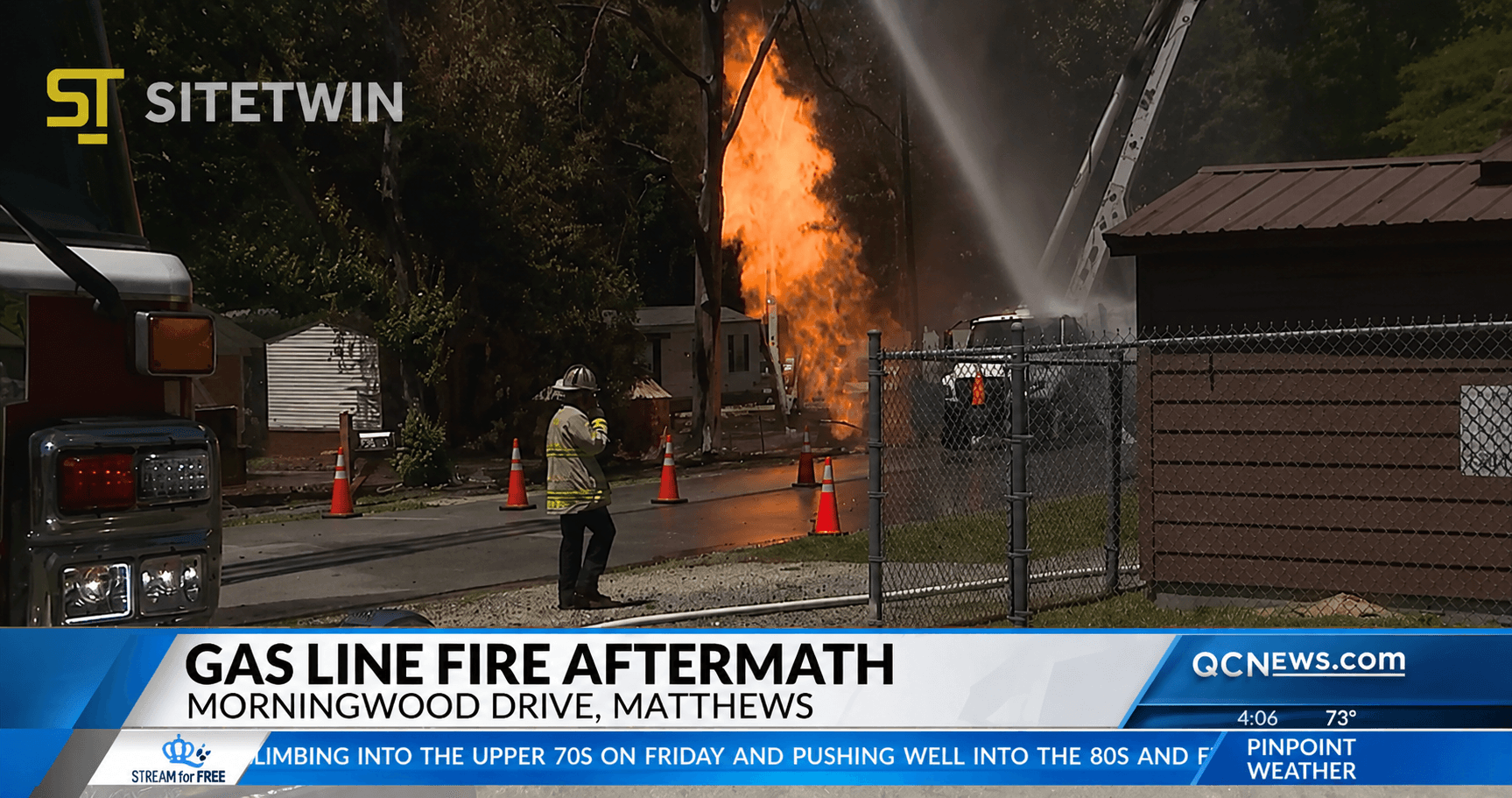
A gas main gets hit during excavation. Fireball. Evacuations. Emergency response. Crews shut down instantly.
The Matthews gas line fire is the reason “we called 811” is not the full plan anymore.
811 is still required. But 811 does not cover everything on private property, inside buildings, under slabs, abandoned lines, or inaccurate records. SiteTwin works where 811 is incomplete or where field verification is needed before excavation starts.
What Does Private Utility Locating Cost?
Most private utility locating or GPR jobs run between $995–$1,200 for a half day.
Full-day work typically starts around $1,800+ depending on site conditions and scope.
Small jobs may run around $200 per hour with a 2-hour minimum.
Same-day or next-day mobilization is often available depending on crew availability and location.
Before you trench, bore, core, or saw cut, send the address and scope so the work area can be verified before excavation begins.
What Affects the Price?
Pricing depends on:
Site size
Access conditions
Utility congestion
Scope length
Amount of marking required
Surface conditions
Existing records and plans
A small drill clearance is very different from locating 1,000 feet of telecom pathway.
A clean open lot is very different from a tight residential corridor loaded with gas, electric, water, sewer, fiber, irrigation, and undocumented private lines.
What You’re Actually Paying For
You’re not paying for paint marks only.
You’re paying to avoid a shutdown.
One bad bore can stop a project immediately. A gas strike can trigger:
Evacuations
Emergency response
Utility owner involvement
Repair invoices
Schedule delays
Downtime across multiple crews
Private utility locating and GPR scanning help crews make better field decisions before excavation starts.
What Happens on Site?
A SiteTwin locator scans the work area using:
Ground Penetrating Radar (GPR)
Electromagnetic locating (EM)
RF locating
Passive locating methods
Crews receive:
Utility paint marks
Suspected utility paths
Crossing identification
Drill clearances
Bore path adjustments
Safe drill zones
For slab work, scanning is performed live with results marked directly on the concrete before coring or cutting begins.
Field verification happens in real time so crews know where to drill, trench, bore, or avoid.
Don’t Drill Blind
Send the address and scope before the crew starts. Get the site checked before one bad mark turns into a shutdown.
Typical Scheduling
Most jobs take between 2–6 hours onsite.
Results are marked immediately in the field.
Larger utility corridors or congested sites may require full-day locating.
Same-day or next-day scheduling may be available depending on crew location and workload.
When Do You Need Private Utility Locating or GPR?
Use private locating or GPR before:
Drilling
Trenching
Directional boring
Coring
Saw cutting
Working near slab edges
Excavating near active utilities
You especially need it for:
Private property work
Interior remodels
Existing buildings
Older sites
Congested utility corridors
Areas where 811 marks do not align with field conditions
It is also critical when:
Plans are outdated
Utilities were added over time
Crews are working near gas, power, fiber, sewer, or water infrastructure
The Schedule Is Already Tight
Jobsite pressure is real.
Crews are waiting. Equipment is rented. Deadlines are already moving.
Get the locate scheduled before excavation starts.
Related Services
Utility Locating Services
GPR Scanning Services
Request Service Here
For more excavation risk stories, utility damage prevention insights, and underground infrastructure content, check out The Damage Report Newsletter