
Bore Paths Fail Where the Records Stop.
Fiber builds move fast and cross everything. The risk is not the bore itself, it is the line nobody drew that sits between your entry and exit pit at a depth you assumed rather than measured.
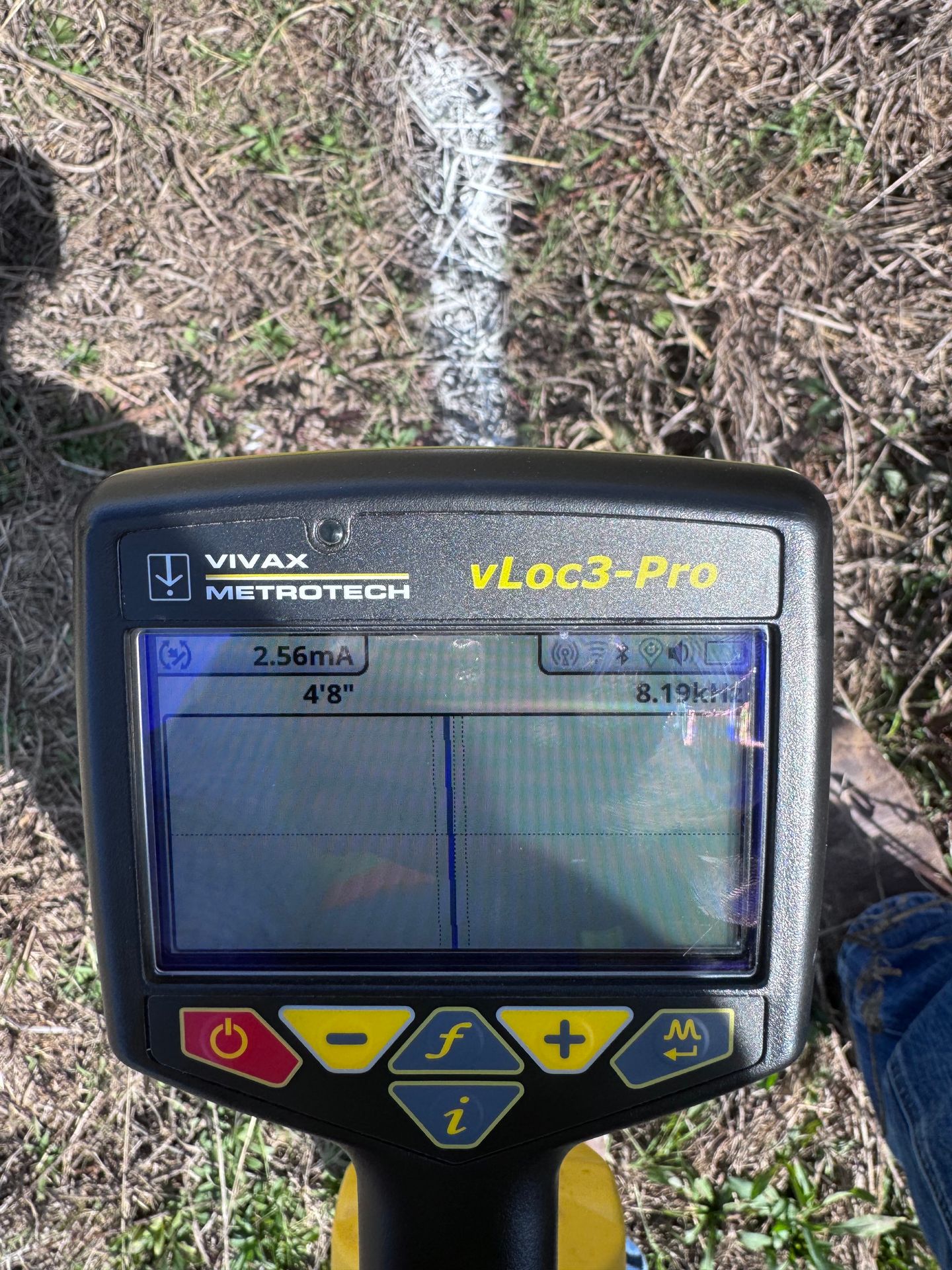
Horizontal drilling turns a horizontal locate into a vertical question.
A surface locate tells you where a line crosses your path. It does not reliably tell you the elevation of that line at the crossing point, and elevation is the entire question when a drill head passes underneath it.
Locator depth readings degrade in exactly the conditions fiber work runs through: congested right-of-way, parallel utility bundles, and wet or high-clay soil. That is why crossings get potholed rather than estimated.
- Existing utilities crossing the planned bore path
- Measured depth at each critical crossing
- Non-metallic and abandoned lines EM cannot trace
- Congested right-of-way where signal bleeds between lines
- Documented clearance before the drill turns
Estimated clearance is not clearance.
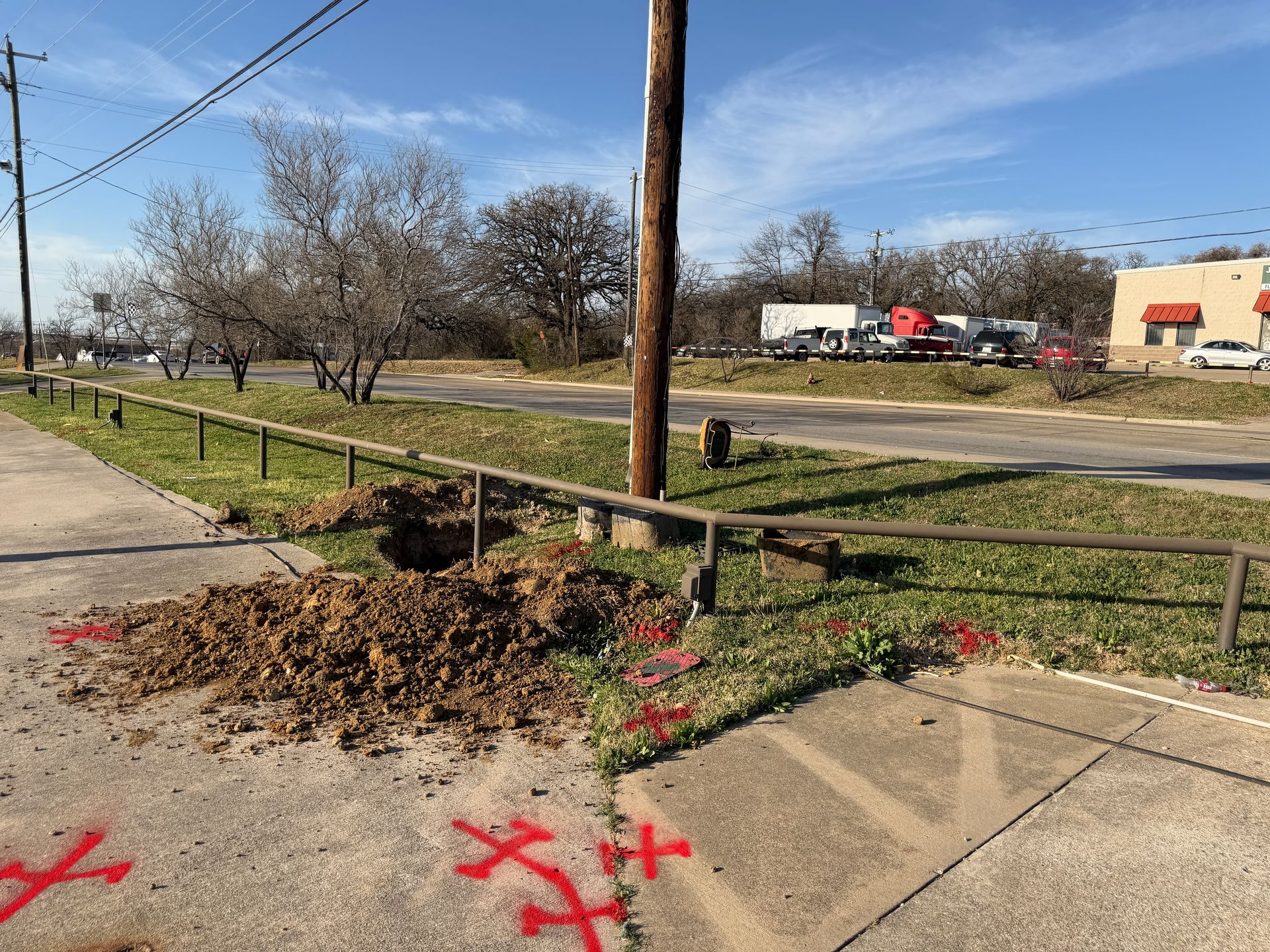
Where Fiber Crews Use Us
Most of this work is scheduling, not surprises, as long as it happens before the drill is on site.
Pre-Bore Conflict Screening
Locate and mark existing utilities across the planned path so conflicts get identified before mobilization.
Crossing Depth Verification
Vacuum excavated test holes at the crossings that matter, so clearance is measured rather than assumed.
Learn more →Route Documentation
Georeferenced maps of what was found, useful for the as-built and for the next crew in the same corridor.
Learn more →Every fiber strike started as an assumed depth.
Screening the path and measuring the crossings is the difference between a schedule and an incident report.
Send the Address & ScopeTelecom & Fiber Questions
Can you screen a full bore path, not just a single point?
Why do we need potholing if you already located the line?
Can you find existing fiber and conduit?
Do you work in public right-of-way?
How quickly can you mobilize for a fiber build?
Do you provide documentation for the as-built?
Have a bore path to screen?
Send the alignment, the entry and exit points, and where clearance is tight. We will come back with a screening and test hole plan.