
Ground Penetrating Radar

GPR Scanning Services in Texas

Electromagnetic locating traces metallic lines fast, but it goes quiet on PVC, conduit, and abandoned pipe. We run GPR alongside EM on every project to find what EM can't, check trench and bore paths, and flag voids and anomalies before your crew breaks ground.
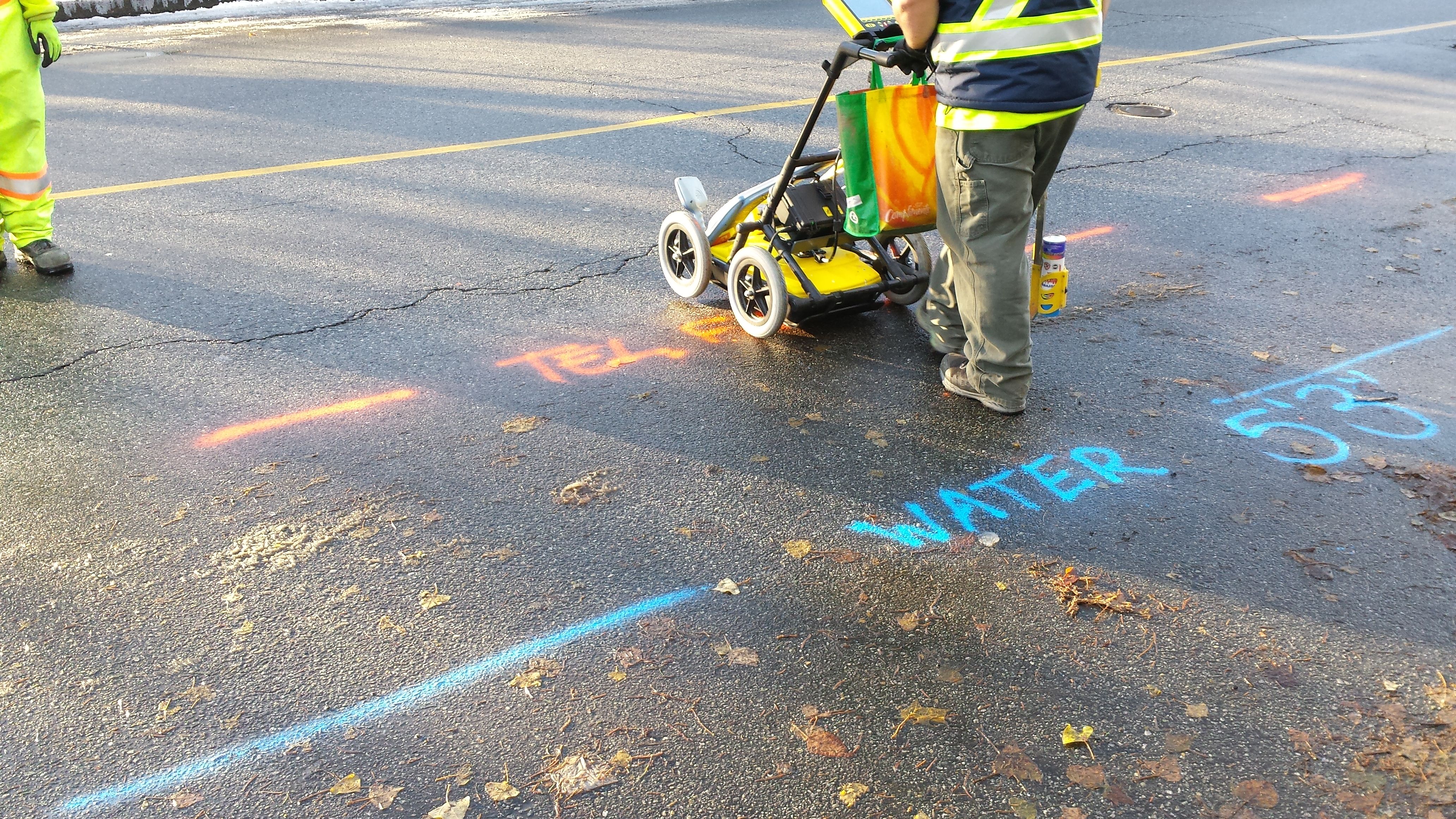
SiteTwin crew running a ground penetrating radar cart over marked asphalt
EM Goes Quiet on PVCGPR finds what electromagnetic locating cannot
EM+GPRDual-method locating
PDF/KMZDeliverables included
Same dayTypical mobilization
Non-metallic line detection beyond EM locating
PDF maps & KMZ deliverables included
Serving Austin, Dallas, Houston, Fort Worth & San Antonio
How It Works

What Ground Penetrating Radar Does on Site

GPR transmits radar pulses into the ground or into concrete and reads the reflections in the field to identify buried utilities, rebar, voids, and other subsurface features. Unlike electromagnetic locating, it doesn't need a metallic or traceable signal to see a target, which makes it the tool for the lines and conditions EM can't reach.

  • Traces PVC, conduit, and abandoned lines that carry no signal for EM locating
  • Verifies utility conflicts before trenching, boring, or excavation
  • Screens bore paths ahead of HDD and directional drilling
  • Identifies subsurface anomalies and voids before crews dig
  • Reads through congested utility corridors where lines run close together

GPR has real limits, and we plan around them instead of glossing over them. Wet, high-clay soils, common across the Blackland Prairie and the Gulf Coast gumbo belt, attenuate radar signal and cut into depth of penetration. We select antenna frequency for each site based on soil conditions and target depth, and we run GPR alongside EM locating rather than on its own. For critical crossings, potholing or vacuum excavation is still the method that confirms exact depth.
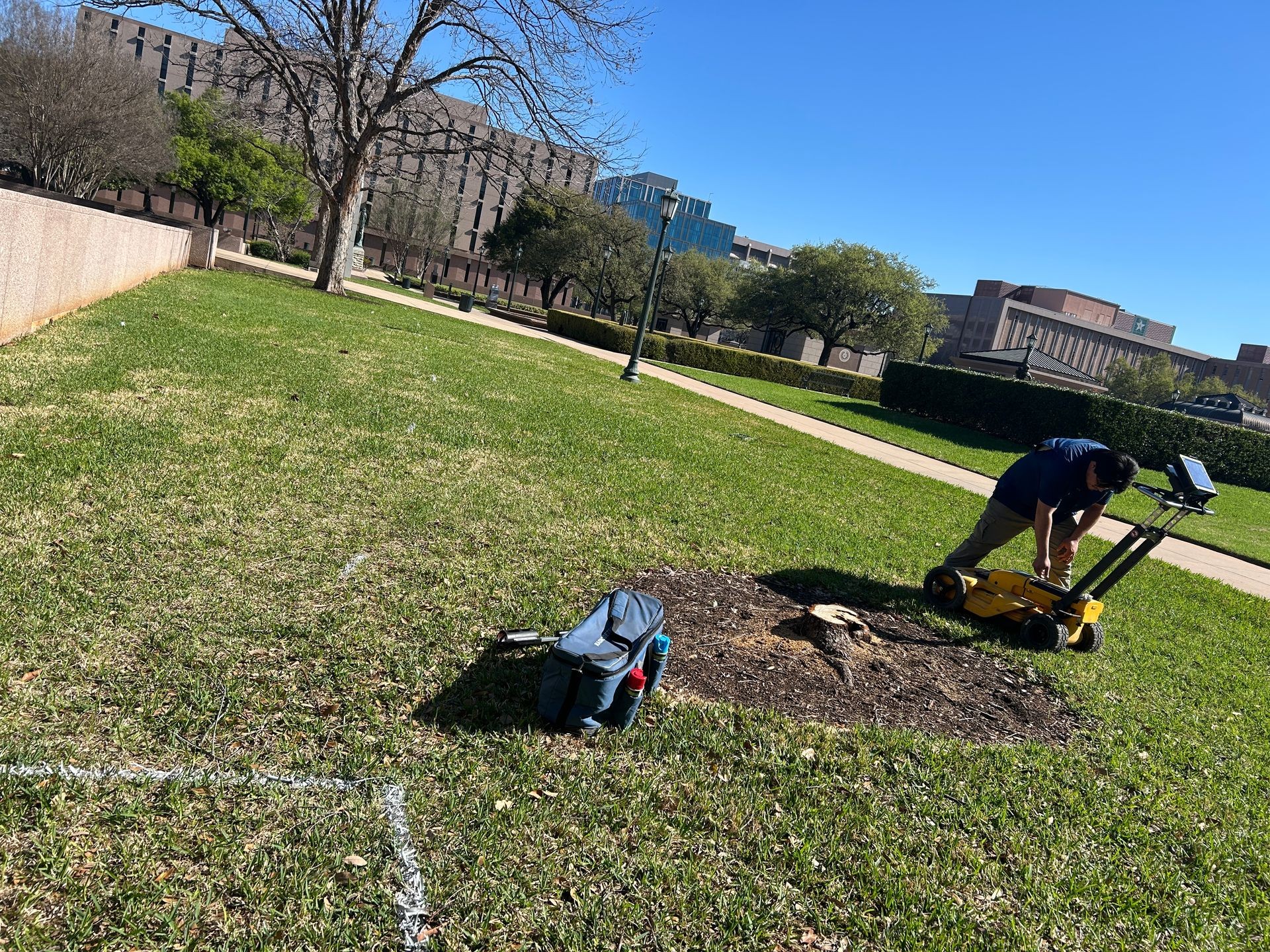
GPR technician reading radar scan reflections in the field to trace a non-metallic utility line
Where We Use GPR

GPR Scanning Applications

GPR earns its place on a scope any time a metal detector or EM locator runs out of answers. Here's where it does the most work.

Private Utility Locating Support

Extends private utility locating past what EM alone can trace, for commercial construction, utility coordination, and preconstruction planning across Texas.

Learn more →

Concrete Scanning

Scans slabs and structures before drilling, coring, trenching, or saw cutting to identify rebar, post-tension cable, and embedded conduit.

Learn more →

Pre-Bore Screening for HDD

Screens bore paths ahead of horizontal directional drilling projects where existing utility records are incomplete or out of date.

Utility Conflict Investigation

Checks crossing depths and clearances between existing utilities and new work before excavation starts.

Subsurface Anomaly & Void Detection

Locates unknown buried structures, voids, and anomalies that don't show up on record drawings or as-builts.

Congested Utility Corridors

Reads through crowded corridors where multiple lines run close together and EM signals overlap or bleed into each other.

Our Process

How a GPR Scan Runs on Your Site

Four steps, from the first look at your records to a marked site and a delivered map.

1

Site Review & Antenna Selection

We review existing utility records, site conditions, soil type, and your scope, then select the antenna frequency suited to the expected depth and target size.

2

EM Locating Pass

We locate traceable metallic utilities with electromagnetic equipment first and mark what's already known before GPR starts.

3

Field GPR Scanning

We scan the work area and read radar reflections in real time to trace non-metallic lines, voids, and anomalies that EM alone can't find.

4

Marked Results & Deliverables

We paint and flag findings on site, then hand off PDF utility maps, KMZ exports, and GPS/GIS data for your project file.

EM+GPR
Dual-method locating on every scope
PDF/KMZ
Maps & GPS data included
5 Metros
Austin, Dallas, Houston, Fort Worth, San Antonio
5.0★
Average Google review rating
Questions

GPR Scanning FAQ

What does GPR find that electromagnetic locating misses?
PVC, conduit, and abandoned lines carry no signal, so EM locating equipment can't trace them. GPR reads radar reflections in the ground to find these non-metallic lines, along with voids and other subsurface features EM was never built to see.
Does GPR replace electromagnetic locating?
No. We pair GPR with EM locating on every project. EM handles traceable metallic utilities quickly, and GPR fills in what EM can't see.
How deep can GPR scan?
Depth depends on soil conditions, antenna frequency, and what we're looking for. Dry, sandy soil allows deeper penetration than wet clay. We select antenna frequency for each site based on target depth and target size.
Does Texas clay soil affect GPR results?
Yes. Wet, high-clay soils common across the Blackland Prairie and the Gulf Coast gumbo belt attenuate radar signal and reduce how deep we can scan. We factor soil conditions into every scope before we mobilize.
Is GPR accurate enough to skip potholing?
GPR narrows down location and approximate depth, but it isn't an X-ray and doesn't guarantee every target is visible. For critical crossings or exact depth verification, potholing or vacuum excavation remains the definitive method.
What deliverables do I get after a GPR scan?
Field markings on site, plus a PDF utility map, a KMZ export, and GPS/GIS data for your project file.
Can GPR scan through concrete?
Yes. GPR is standard practice for concrete scanning before drilling, coring, trenching, or saw cutting, to identify rebar, post-tension cable, and embedded conduit.
How fast can you schedule a GPR scan?
Send the address and scope and we typically mobilize same day or next day across our Texas service areas.
What Clients Say

Trusted by Texas contractors & project teams

Verified Google reviews from contractors, engineers, and project managers across our Texas service areas.

★★★★★

Great deliverables & timelines

"Nick and his team are some great people to work with. They offer great deliverables, and have awesome timelines."

JD
Jeremy DealGoogle Review
★★★★★

Marked out the work area

"Came to our site and marked out the utilities in the work area. Very personable. Thanks for all your help."

ZW
Zane WallaceGoogle Review
★★★★★

Outstanding service

"Nick and his team are very professional and are great at what they do. Highly recommend!"

CS
Chris ShriverGoogle Review
Get in Touch

Ready to schedule GPR scanning?

Send the address and scope. We'll come back with an antenna plan, a mobilization date, and what to expect on site.

Austin, TX & statewide Texas coverage
Same-day / next-day mobilization