
Concrete GPR Scanning Before Coring or Saw Cutting: Cost, Risks, and What to Expect
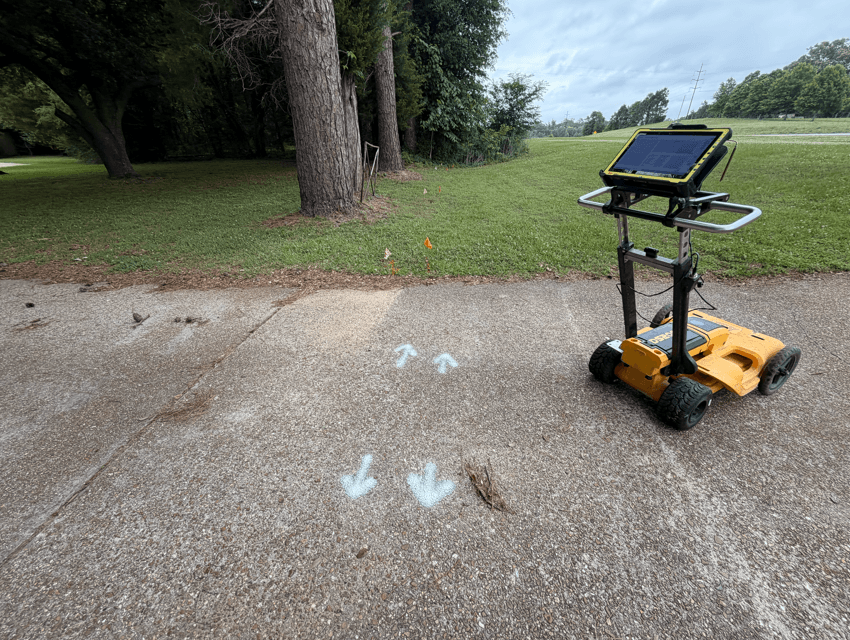
Concrete GPR Scanning Before Coring or Saw Cutting
You’re about to cut or core into a slab, but nobody onsite can tell you what is actually inside it.
Could be post-tension cables. Could be conduit. Could be dense rebar. Could be a void right where the cut is planned.
If you hit the wrong thing, the problem is bigger than patching concrete.
Now the job stops.
Crews are waiting. Structural concerns get raised. The schedule slips while everyone figures out how bad the damage is and what needs to be repaired.
That is where concrete GPR scanning comes in.
Before you cut. Before you core. Before the first hole goes in.
Across Texas commercial projects, crews often encounter slab conditions that do not match the drawings. Remodel work, tenant finish-outs, hospital renovations, manufacturing retrofits, and older buildings regularly contain undocumented conduit, abandoned utilities, or reinforcement layouts that are different from the original plans.
For contractors, the issue is rarely just the concrete itself. The real problem is uncertainty. Once coring or cutting starts, there is no room for guessing.
What Affects the Price?
Pricing depends on slab conditions and how much area needs to be verified.
A few simple core locations in an open slab are very different from scanning a congested PT deck with multiple utilities and heavy reinforcement.
Other factors include:
- slab thickness
- density of rebar or PT cables
- number of cut or core locations
- accessibility onsite
- interior versus open-area scanning
- unknown or undocumented slab conditions
- The tighter the reinforcement and the higher the risk, the more verification work is usually required before cutting starts.
Mechanical rooms, elevated decks, occupied facilities, and active construction environments often require slower and more detailed scanning due to congestion and limited access.
GPR scanning can significantly reduce cutting risk, but dense reinforcement, moisture conditions, slab composition, and heavy congestion can sometimes limit scan interpretation in certain areas
What You’re Actually Paying For
You are paying for visibility before concrete gets cut open.
GPR scanning helps identify embedded hazards including:
- post-tension cables
- conduit
- rebar
- voids
- unknown utilities
It also gives crews clearly marked safe cutting and coring zones before work begins.
One bad cut can shut the project down immediately.
Now the crew is waiting while structural engineers, electricians, or utility owners get pulled into the problem.
That downtime costs far more than the scan.
You are not paying for a report.
You are paying to avoid:
- damaged PT cable
- conduit strikes
- utility shutdowns
- project delays
- rework
- emergency repairs
- production downtime
It is also important to understand that 811 does not apply here.
811 does not mark:
- inside slabs
- elevated decks
- interior concrete
- embedded utilities
SiteTwin works where 811 does not reach and where verification is required before drilling or cutting.
Even when exterior utility markings exist, embedded slab hazards still require field verification before cutting begins.
Need Concrete Scanning Before Cutting or Coring?
SiteTwin performs GPR concrete scanning, utility locating, and slab investigations for contractors and property owners across Texas before drilling, coring, anchoring, and saw cutting begins.
What Happens Onsite?
A technician uses ground penetrating radar to scan the slab live onsite.
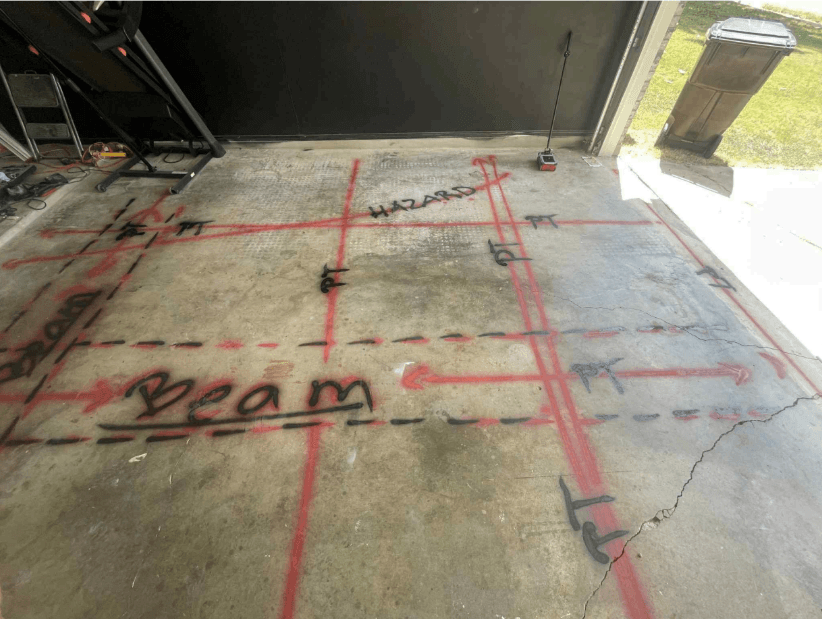
Scanning is performed in real time with hazards and safe zones marked directly onto the concrete surface as the work progresses.
Your crew sees the results immediately.
You may see:
- PT cable markings
- conduit paths
- reinforcement congestion
- void indications
- adjusted cut locations
- drill clearance markings
Safe drill and cut zones can be adjusted onsite before coring or saw cutting begins.
That means field decisions happen immediately instead of waiting on delayed reports or assumptions.
Depending on the project scope, deliverables may also include:
- PDF utility maps
- site photos
- marked slab layouts
- KMZ exports
- GIS-compatible utility documentation
For high-risk excavation or subsurface conflicts below the slab, potholing or additional verification may still be necessary before excavation proceeds. Surface scanning alone should not replace physical verification when excavation risk remains high.
Typical Scheduling
Same-day or next-day mobilization is available in most cases.
Most jobs take between 2-5 hours onsite depending on slab conditions and scan area size.
Results are marked immediately onsite so crews can proceed as soon as scanning is complete.
Larger facilities, occupied buildings, shutdown coordination, and after-hours access may require additional scheduling coordination.
When You Need Concrete GPR Scanning
You need concrete GPR scanning:
- before cutting
- before coring
- before drilling
- before trenching into concrete
You also need it:
- on post-tension slabs
- during remodel work
- inside occupied buildings
- near slab edges
- around structural beams
- in congested utility areas
anytime slab conditions are unknown
GPR scanning becomes especially important when:
- plans do not match field conditions
- embedded utilities are undocumented
- crews are drilling blind into unknown concrete
- slab reinforcement layouts are uncertain
- downtime from mistakes would impact production
Many slab strikes happen during smaller drilling or saw cutting work because crews assume the area is low risk. Even shallow cuts can hit energized conduit, PT cable, chilled water piping, or communication lines hidden inside the slab.
Need Concrete Scanning Before Coring or Saw Cutting?
SiteTwin provides GPR concrete scanning, private utility locating, and slab investigations for contractors, engineers, and facility managers across Texas.
Schedule Private Utility Locating
Request Service
For more excavation risk, concrete scanning, and underground infrastructure content, check out the The Damage Report Newsletter