Utility Locating Before Directional Boring
Directional boring is one of the most efficient ways to install underground utilities, but it also creates unique risks.
Unlike open trenching, the drill head moves underground where the operator cannot visually confirm every utility crossing. If a gas line, fiber duct, water service, power feed, or private utility is missed, the result can be service outages, emergency repairs, project delays, and safety concerns.
That is why utility locating should be completed before directional boring begins.
SiteTwin | Private Locating Services
A utility investigation helps identify known utilities, suspected conflicts, and areas that require additional verification before the drill enters the ground.
Why Utility Locating Matters for Directional Boring
Directional boring projects often cross multiple underground utilities in a single run.
Common conflicts include:
- Gas lines
- Electric lines
- Fiber and communication systems
- Water services
- Fire lines
- Irrigation systems
- Storm and sanitary utilities
- Parking lot lighting circuits
- Private utilities between buildings
Commercial and industrial sites are especially challenging because many private utilities have been added, rerouted, repaired, or abandoned over time.
Without proper utility locating, the drill crew may be relying on incomplete plans or assumptions.
Start With 811
811 should be contacted before boring where required.
The 811 process allows utility owners to mark infrastructure they own near the proposed work area.
However, 811 is not a complete private utility investigation.
Public utility owners generally mark only the facilities they own. Private utilities such as irrigation, parking lot lighting, private electric, private water, fire lines, and utilities between buildings may not be included.
For directional boring on private property, contractors often need both 811 markings and private utility locating to understand the full underground picture.
How Utility Locating Is Performed
The first step is defining the proposed bore path.
The locating technician should know:
- Entry and exit locations
- Planned drill route
- Utility crossing areas
- Existing plans or as-builts
- Known utility records
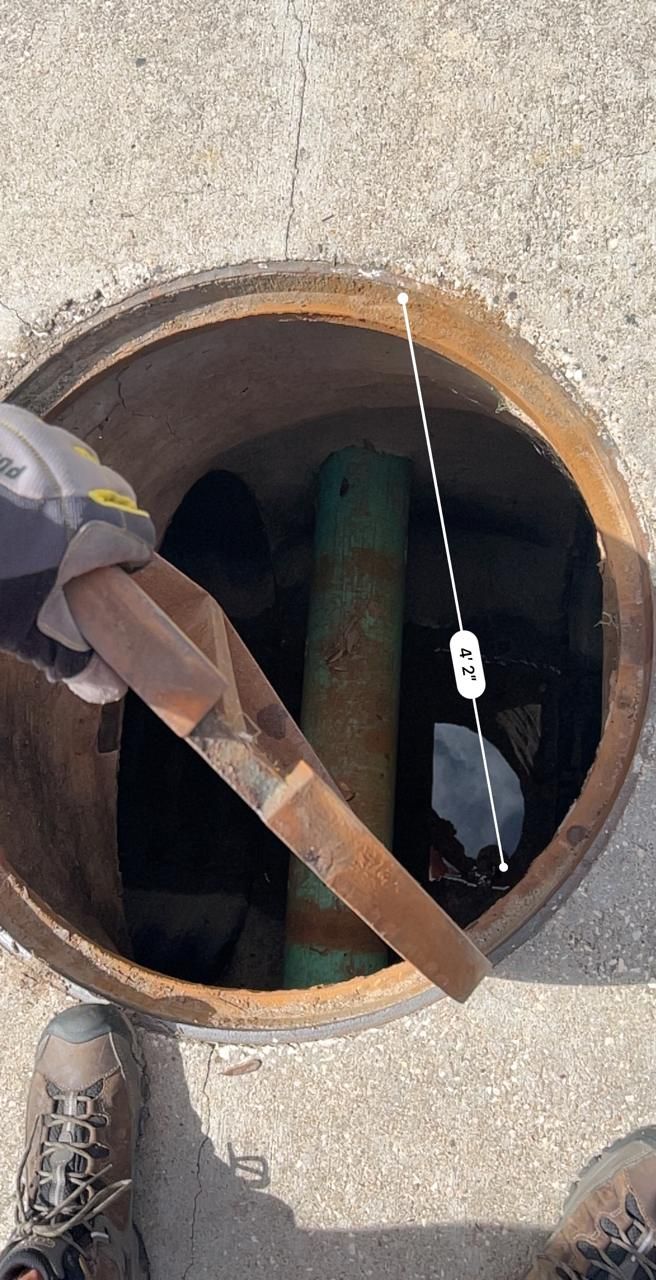
A site walk is then performed to identify visible utility indicators such as meters, valve boxes, transformers, handholes, pull boxes, light poles, irrigation controls, and pavement patches.
These surface features often provide valuable clues about what may be underground.
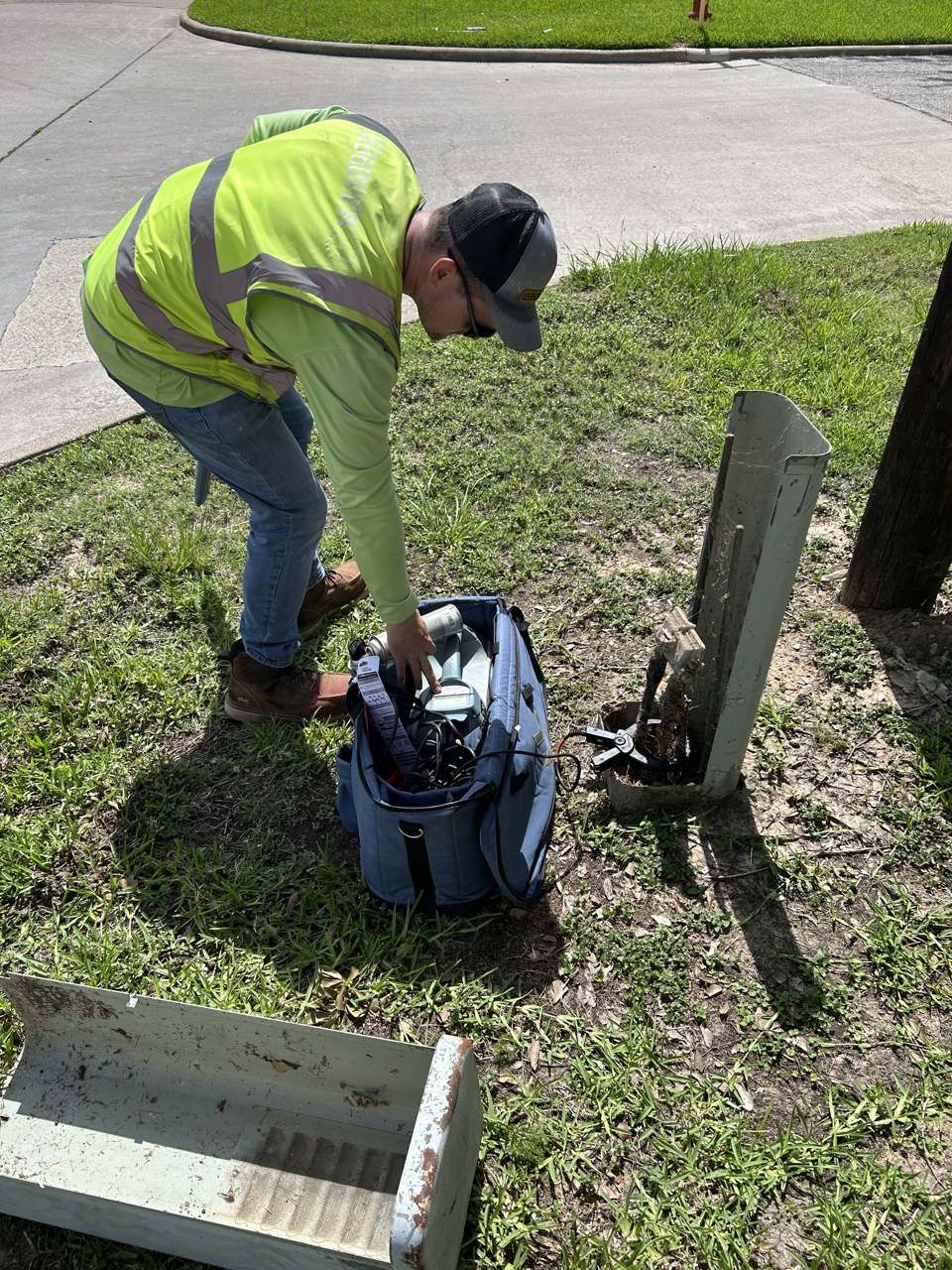
Using EM Locating
Electromagnetic locating (EM locating) is commonly used to trace conductive utilities or utilities equipped with tracer wire.
EM locating can often be used for:
- Electric lines
- Communication lines
- Gas lines with tracer wire
- Metallic water lines
- Metallic conduits
- EM locating works best when the utility can carry a signal and is accessible for tracing.
Limitations occur when utilities are non-conductive, tracer wire is missing, access points are unavailable, or utility congestion creates overlapping signals.
Using GPR Scanning
Ground penetrating radar can help investigate subsurface features that may not be traceable with EM locating alone.
GPR scanning may help identify:
- Utility corridors
- Buried targets
- Trench lines
- Abandoned utilities
- Unknown anomalies
GPR is especially useful when records are incomplete or when non-conductive utilities may be present.
GPR has limitations. Soil conditions, moisture, clay content, depth, utility material, and surface conditions can affect results. GPR should not be viewed as a guarantee that every utility will be detected.
The best investigations typically combine EM locating, GPR scanning, site records, and field observations.
Planning a Directional Boring Project?
|
SiteTwin performs private utility locating, GPR scanning, and underground utility investigations for contractors and property owners across Texas.
SiteTwin | Request A Locate
Why Potholing Is Critical
For directional boring, potholing is often the most important verification step.
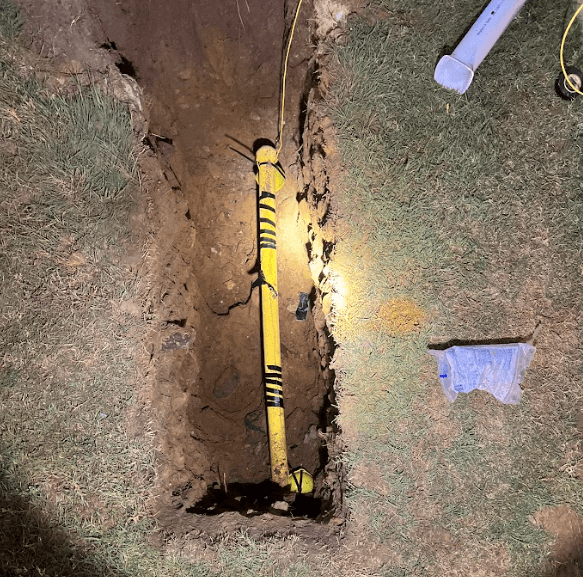
Utility locating identifies the suspected path of a utility. Potholing physically exposes the utility so the crew can verify its depth and location.
When excavation risk is high, potholing should be used before boring through utility crossings.
This is particularly important for:
- Gas lines
- Power lines
- Fiber crossings
- Water and fire lines
- Congested utility corridors
- Areas where marks and plans do not agree
- Surface markings show estimated alignment.
Potholing confirms what is actually underground.
Documentation and Deliverables
Depending on project requirements, SiteTwin may provide:
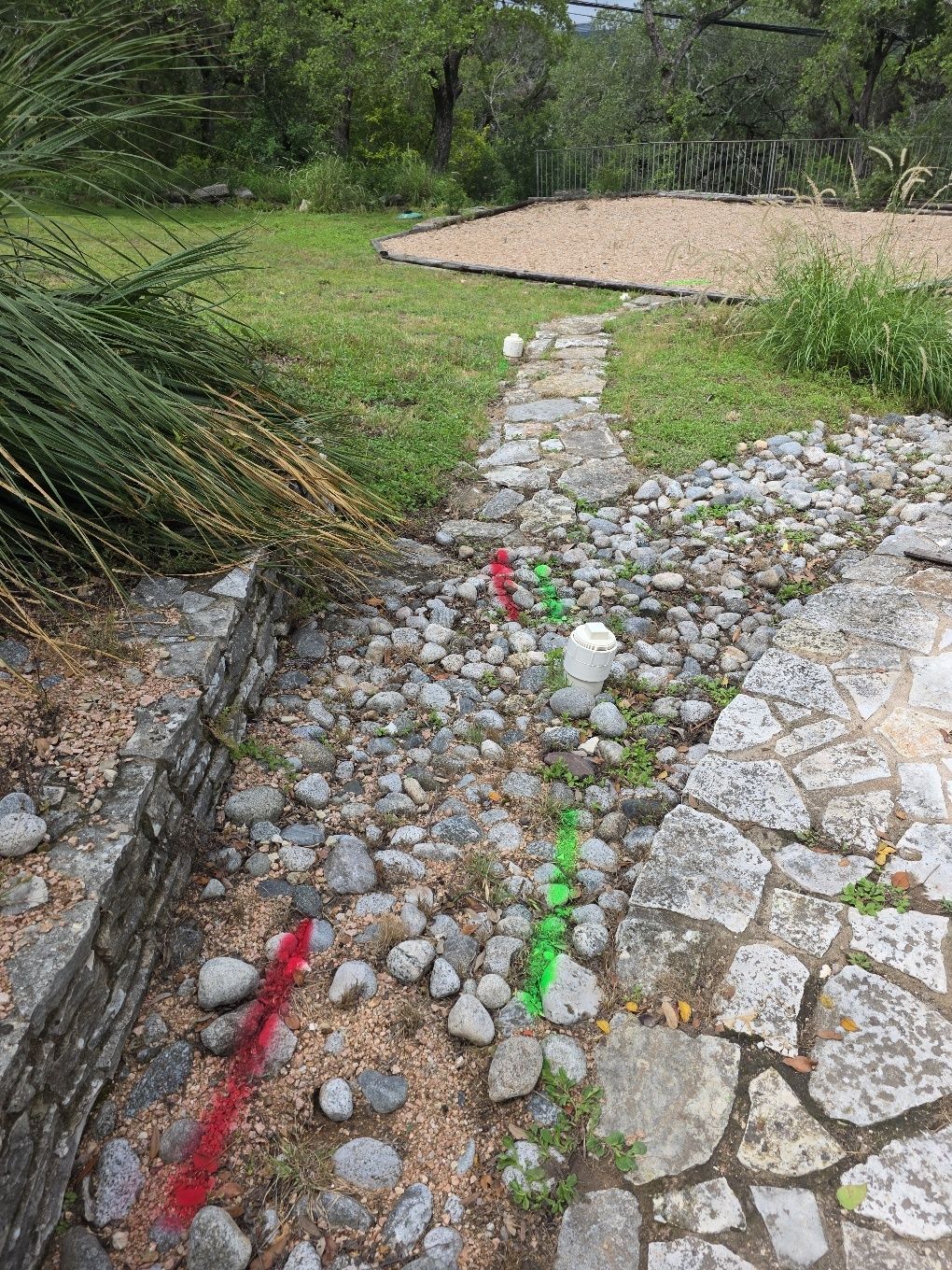
- Utility paint markings
- Site photos
- PDF utility maps
- KMZ exports
- GIS-compatible utility mapping
- Conflict notes
- Potholing recommendations
These deliverables help project managers, drill crews, and subcontractors work from the same field information.
Texas Directional Boring Projects
Directional boring is common across Texas for utility installations, service upgrades, fiber projects, and commercial developments.
SiteTwin | Check Out Our Locations
In many Texas markets, properties have been modified repeatedly over the years, creating utility conditions that may not match available records. Utility locating helps reduce uncertainty before drilling begins. You can also check out our locations.
FAQ Section
Do I need utility locating before directional boring?
Yes. Utility locating helps identify utility crossings and reduce the risk of striking buried infrastructure during drilling.
Does 811 locate all utilities?
No. 811 should be contacted where required, but private utilities may not be included in public utility markings.
Can GPR find every underground utility?
No. Soil conditions, depth, utility material, and site congestion can affect detection. GPR is an investigation tool, not a guarantee.
Why is potholing important before boring?
Potholing physically verifies utility depth and location at critical crossings before the drill passes through the area.
Before directional boring begins, make sure the route has been investigated, marked, and verified.