
How to Locate Underground Utilities Before Excavation
Excavation problems usually start before the bucket ever hits the ground. The trench route looks simple. The crew has a plan. Equipment is scheduled. The superintendent expects production to start in the morning. Then the site drawings do not match the paint, the utility marks stop short of the work area, or nobody knows whether the private lines behind the building were ever documented.
That is when utility locating becomes more than a checkbox.
Before trenching, boring, drilling, grading, or digging, contractors need to identify underground utilities, mark conflict areas, and verify high-risk crossings before mechanical excavation begins.
The goal is not to assume the site is clear. The goal is to reduce excavation risk before the crew exposes power, gas, water, sewer, fiber, irrigation, or private site utilities the hard way. Based in Austin, SiteTwin performs private utility locating, GPR scanning, and concrete scanning for projects across Texas - including Austin, Houston, San Antonio, Dallas, and Fort Worth.
Start With 811 - But It Won't Mark Private Utilities
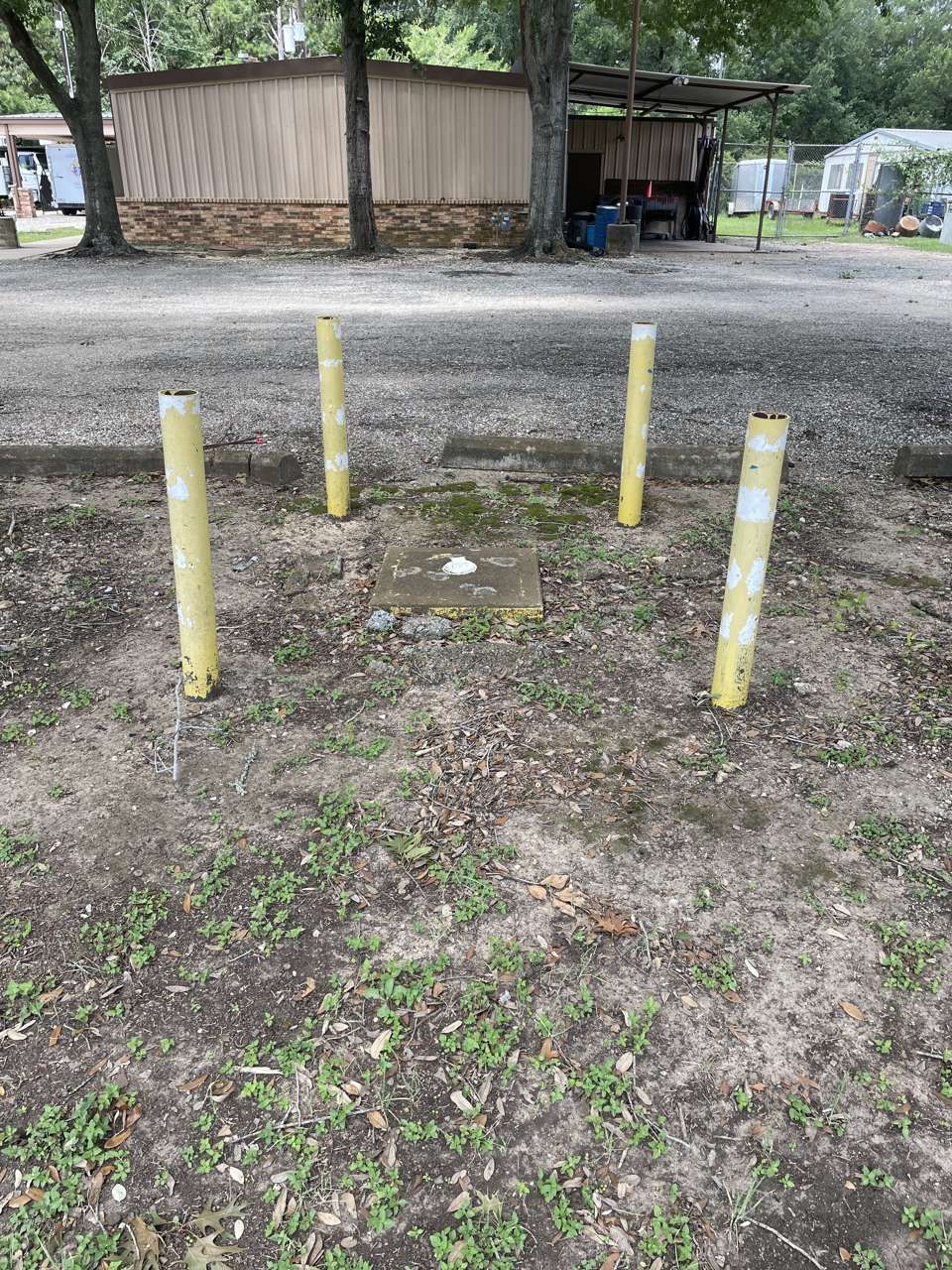
811 should be contacted before excavation where required. It is the standard public utility notification process and gives utility owners the opportunity to mark facilities they own in or near the proposed excavation area.
But 811 is not the same as a full private utility investigation. Many contractors run into problems because they assume 811 marks everything underground. It does not.
Public utility owners typically mark only the infrastructure they own. On private property, many utilities may be excluded, including:
- Private electric lines
- Site lighting circuits
- Irrigation systems
- Private gas lines
- Private water lines
- Fire lines
- Communication lines
- Secondary power feeds
- Utilities installed by property owners
- Tenant improvement utilities
- Abandoned or undocumented lines
That gap matters on commercial properties, industrial sites, multifamily properties, schools, campuses, hospitals, and large parking lots. 811 is important, but it should not be treated as the only step when private utilities, undocumented infrastructure, or congested work areas are involved. For a deeper walkthrough, see our guide on how to locate private utility lines.
Review Site Plans, As-Builts, and Utility Records
Before the locate begins, gather any records available. That may include civil drawings, utility plans, as-builts, site maps, irrigation plans, electrical drawings, plumbing records, tenant improvement documents, or previous utility maps. Even incomplete records help the locating technician understand what may be present onsite.
But plans should be treated as a starting point, not the final answer. Field conditions often change over time. Utilities get rerouted. Lines are abandoned. Repairs are made without updated drawings. New tenants add infrastructure. Parking lots get rebuilt. Lighting and communication systems are upgraded.
A drawing may show what was planned or installed years ago. It may not show what is actually in the ground today.
Walk the Site Before Utility Locating Begins
A good utility investigation starts with a visual site review. Technicians look for surface clues that help identify underground utility paths.
Common field indicators include:
- Manholes
- Valve boxes
- Cleanouts
- Handholes
- Meter banks
- Transformers
- Light poles
- Irrigation controls
- Utility trenches
- Pavement patches
- Saw cuts
- Pull boxes
- Grounding points
- Building penetrations
- Utility warning signs
These surface features help build a utility picture before equipment is used. For example, a row of parking lot light poles may indicate private electrical conduit. A patched trench line may suggest a previous utility repair. A transformer near a building may indicate secondary power feeds crossing the proposed excavation route.
The field walk helps connect visible features with possible subsurface paths.
Electromagnetic (EM) Utility Locating for Conductive Lines
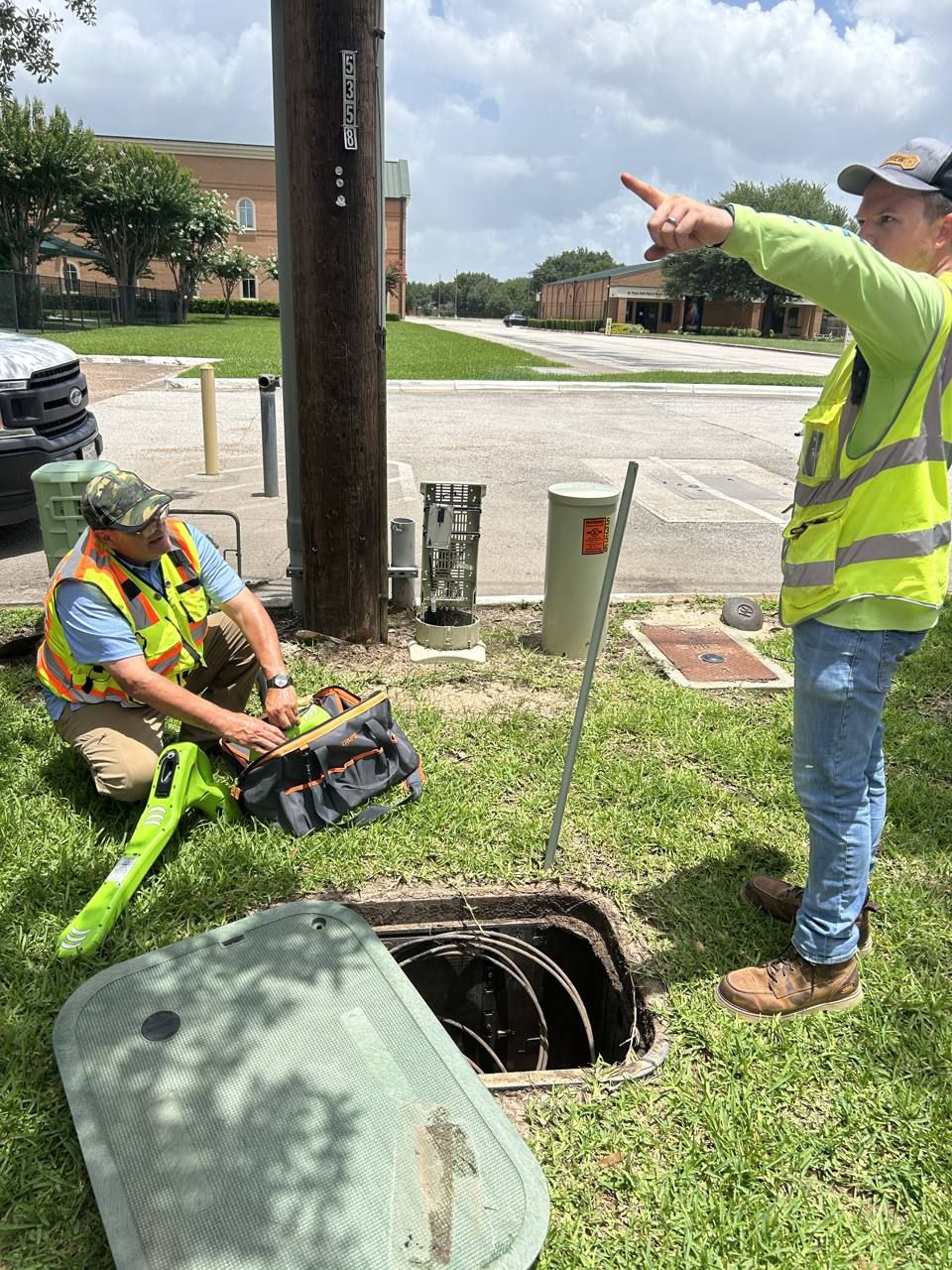
Electromagnetic locating is commonly used to trace conductive utilities. A technician may connect directly to an accessible utility, induce a signal onto a line, or use passive locating methods to detect certain energized or metallic utilities.
EM locating is often used for:
- Electric lines
- Metallic water lines
- Communication lines with tracer wire
- Gas lines with tracer wire
- Metallic conduits
- Some storm or sanitary components
- Utility corridors with accessible features
EM locating works best when the utility is conductive, accessible, and capable of carrying a signal. But it has limitations. Non-conductive utilities, broken tracer wires, poor grounding, congested utility corridors, reinforced surfaces, and inaccessible connection points can all limit results. EM locating should not be assumed to work perfectly in every condition.
That is why many underground utility investigations also use GPR scanning.
GPR Scanning for Underground Utility Investigation
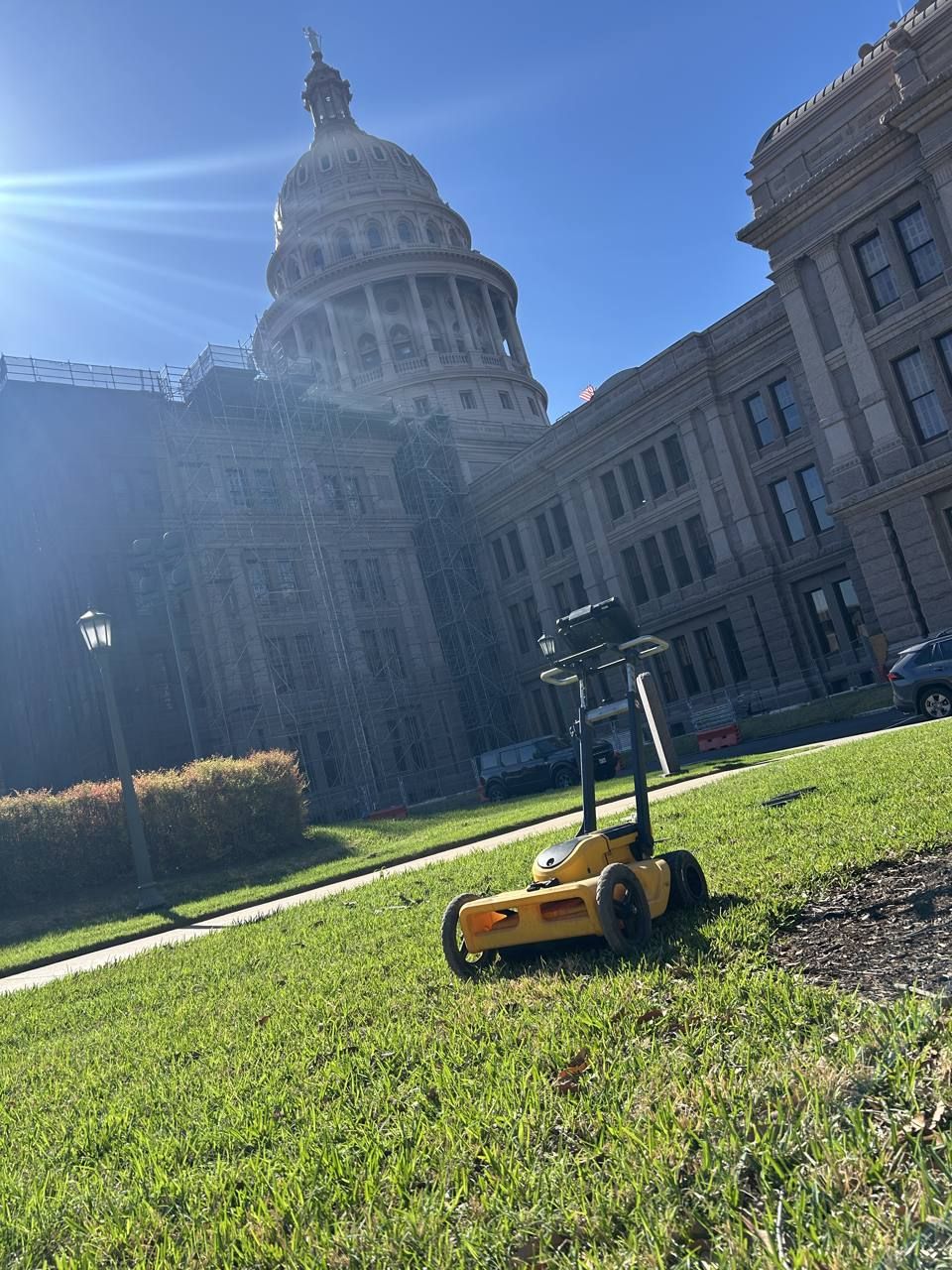
Ground penetrating radar helps investigate subsurface features that may not be traceable with EM locating alone.
GPR scanning may help identify buried utilities, trench lines, voids, unknown targets, abandoned infrastructure, and other subsurface anomalies within the scan area. It can be especially useful when:
- Utility records are incomplete
- A line is non-conductive
- There is no tracer wire
- A utility cannot be accessed for direct connection
- Abandoned utilities may be present
- The work area has multiple unknown crossings
- Excavation is planned through a congested corridor
GPR has real limitations. Soil type, moisture, clay content, depth, surface conditions, debris, reinforced concrete, and utility material can all affect detection. GPR does not find every underground utility in every condition and should not be presented as a guarantee that the work area is clear.
The best results usually come from combining GPR scanning, EM locating, site records, surface feature review, and field experience.
Mark Located Utilities Clearly in the Field
Once utilities or suspected targets are identified, they should be marked clearly onsite. Depending on site conditions, markings may include paint, flags, stakes, labels, or notes on the surface.
The markings should help the crew understand:
- Known utility paths
- Suspected utility paths
- Conflict areas
- Unknown targets
- Areas with limited confidence
- Areas needing potholing verification
- Recommended route adjustments
This is where communication matters. A mark on the ground should not be treated as magic. The crew needs to know what was located, what was suspected, and where uncertainty remains.
For excavation planning, the most important question is simple: where can the crew dig, and where do they need to verify first?
Planning excavation or boring in Texas?
SiteTwin performs private utility locating, GPR scanning, and underground utility investigations for contractors and property owners across Austin, Houston, San Antonio, Dallas, and the rest of Texas. Request a locate.
Potholing: Verify High-Risk Utility Conflicts Before You Dig
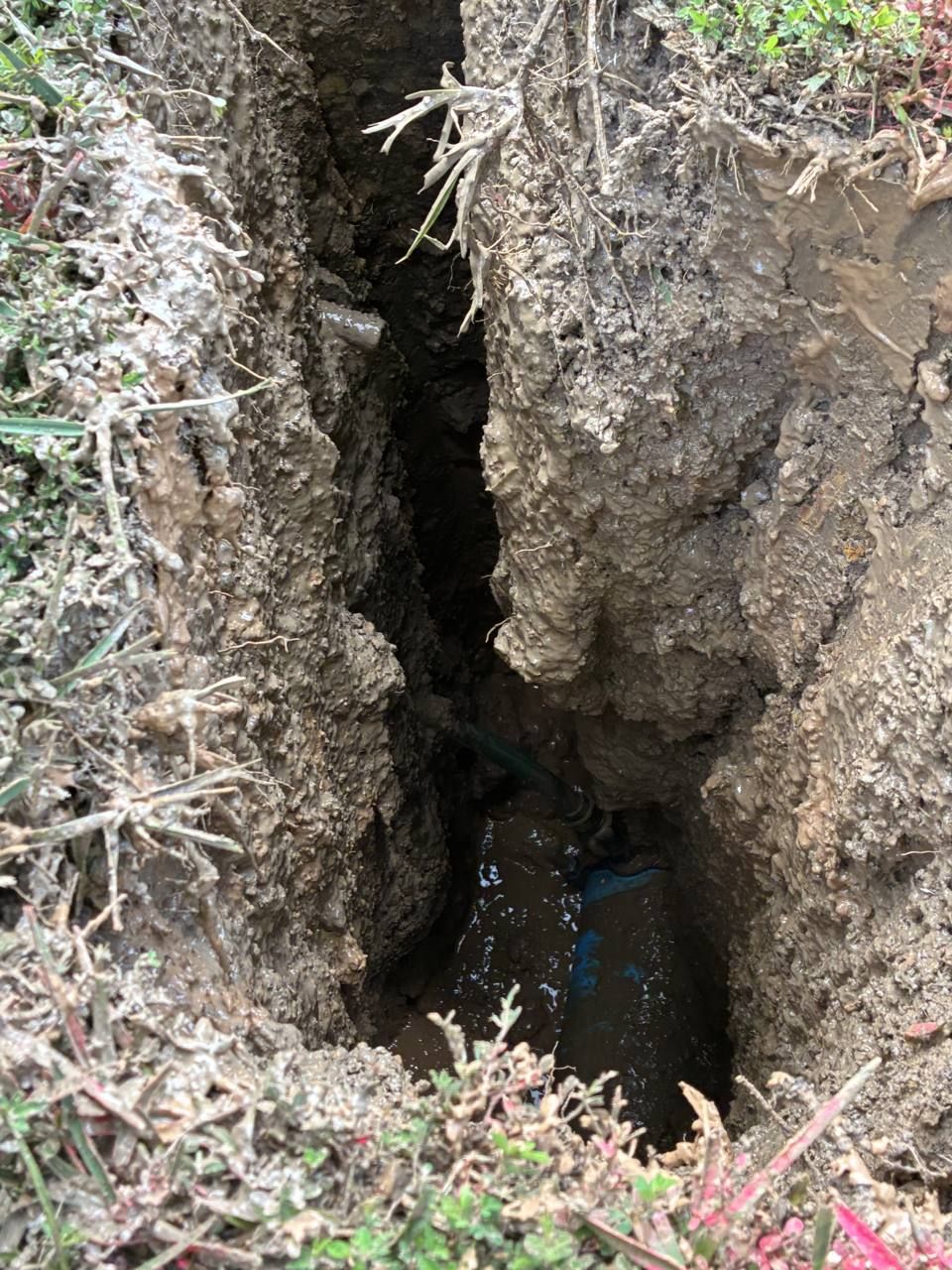
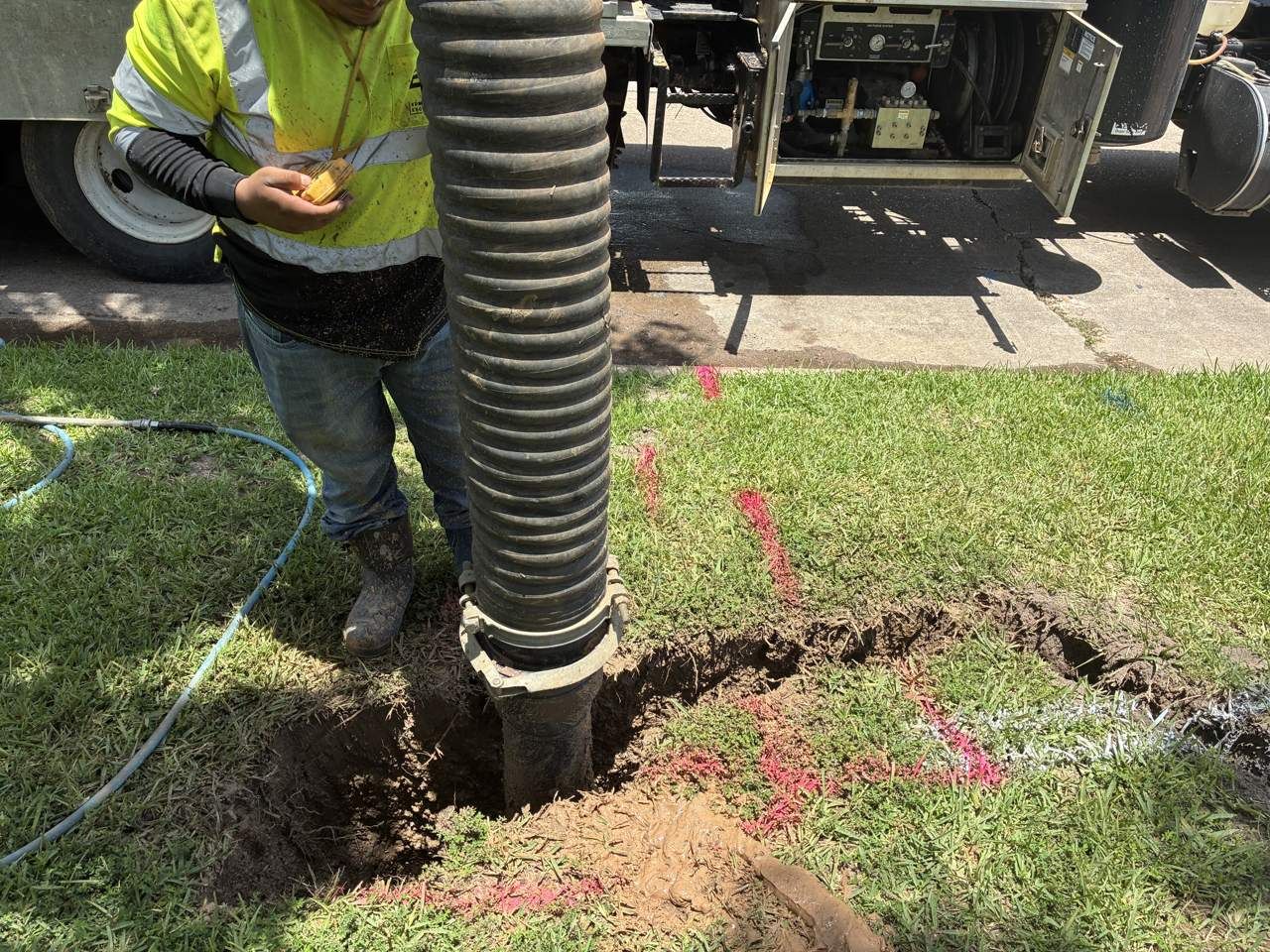
Utility locating reduces risk, but it does not replace physical verification. When excavation risk is high, potholing or daylighting should be used to physically confirm the utility's depth, location, and type before mechanical excavation continues.
Potholing is especially important before:
- Directional boring
- Deep trenching
- Utility tie-ins
- Excavation near gas lines
- Excavation near primary or secondary power
- Fiber crossings
- Work near water or force mains
- Congested utility corridors
- Areas with conflicting marks or records
- Unknown GPR targets in the excavation path
Paint markings show the suspected horizontal alignment. Potholing confirms what is actually underground. A utility may be shallower than expected. It may be offset from the surface mark. It may be abandoned. It may cross the trench at an angle. It may be bundled with other utilities.
Physical verification gives the excavation crew better information before the bucket, auger, or bore head moves through the conflict area.
Document the Utility Locate and Mapping
For many jobs, paint marks are enough for the immediate work. For larger or more complex projects, documentation may be needed.
Depending on the scope, deliverables may include:
- Site photos
- Field sketches
- PDF utility maps
- KMZ exports
- GIS-compatible utility mapping
- Utility corridor notes
- Conflict area documentation
- Potholing recommendations
- Photos of paint markings and site conditions
These deliverables help project managers, superintendents, engineers, owners, and subcontractors stay aligned. They are especially useful when the locate happens before the excavation crew arrives, when multiple crews are working onsite, or when route changes need to be reviewed by the project team.
Plan Around Site Access and Field Conditions
Utility locating works best when the work area is accessible. Before the technician arrives, the site contact should confirm:
- The excavation route is clearly defined
- Gates or locked areas are accessible
- Vehicles or materials are moved where possible
- Known utility rooms or panels can be accessed
- Plans or markups are available
- The site contact can explain the work area
- Safety requirements are communicated
- Any known hazards are identified
Poor access can limit the investigation. Parked vehicles, stored materials, active equipment, standing water, heavy debris, reinforced surfaces, and restricted areas may prevent complete scanning or tracing. The clearer the scope and access, the more useful the locate will be for the excavation crew.
Concrete Scanning Before Coring or Cutting
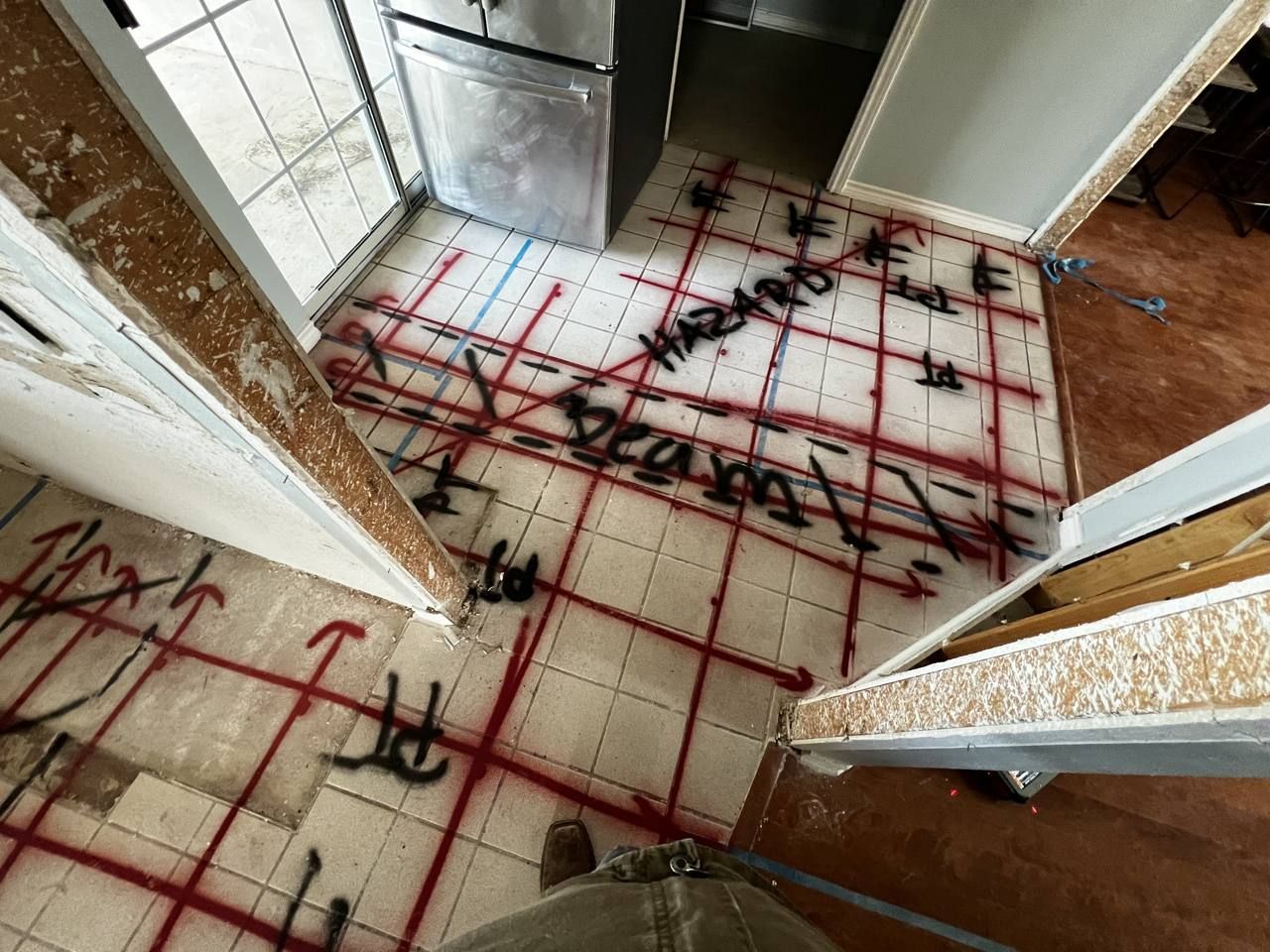
Some excavation-related work starts inside a building or on a slab. Before coring, saw cutting, trenching through concrete, anchoring, or making slab penetrations, concrete scanning may be needed to identify embedded objects.
SiteTwin | Concrete Scanning Services
Concrete scanning can help identify:
- Rebar
- Post-tension cables
- Conduits
- Embedded utilities
- Unknown objects
- Reinforcement patterns
This is common on tenant improvements, commercial remodels, warehouse upgrades, mechanical installations, plumbing work, and electrical routing. It can also help locate voids under concrete before coring or cutting.
Post-tension concrete requires special caution. Damaging a tendon can create serious safety and repair issues. Concrete scanning also has limitations. Slab thickness, reinforcement density, access, surface conditions, and embedded target depth can affect results. The scan area should be large enough to cover the proposed cut, core, or penetration area with room to adjust layout if conflicts are found.
When to Schedule Private Utility Locating in Texas
Utility locating should be scheduled before the crew is standing onsite waiting to dig. For straightforward projects, same-day or next-day mobilization may be available in many cases depending on location, crew availability, site access, and scope. Larger or more complex investigations should be scheduled earlier, especially if mapping deliverables are needed.
Schedule private utility locating before:
- Trenching
- Directional boring
- Drilling
- Grading
- Excavating near existing utilities
- Installing signs, fences, bollards, or light poles
- Cutting concrete or asphalt
- Utility tie-ins
- Emergency repairs
- Property redevelopment
- Work on older commercial or industrial sites
If the project involves private property, incomplete records, congested utilities, or high-risk excavation, locating should happen before production pressure forces rushed decisions.
SiteTwin is based in Austin and serves contractors across the major Texas metros. Across Texas - including Austin, Houston, San Antonio, and Dallas - many commercial and industrial sites have private utilities that are not fully shown on public records or owner drawings. This is common in growing markets where properties have been expanded, repaired, repaved, or remodeled over time. A utility investigation helps contractors working in these markets reduce uncertainty before excavation starts.
It is not about slowing the job down. It is about keeping the job from stopping after a strike.
Underground Utility Locating FAQ
What is the first step before excavating near underground utilities?
The first step is to contact 811 where required before excavation. After that, review available records, walk the site, and consider private utility locating if the work area may contain private or undocumented utilities.
Does 811 locate all underground utilities?
No. 811 typically coordinates public utility owner markings. It may not cover private utilities such as site lighting, irrigation, private electric, private gas, communication lines, or owner-installed infrastructure on private property.
What is private utility locating?
Private utility locating is a field investigation used to identify utilities that may not be marked through the public 811 process. It often includes EM locating, GPR scanning, site review, paint markings, and documentation.
Can GPR find every underground utility?
No. GPR cannot find every utility in every condition. Soil type, moisture, depth, utility material, surface conditions, and site congestion can affect results. GPR should be used as part of a broader utility investigation process.
When is potholing required?
Potholing is recommended when a utility conflict is present, excavation risk is high, or the crew needs to confirm utility depth and location before mechanical excavation, trenching, or directional boring continues.
Can utility locating be done before directional boring?
Yes. Utility locating should be performed before directional boring, especially at utility crossings, tie-in points, and congested corridors. Potholing should be used to verify high-risk crossings before the bore proceeds.
What deliverables can come from a utility investigation?
Depending on the project scope, deliverables may include utility paint markings, site photos, PDF utility maps, KMZ exports, GIS-compatible utility mapping, field sketches, and notes on conflict areas requiring potholing.
Related SiteTwin Guides
- Line locating methods explained
- Ground penetrating radar cost: what to expect
- How much does concrete scanning cost? A full breakdown
Locate Underground Utilities Before You Dig
Before the bucket, bore head, drill, or saw touches the work area, make sure the underground conditions have been investigated. SiteTwin helps contractors and property owners locate private utilities, scan with GPR, identify conflicts, and document findings before excavation begins - with crews serving Austin, Houston, San Antonio, Dallas, and markets across Texas.