
How to Find Underground Electrical Wires Before You Dig
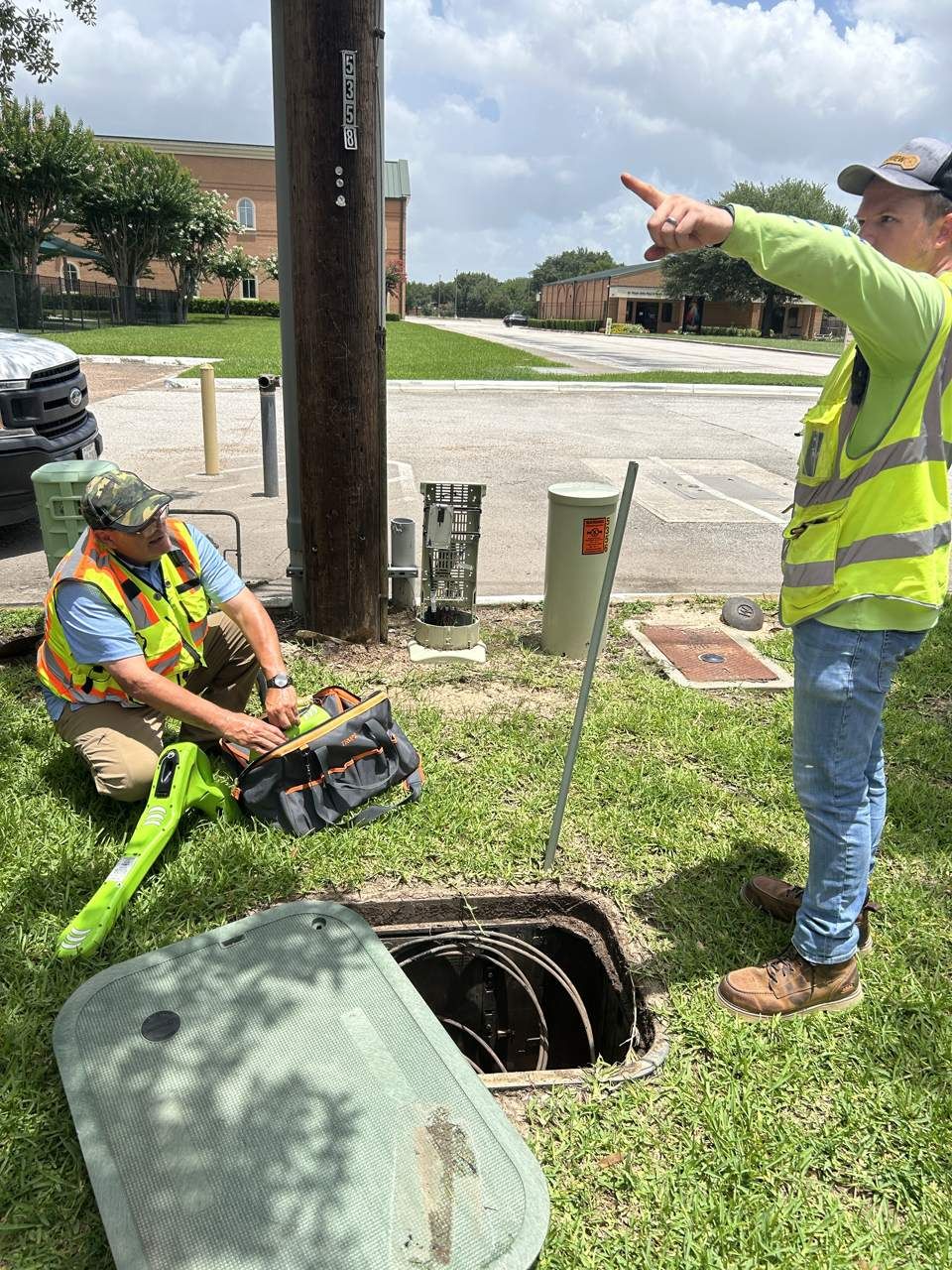
Here's the setup for most of the electrical strikes we hear about: it wasn't the big excavation. It was the fence crew, or the sign footing, or somebody augering holes for a shade structure in a parking lot. Small holes, shallow digging, and a lighting circuit sitting eighteen inches down that wasn't on anybody's drawing.
Underground electrical wire is a strange one in our trade. It's usually the easiest utility to trace, because it's conductive, and it's also the one with the least forgiveness built in. Copper doesn't negotiate. So finding underground wire is very doable; the failure is almost always that nobody looked for the private circuits at all.
The red marks stop at the meter
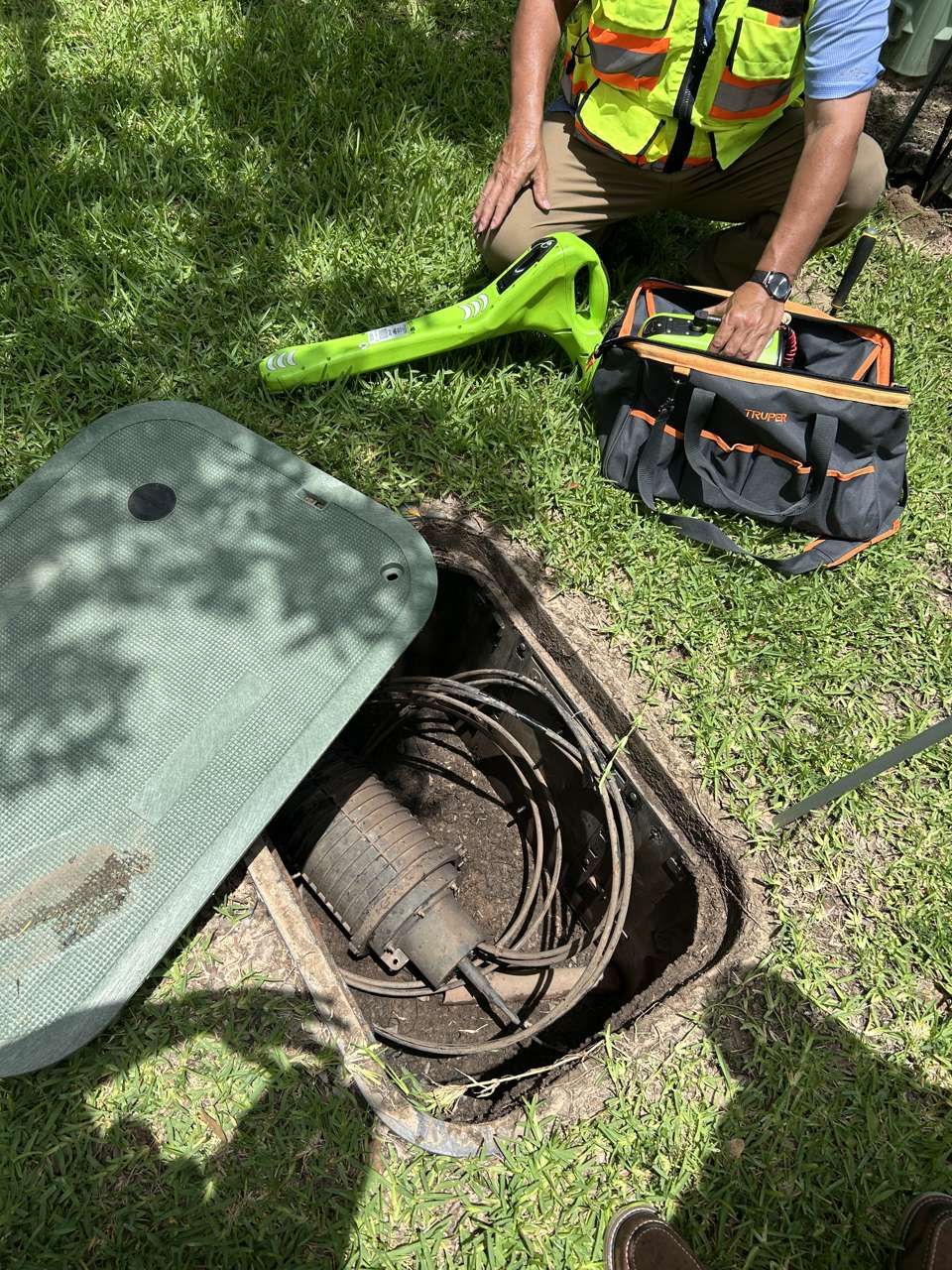
File your 811 ticket and the power company will mark their lines in red, up to the service point. Required, useful, do it.
Then walk the site and count light poles.
Every parking lot pole, every illuminated sign, every gate operator, every landscape light is fed by a circuit the property owner installed, and 811 does not mark an inch of it. On a typical commercial lot, the owner's electrical outweighs the utility's. It was probably installed by the low bidder decades ago, the conduit may or may not match any drawing that still exists, and it's shallow. That's the stuff that gets hit, and finding it is private locating work.
How an underground wire locator actually finds power
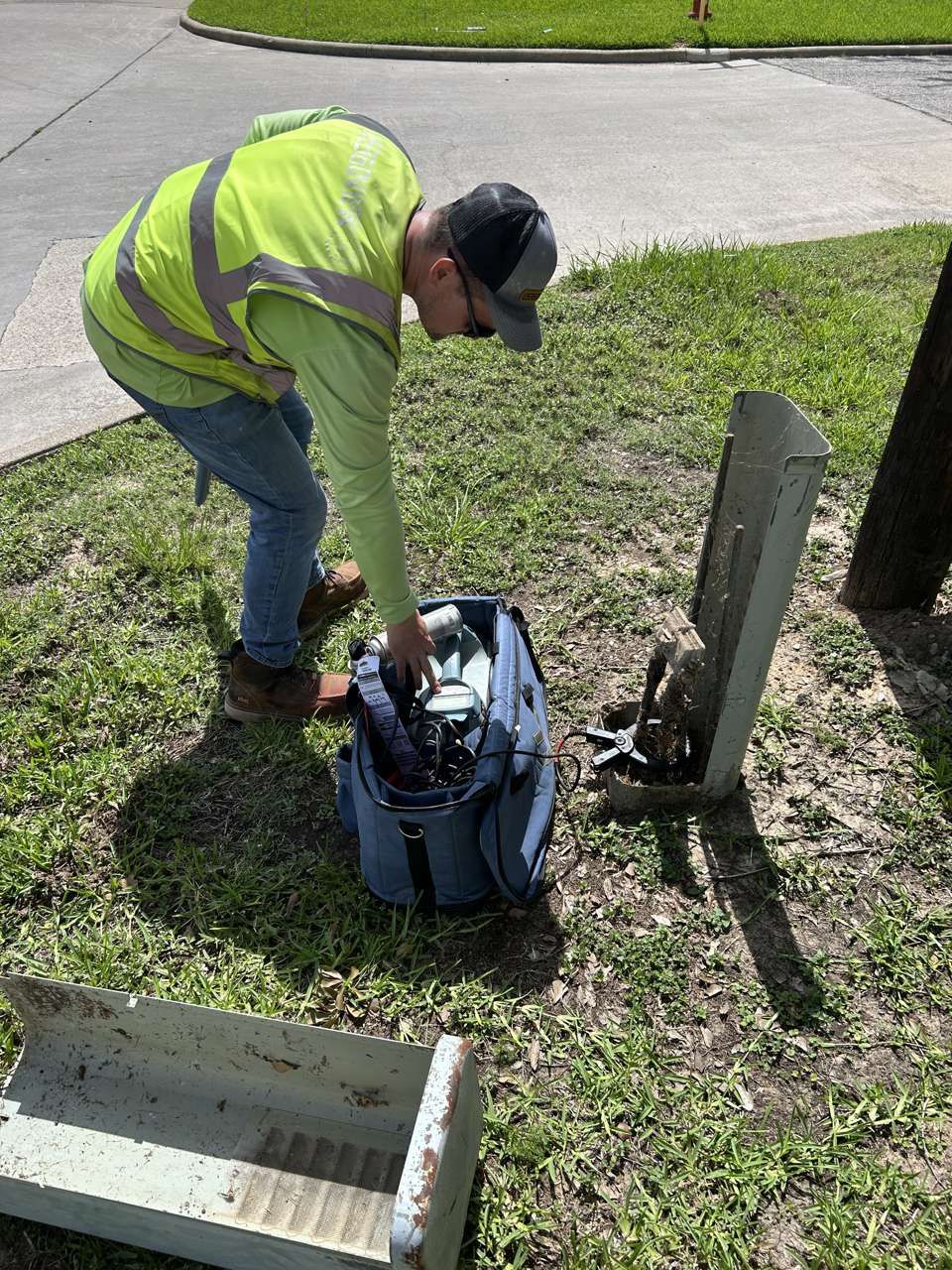
Live circuits put off a field an EM wire locator can often pick up passively, just sweeping the ground. That's the quick win, but passive sweeps miss things, especially lightly loaded or switched-off circuits, so we don't stop there.
The better trace is active: get access to a panel, a light pole base, or a junction box, clip a transmitter on, and follow the signal down the run. This is also why we ask for panel access and keys ahead of time. A locate where we can energize the circuits properly beats a drive-by sweep every time, and it's a big part of prepping a site well.
The stubborn case is dead PVC conduit with no wire we can energize, an abandoned run, or a spare duct. No conductor, no EM signal. Then it's GPR, and we're upfront that GPR results depend on soil. Most of the time between the two methods we corner it. When we can't say something with confidence, we mark what we know and tell you what we don't. You'd rather hear that before the auger goes in.
Direct bury wire vs. conduit, and why you should care
Power gets underground two ways. Direct burial cable is rated to sit in the dirt with nothing around it; wire in conduit runs through PVC or metal pipe. Installers choose based on cost and code. You should care because the two behave differently when someone digs.
Direct bury wire is the one a shovel finds first. No pipe, no warning, just jacketed conductor in the ground, and it's everywhere on older and budget installs: lot lighting, sign feeds, gate operators. It traces well on EM while it's energized, which is the good news.
Conduit cuts the other way. Metal conduit shows up on EM whether or not the wire inside is live. PVC conduit is the trap: if the run is abandoned, unenergized, or empty, there may be nothing conductive to trace at all, and it becomes a GPR target like any other plastic pipe. Some of the hardest finds we get called for are old PVC duct runs that show up on no drawing and carry no signal.
Depth: the number everyone wants and nobody should trust
The code ranges, for what they're worth: direct burial cable typically goes around 24 inches, PVC conduit around 18, and metal conduit can legally sit much shallower. Under slabs and where circuits have extra protection, shallower still.
But what code says and what's under your site are different facts. Lots get regraded. Pavement gets milled and overlaid. A conduit that was legal in 1998 might be nine inches under today's surface.
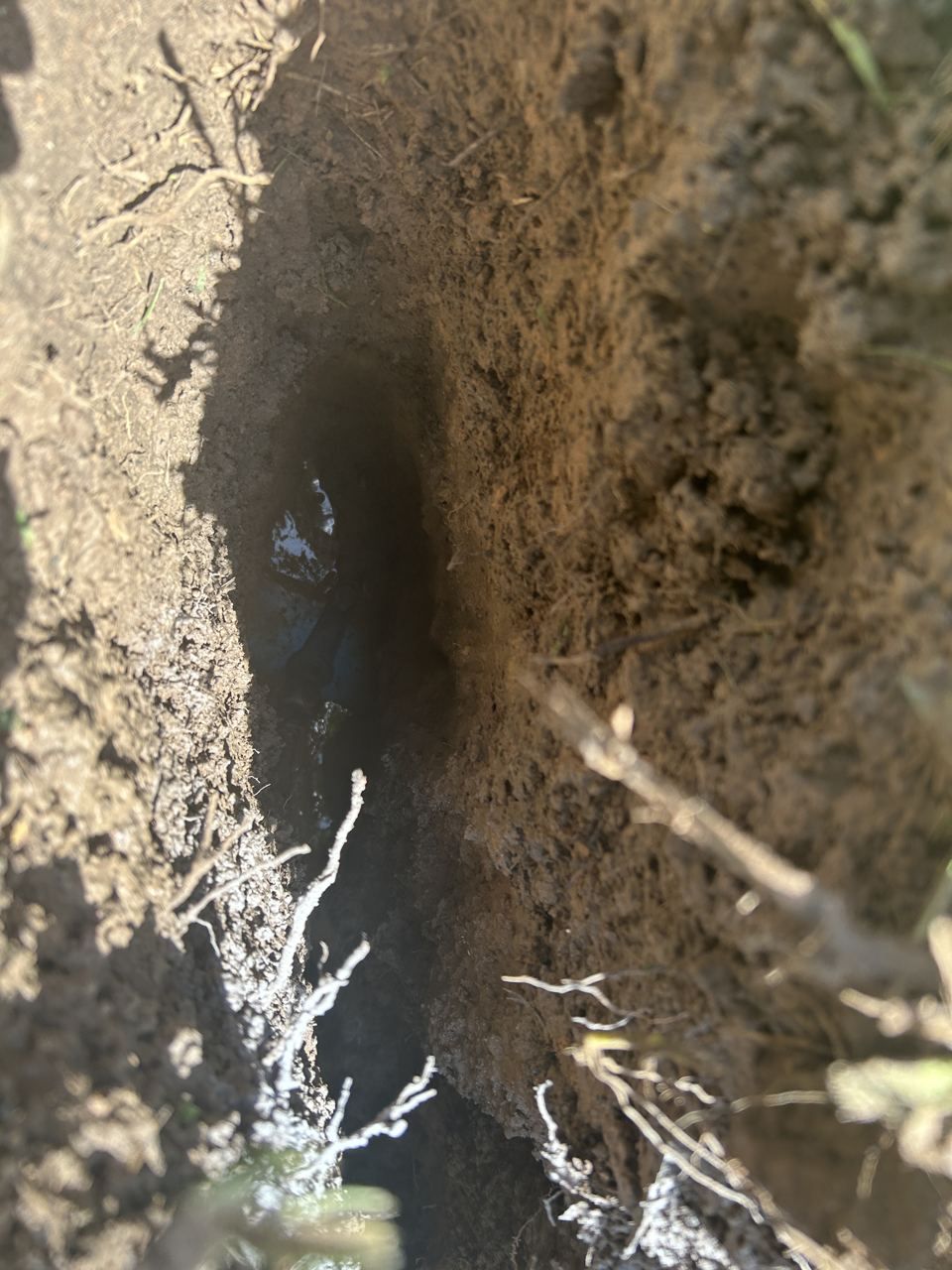
EM locators estimate depth, and we treat those readings as estimates in front of clients, because that's what they are. When a trench or bore has to pass close to power, the move is the same one we preach for gas: pothole it, look at the actual conduit, measure it, then dig.
Small jobs hit wires too
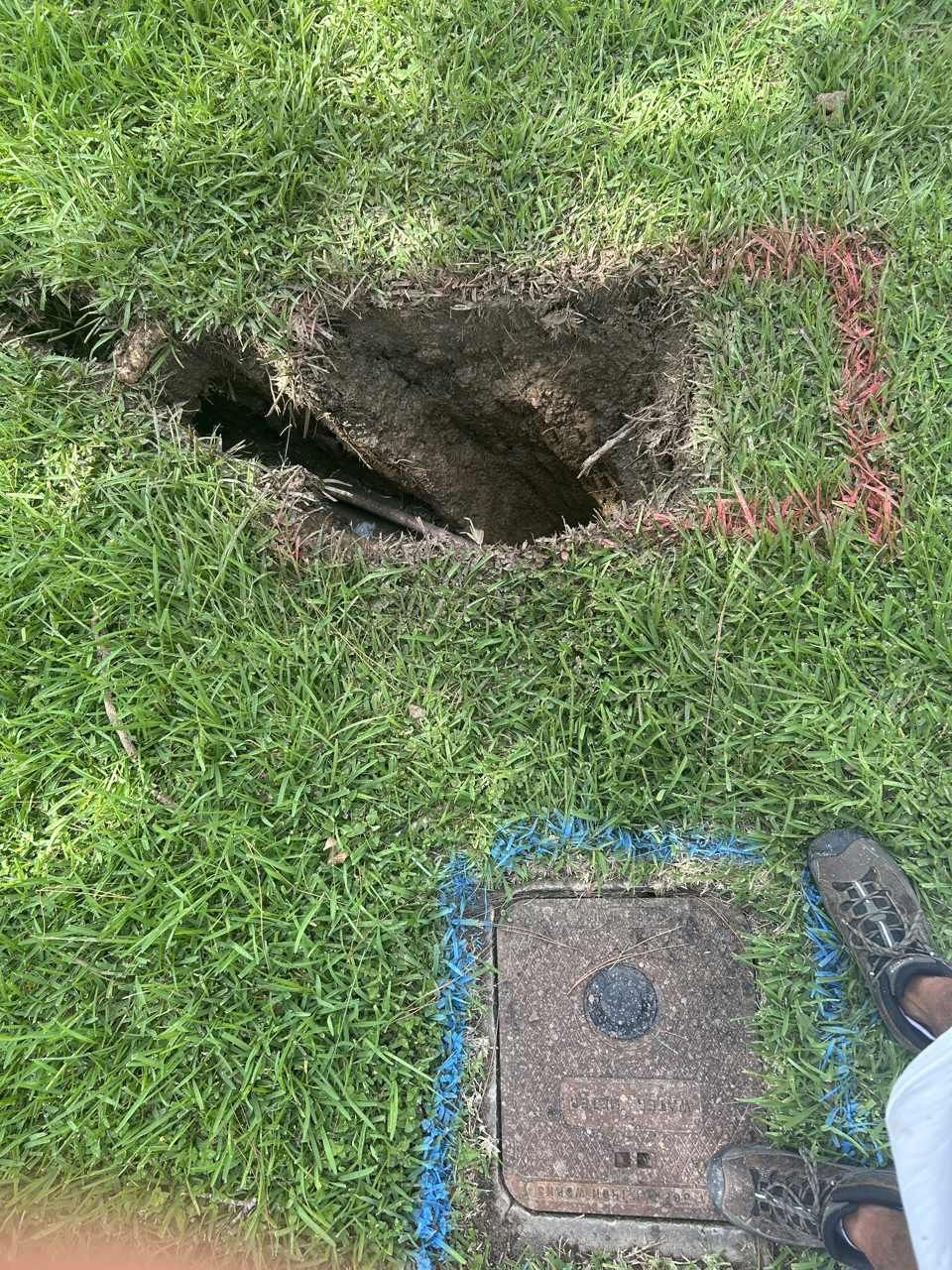
The projects that hit electrical are rarely the mass excavations. Those get planned, located, and watched. It's the small stuff: running power to a shed or outbuilding, setting a carport, augering for a gate post, trenching thirty feet for a landscape panel. Small enough that nobody orders a locate, deep enough to reach a feeder.
If the trench crosses a lot that has any site lighting or existing improvements on it, the odds of an existing circuit in the path are better than people think. A one-hour locate on a small job is cheap insurance, and on the small jobs it's almost never bought. That's the gap most electrical strikes live in.
Before your crew digs near power
- 811 ticket filed and marks on the ground, and you know which marks are theirs vs. yours
- Private circuits located, with panels energized for an active trace, not just swept
- Anything the locate flagged as low-confidence treated as live and present
- Crossings within a couple feet of the dig potholed and measured
- Hand tools or vacuum, not a bucket, for the last stretch near a marked line
That list has kept a lot of augers out of a lot of lighting circuits.
We locate site electrical on commercial properties across the Texas metros, Houston to Fort Worth to San Antonio. Same-day and next-day mobilization available in many markets. Send the address and scope for review.
SiteTwin | Private Utility Locating · Austin · Dallas · all locations