
How to Locate a Gas Line Before You Dig
A nicked communications line costs you an afternoon. A nicked gas line clears the block.
That's the difference we drill into every crew we work with. Most utilities, if you hit them, you're dealing with a repair bill and an awkward phone call. Gas is the one where people get hurt. So before we talk about locating equipment at all, the ground rule: nobody guesses on gas. Not on depth, not on routing, not on "it should run straight from the meter."
Call 811. Then understand what you just got.
811 is free, it's the law in Texas, and you should file the ticket every time. Texas requires the notice at least two working days before you dig, and the ticket is good for 14 days, so build it into the schedule instead of treating it as a morning-of formality. The gas utility will come out and put yellow marks over the distribution lines they own near your dig.
What most people miss is where that service ends: the meter. The utility marks their side. Everything on the property side of that meter is the owner's pipe, and in most cases nobody from 811 is coming to find it.
On the commercial sites we work, the property side is where the surprises live. Gas run out to a detached kitchen. A line feeding a generator pad that got added years after the as-builts were drawn. Pool heaters, shop buildings, old lines that were "abandoned" on paper and never actually cut. That's private utility locating work, and skipping it because the 811 marks are already on the ground is how gas strikes happen on marked sites.
Why gas is a mixed bag to locate
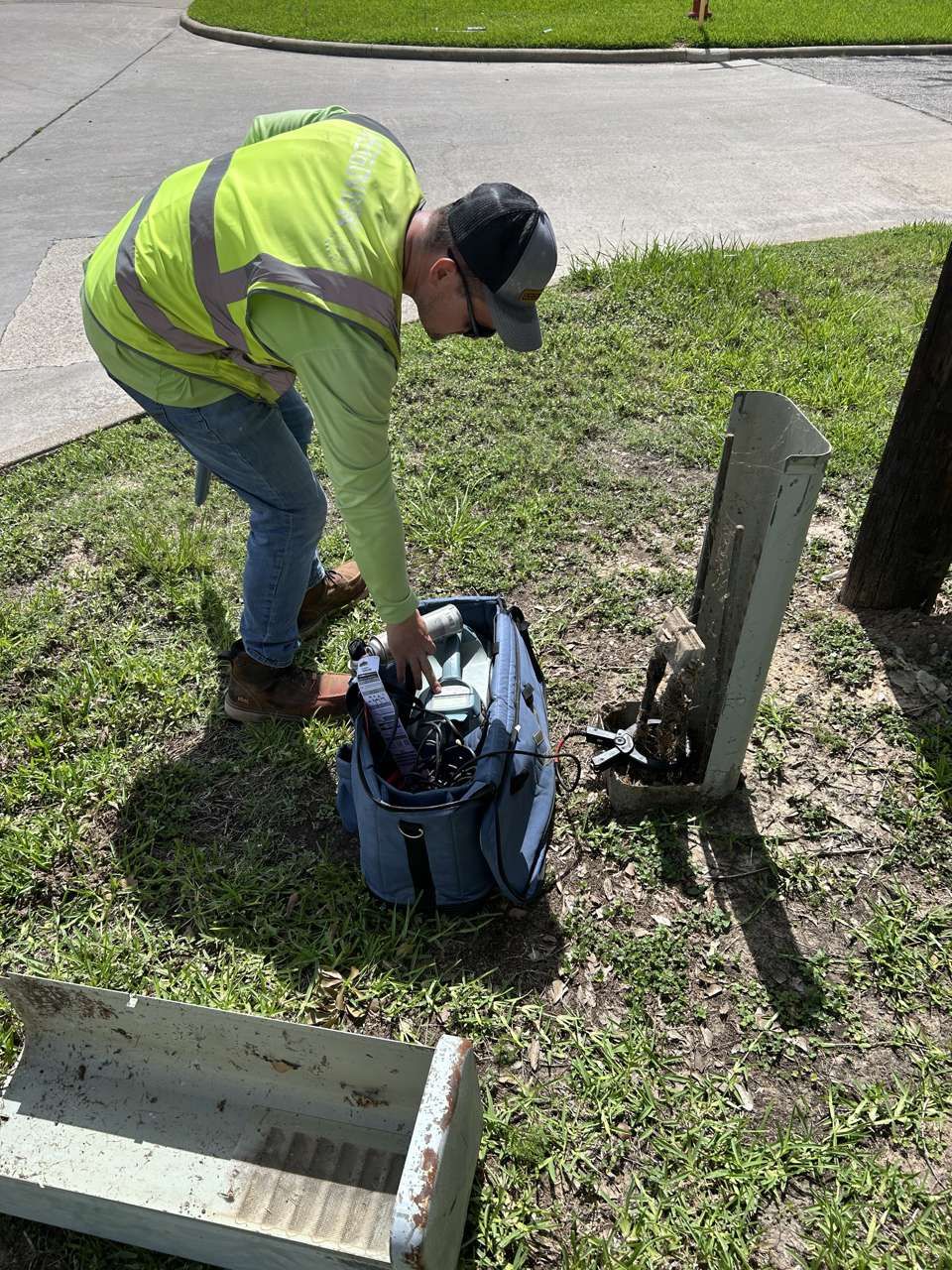
Old steel gas pipe is honestly one of the easier things we trace. It's metal, it carries a signal, and EM locating will follow it all day.
The problem is that most gas installed in the last few decades is poly. Plastic pipe carries no signal. It's supposed to be buried with tracer wire so a locator can energize the wire and follow it, and when that wire is intact, fine. But tracer wire breaks, corrodes, and sometimes never got installed, and a poly gas line with dead tracer wire is one of the hardest targets any gas line locator faces. We wrote up why tracer wire fails in our line locating methods guide because it comes up that often.
When the wire's dead, we switch to GPR and work the area. Sometimes it images the line cleanly. In heavy, wet Gulf Coast clay, sometimes it doesn't, and we'll say so rather than paint a guess. A mark we're not confident in is worse than no mark, because a crew will trust it.
Meanwhile, the surface tells you a lot if you look. Meters, risers, and regulators don't feed themselves. Every one of them has pipe arriving from somewhere, and half of a good gas locate is reading that and confirming it with the equipment.
Reading the surface before the equipment comes out
Gas announces itself above ground more than most utilities, if you know what to look for:
- Meters and regulators. Pipe arrives at every one of them, usually in a straight-ish run from the main.
- Risers, the yellow-painted pipe coming up a wall or out of the ground at equipment.
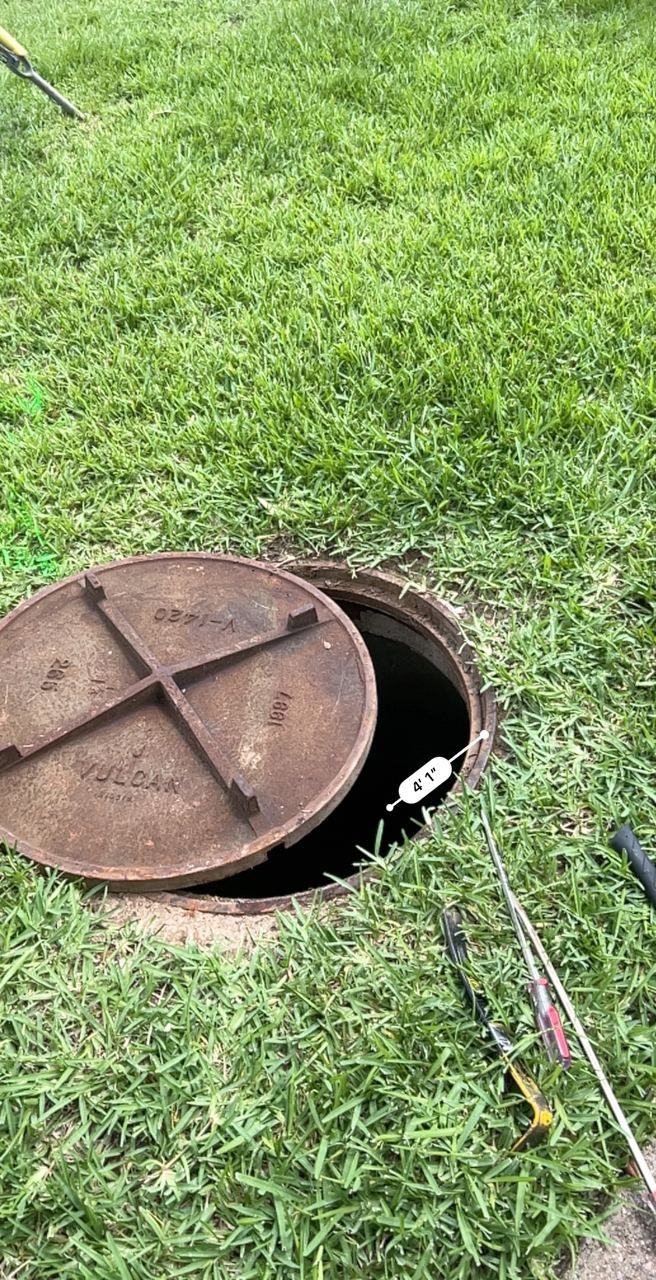
- Valve lids in pavement, often small round castings marked "GAS."
- Cathodic protection test stations, the little posts along steel mains.
- Patched trench lines in pavement running toward any of the above.
None of that replaces a locate. All of it informs one. When we walk a site, half the initial picture comes from this kind of surface evidence, and a crew that learns to see it will catch problems the drawings don't show.
How deep are gas lines buried?
The standard answer is that distribution mains commonly run around 24 inches and services shallower, sometimes around 18. The truthful answer is that we've exposed gas at depths that matched no standard at all, especially on older services and on private pipe past the meter, which was installed by whoever the owner hired and inspected by nobody. Grade changes since installation move the number further.
So use the standard depths for planning, and never for digging. If your excavation gets within a couple feet of a marked gas line's depth range, you're in potholing territory, which brings us to the rule.
The one rule we don't bend: pothole the crossing
Paint on the grass is a horizontal estimate. It is not a depth, and it is not a guarantee.
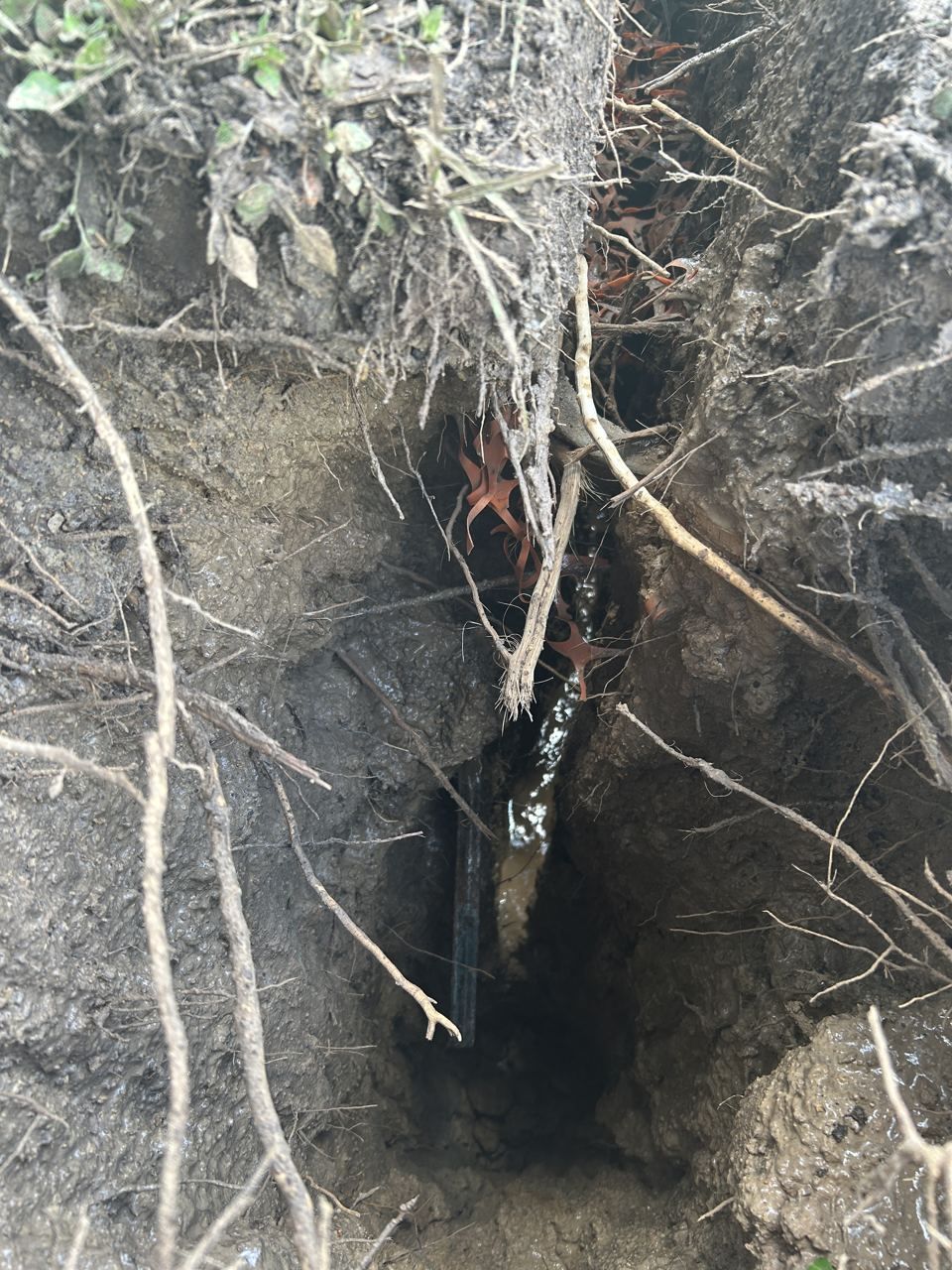
So when a bore path or a deep trench crosses a gas line, we tell clients to pothole it. Physically expose the pipe, measure where it actually sits, then send the bore under it with real numbers. Directional drilling is blind by nature. The drill head doesn't know the poly service is there, and "the mark said it was over a foot away" is not a sentence anyone wants to be saying to a fire marshal.
Is potholing an extra line item? Yes. It's also the cheapest thing on the invoice compared to what a gas strike costs, and we've never once had a client regret verifying.
We locate public and private gas lines across Houston, Dallas, Fort Worth, Austin, and San Antonio, and we'll tell you which crossings actually need potholing instead of upselling all of them. Send the address and scope for review.
Questions we get about gas locates
How deep is a gas line buried?
Mains are commonly around 24 inches and services shallower, but treat those as rumors, not measurements. Regrading, repaving, and old installs move the real number. If the depth matters to your dig, pothole it.
Will 811 mark the gas line to my building?
They'll mark up to the meter. Pipe past the meter, to detached buildings, generators, or equipment, is the owner's and usually takes a private locate.
What if you can't find the line?
We say so. Between records, EM, GPR, and potholing, an unlocatable line usually becomes a locatable one, but the answer is never to shrug and dig. If we can't verify it, we treat the area like the line is there.
SiteTwin | Private Utility Locating · Houston · Dallas · all service areas