
How to Find Sprinkler Lines (and How Deep They Are)
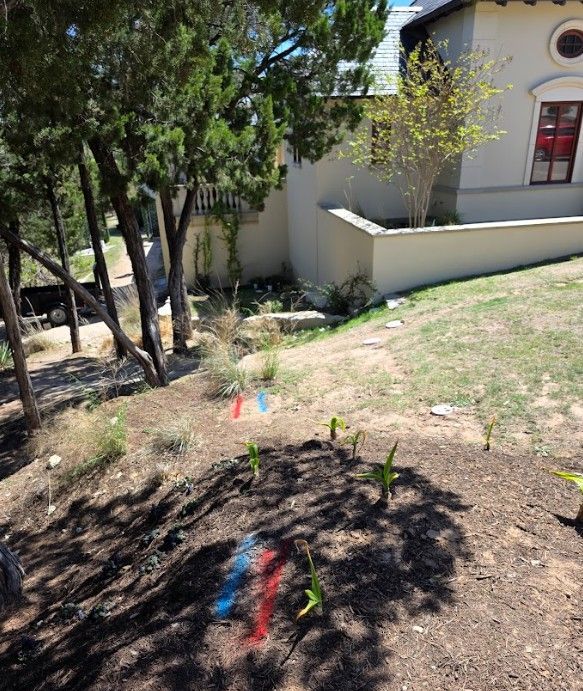
Texas irrigation rules require at least 6 inches of cover over sprinkler pipe. Installation guidance for home systems puts lateral lines around 8 to 10 inches deep and the mainline at 18 inches or more.
You can usually map the whole layout from the heads, valve boxes, and controller wiring before anyone digs. Here is how the system is laid out underground, and the order we would work through it to find each piece.
How deep are sprinkler lines buried?
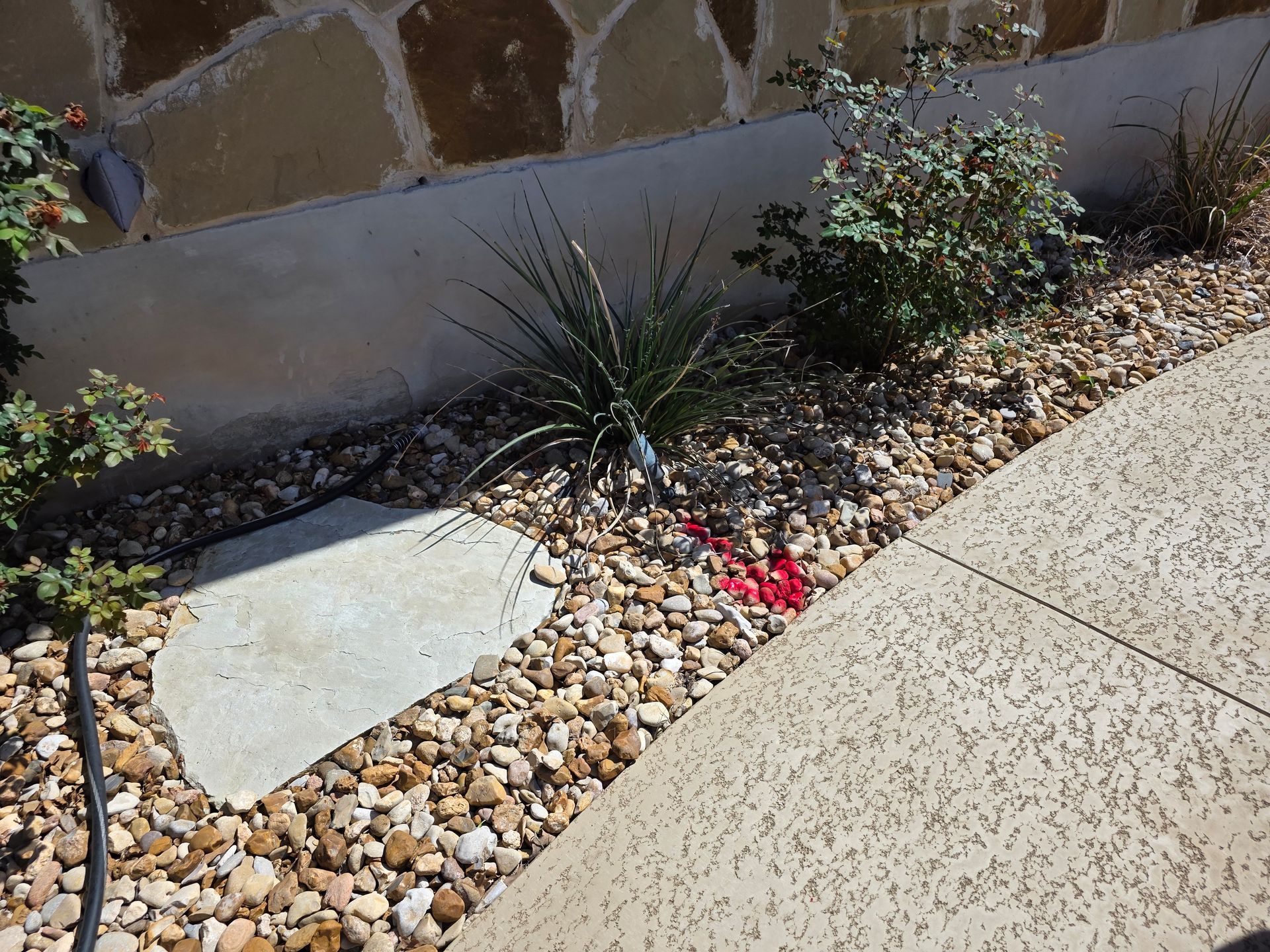
A sprinkler system has three buried parts, and each one sits at a different depth.
- Lateral lines carry water from a zone valve out to the heads. Installation guidance for home systems puts them around 8 to 10 inches deep. Commercial standards call for 12.
- The mainline runs from the water supply and backflow preventer to the valves. Installation guidance recommends at least 18 inches of cover on plastic mainline, and some Texas public projects write that in. The City of Abilene's irrigation specification, for example, requires a minimum of 18 inches of cover on all irrigation lines unless the plans show otherwise. The water service that feeds the system usually runs deeper, as we cover in how deep water lines are buried.
- Valve wire runs from the controller to each valve, usually in the same trench as the mainline. The Texas rules call for at least 6 inches of cover over controller wiring, the same minimum the National Electrical Code sets for low-voltage irrigation control circuits.
The state minimum comes from the TCEQ landscape irrigation rules. Pipe has to be buried to the manufacturer's published specification, or with at least 6 inches of select backfill over the top of the pipe if there is none. Where a utility, structure, or tree roots make 6 inches impractical, the rules allow as little as 2 inches, and the shortfall has to be noted on the as-built drawing.
All of these numbers describe a system on the day it went in. Regrading and erosion strip cover off a line over the years, and new beds and topsoil add it back. Treat any depth as a starting estimate until you have seen the pipe.
1. Start with the paperwork
Texas requires a licensed irrigator to install a sprinkler system, with an exemption for homeowners working on their own homes. When a licensed irrigator finishes a new system, the TCEQ rules require them to hand the owner the irrigation plan or as-built drawing showing how the system was actually installed. That drawing is the fastest way to find every line.
If you do not have it, check the closing documents, the builder's warranty packet, and any HOA landscape approvals. Then look at the controller. The irrigator is required to put a permanent waterproof sticker on it with their name, license number, company, and phone number, so the controller tells you who to call for a copy.
2. Run the system one zone at a time
Turn on a single zone from the controller and walk the yard. Every head that pops up is fed by that zone's lateral lines, so the pipe runs between them. Push a flag in next to each head, then move to the next zone.
Laterals tend to run in straight lines with a tee at each head, so a row of flags usually traces the pipe underneath it. Watch for soggy ground or a head with weak pressure while the zone runs. Both can point to a leak somewhere along that lateral.
3. Find the valves
Each zone has its own valve, and valves are usually grouped together in plastic valve boxes with round or rectangular lids set flush with the ground. Look along the foundation, near the backflow preventer, and in planting beds. Lids get buried under mulch, sod, and rock over time, so a light probe with a screwdriver around the likely spots often turns one up.
Two tricks help. Count the wires at the controller: there is one common wire plus one wire per zone, so the number of active zone terminals tells you how many valves you are looking for. Then have someone start a zone while you listen near the beds. The valve solenoid makes an audible click when it opens.
4. Trace the valve wire
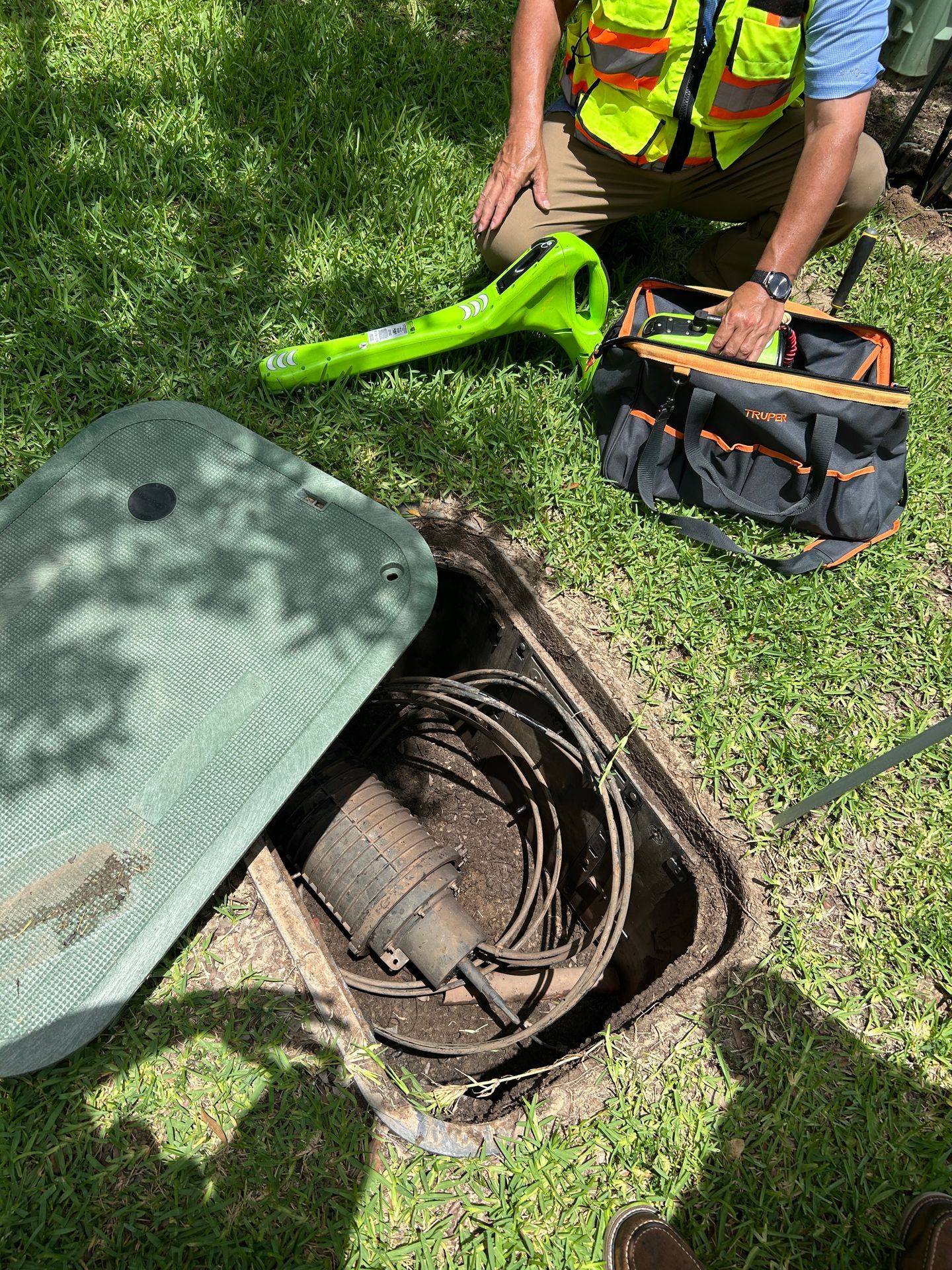
This is the step that finds what the first three miss. Valve wire is copper, so an electromagnetic locator can follow it. Disconnect a zone wire at the controller, put a locator signal on it, and walk the signal out across the yard. It leads to that zone's valve, even one buried under a foot of fill.
Because valve wire usually shares a trench with the mainline, tracing it also shows you roughly where the mainline runs. That is the line you most want to know about before digging.
Why the pipe itself is hard to find
- Sprinkler pipe is usually PVC or polyethylene. Neither carries a signal, so an electromagnetic locator cannot trace the pipe directly, and a metal detector will not find it either.
Where there is no wire to follow, ground penetrating radar is the remaining tool. It can pick up plastic pipe by the contrast between the pipe and the soil around it, but small-diameter lines are a hard target, especially in wet clay. Our comparison of EM locating and GPR explains when each method works.
811 will not mark them
Sprinkler lines belong to the property owner, and Texas law exempts lines that serve only the owner and sit only on the owner's property from the one-call system. We explain the statute in How Deep Can You Dig Before Calling 811 in Texas?, and 811 vs. Private Utility Locating covers what each one marks.
If irrigation gets marked, the color to look for is purple. The APWA uniform color code assigns purple to reclaimed water, irrigation, and slurry lines. Our utility marking color guide has the full chart.
The jobs that hit sprinkler lines
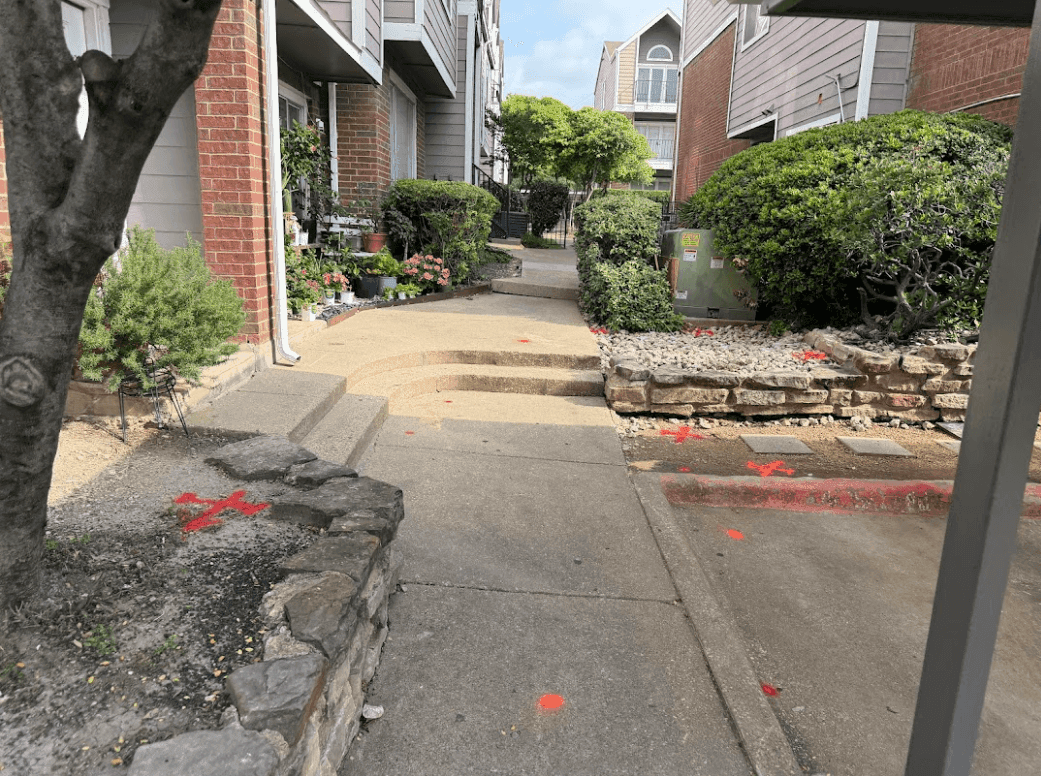
With laterals often 10 inches down or less, almost any digging reaches one. The usual culprits:
- Fence posts and gate footings
- Tree and shrub planting
- Landscape lighting and low-voltage trenches
- French drains and downspout lines
- Pool excavation
- Patio and driveway work
The mainline is the costly one. On most systems it stays pressurized between the backflow preventer and the valves, so a cut mainline keeps flowing until someone shuts off the supply. A cut lateral only leaks when its zone runs.
Sprinkler pipe is rarely the only shallow line in the yard. Gas yard lines can legally sit at 12 inches, as we cover in How Deep Are Gas Lines Buried?, and on rural lots the septic system shares the yard too. Our guide to finding your septic tank covers that one.
Quick answers
How deep are sprinkler lines in Texas?
The state minimum is 6 inches of cover, or 2 inches in tight spots noted on the as-built. Installation guidance puts home laterals around 8 to 10 inches and mainlines at 18 inches or more. Older systems and regraded yards vary.
How do I find a buried sprinkler valve?
Count the zones at the controller, then trace each zone wire with an electromagnetic locator. The wire ends at the valve.
Does 811 mark sprinkler lines?
No. Irrigation on your own property is a private line, outside the one-call system.
Can a metal detector find sprinkler pipe?
No. The pipe is plastic. Tracing the valve wire or scanning with ground penetrating radar are the methods that work.
If you are putting in a fence, pool, or new beds and want the irrigation and every other private line on the lot marked before the digging starts, get in touch. Our private utility locating covers everything 811 leaves unmarked, and our post on when to hire a private utility locator covers the jobs that call for one. We work across Texas, including Austin, Plano, Frisco, and Katy.