
How Deep Is Fiber Optic Cable Buried?
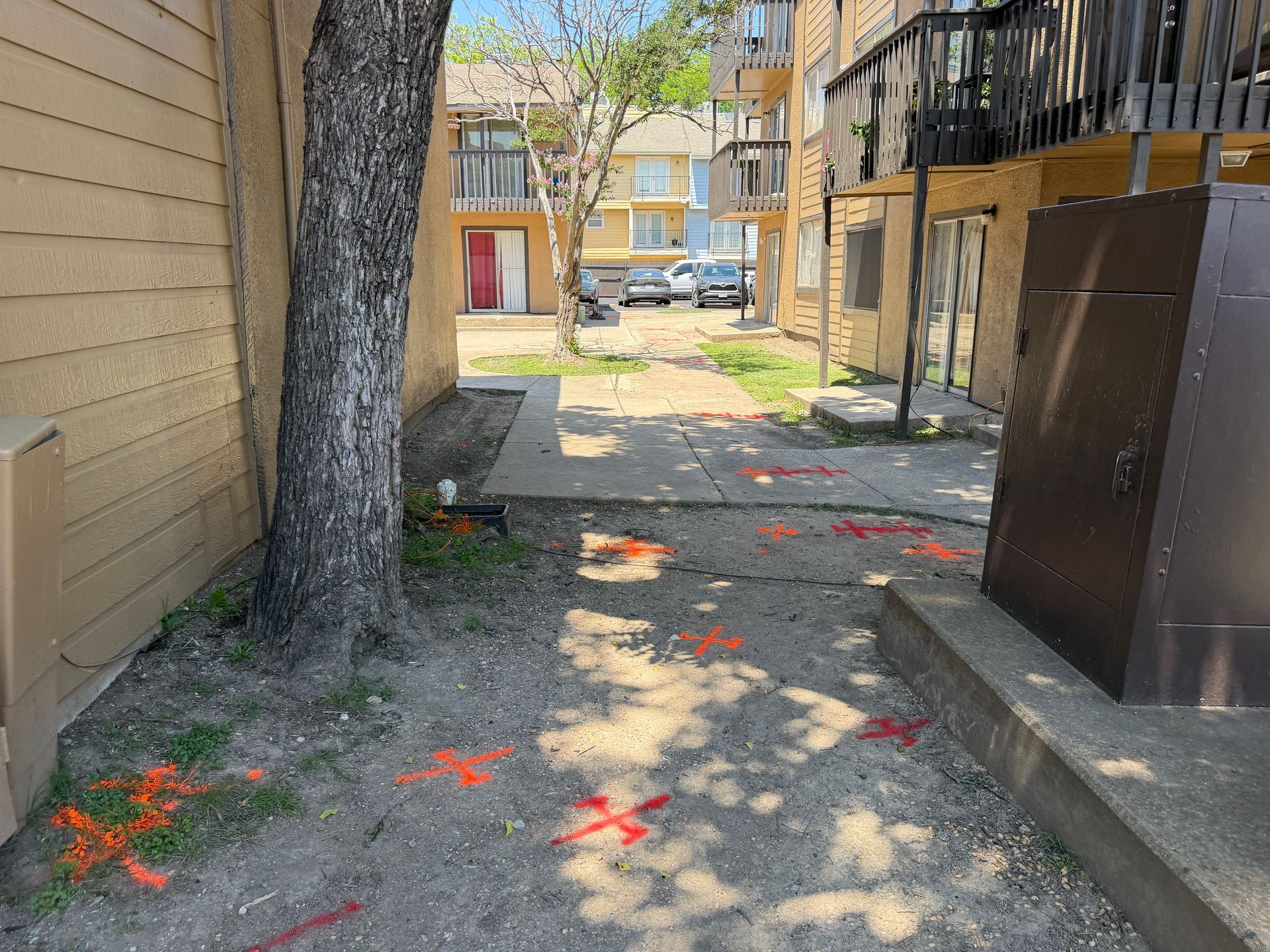
There is no single depth for fiber. Fiber manufacturer Corning recommends at least 30 inches of cover for direct-buried fiber, federal rural telecom specs call for 24 inches in soil and 12 inches at the customer's premises, and microtrenched fiber in city streets can sit 10 to 18 inches down.
Where the cable runs, who owns it, and how it went in all change the answer. Here are the published numbers, and what they mean before you trench or bore.
Fiber depth by where it runs
- Along Texas highways. TxDOT's utility accommodation rules require communication lines running lengthwise in state highway right of way to have at least 48 inches of cover, and the district can allow 42 inches where site conditions warrant. Crossings go 60 inches below the lowest point of the crossed grade. Within 50 feet of a waterway, ditch, channel, creek, or culvert, add another 12 inches.
- Manufacturer guidance. Corning's procedure for direct-buried fiber recommends a minimum of 30 inches of cover in soil, 36 inches under drainage ditches, and 42 inches at roadway crossings.
- Rural telecom builds. The USDA Rural Utilities Service construction specification, used on federally financed telecom projects, sets 24 inches in soil and 36 inches at ditch crossings, unless the engineer specifies otherwise. It covers copper and fiber alike.
- The drop to a home or business. The same federal spec drops to 12 inches at the subscriber's premises. That last run to the building tends to be the shallowest fiber on the property.
- Microtrenching. Some fiber builds cut a narrow slot in the street instead of a full trench. Round Rock's microtrench ordinance, adopted in 2025, allows a cut 1.5 to 3 inches wide and 10 to 18 inches deep on residential streets, or 12 to 18 inches on arterial and collector roads, with the fiber in conduit.
Copper phone cable built to the federal rural spec follows the same depths, since the spec applies to all buried cable and wire.
Why the depth varies so much
Each of those standards applies to a different kind of build. A long-distance carrier in TxDOT right of way, a city fiber build in a residential street, and a contractor running a drop across a front yard all work to different standards.
Installation method matters too. Plowed and trenched cable sits at a fairly even depth. A directional bore under a driveway or road can run deeper in the middle of the crossing than at either end. After that, regrading, new driveways, and landscaping change the cover over the cable.
Power lines follow their own published depths, covered in How Deep Are Electrical Lines Buried?
Why fiber is hard to find without a tracer
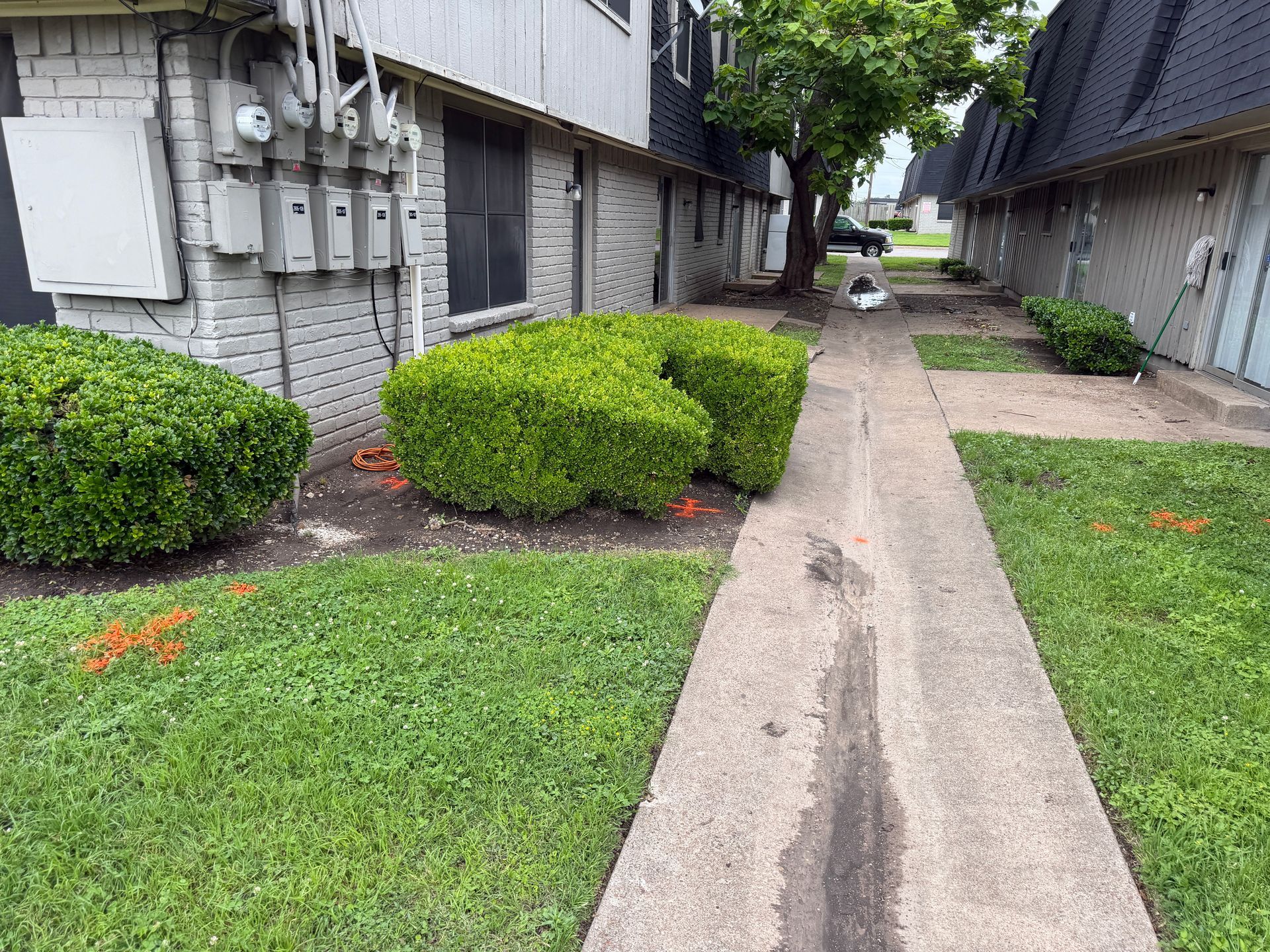
Electromagnetic locators find a line by tracing a signal along metal. The glass in fiber carries no signal, so the cable itself cannot be traced unless it has a metallic element. Some fiber cables include armor or other metal components that can be toned. Others do not, and those depend on a tracer wire installed alongside them.
The Common Ground Alliance's best practices say it directly: non-conductive materials "cannot be located using traditional locate methods," and a tracer wire or other locating method should be part of the design and installation. TxDOT requires a metal wire or another approved means of detection wherever nonmetallic pipe goes into its right of way. Our post on tracer wire covers what happens when that wire is broken or was never installed.
When there is nothing to trace, ground penetrating radar can sometimes pick up the conduit the fiber runs in, depending on its size, depth, and the soil.
What 811 marks, and what it does not
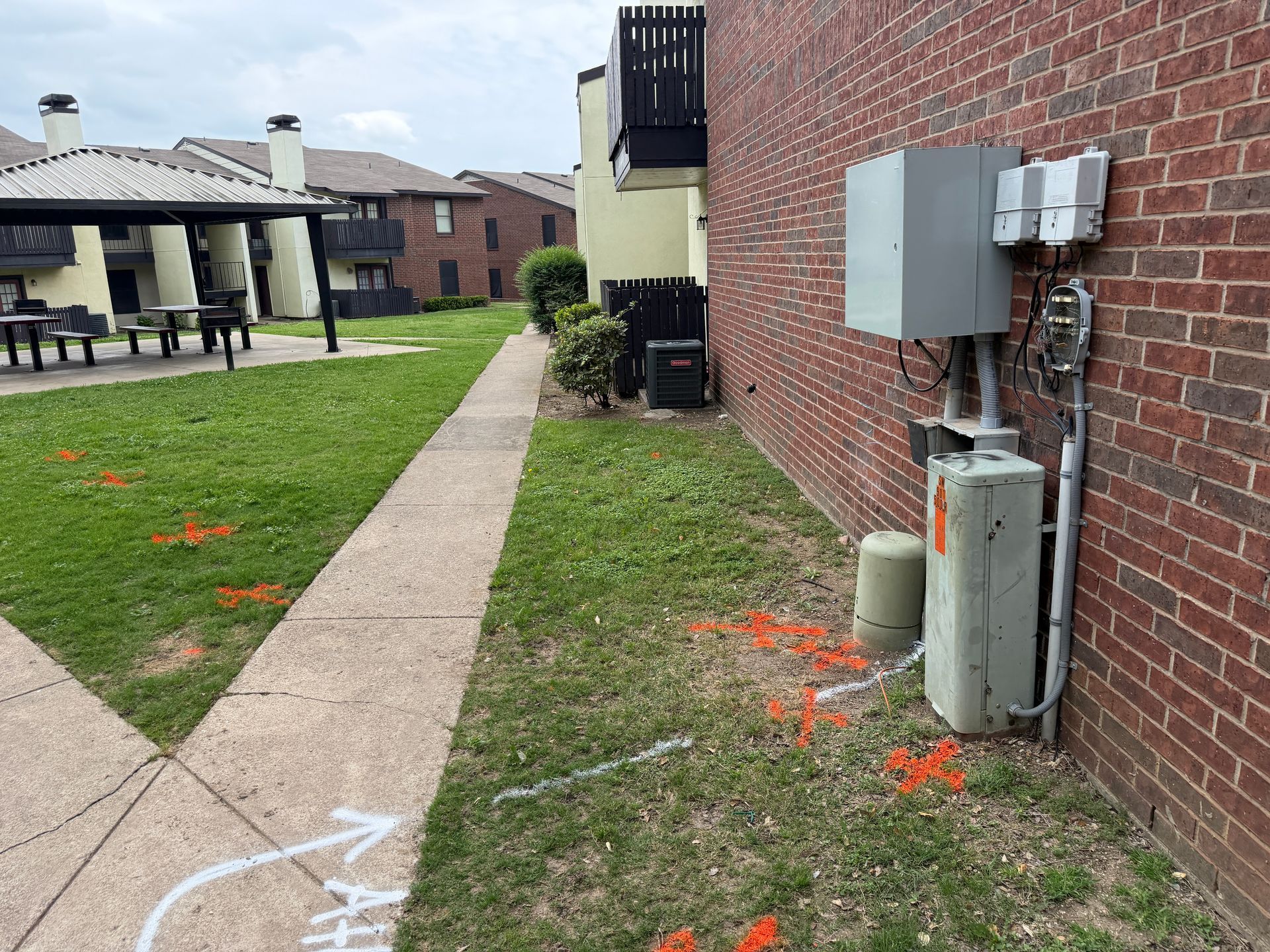
When you call 811, the telecom provider marks its own lines in orange, the APWA uniform color for communication lines. Our utility marking color guide has the full chart.
Privately owned fiber is a different matter. Texas law exempts lines that serve only the owner and sit only on the owner's property from the one-call system. That can include fiber and conduit between buildings on a campus, plant, data center site, or business park, plus security, camera, and gate lines. We explain the statute in How Deep Can You Dig Before Calling 811 in Texas?
Before you bore or trench near fiber
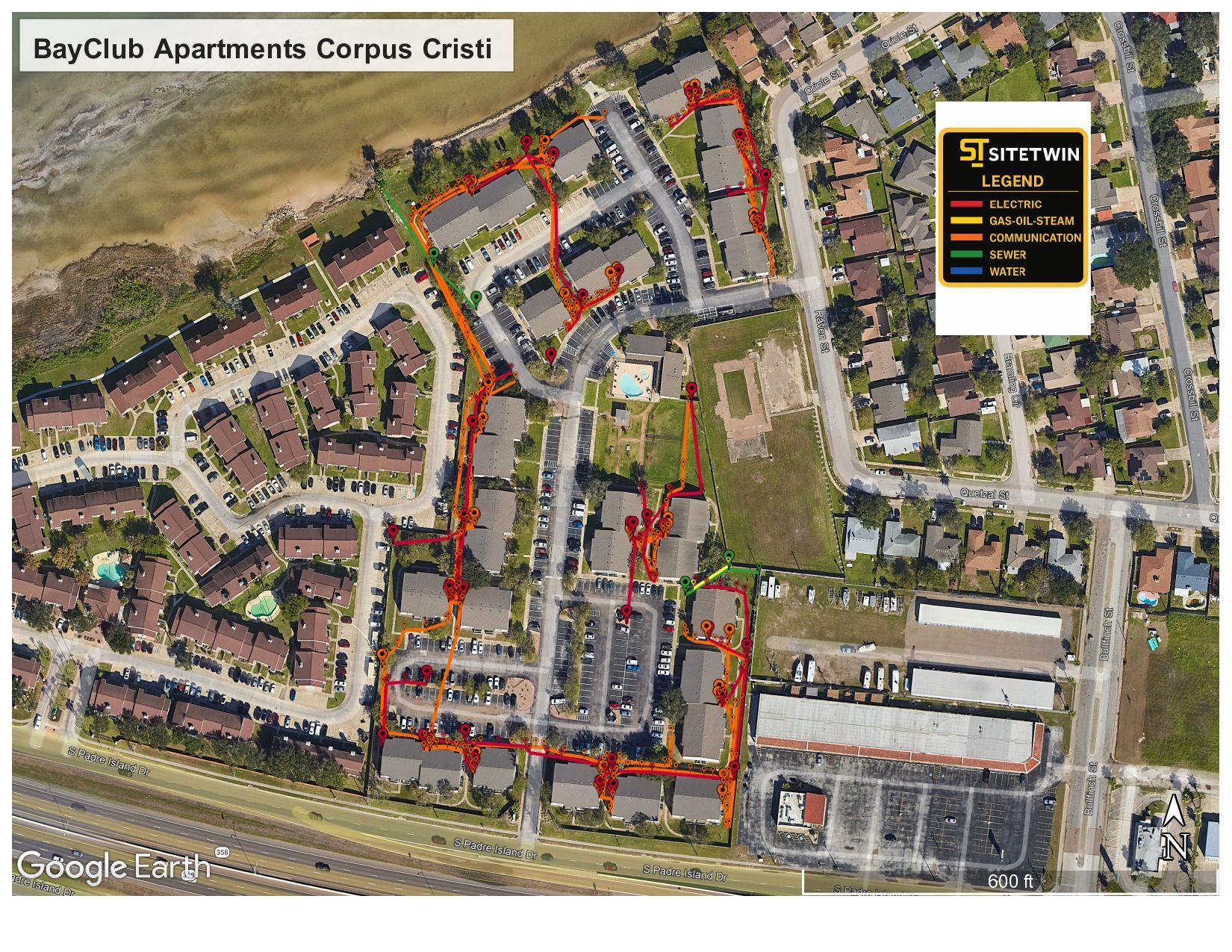
Get the route marked, including the private runs, and then expose the line wherever your work crosses it. Locate paint shows where the line runs, with no depth information, and under the published standards alone fiber can sit anywhere from 10 inches to 60 inches or more below the surface. Our vacuum excavation and potholing service opens a test hole at the crossing so the bore or trench can clear the cable with real numbers. On long routes, GPS and GIS utility mapping records the alignment so the next crew does not have to locate it again.
Quick answers
How deep is fiber optic cable buried?
It depends on the owner and the route. Published standards range from 12 inches at a customer's premises to 48 inches or more along Texas highways, with Corning recommending at least 30 inches for direct-buried cable.
How deep are fiber lines buried in a yard?
Usually shallow. The federal rural telecom spec allows 12 inches at the subscriber's premises, and drops are often the shallowest fiber on a property.
How deep is fiber buried in a city street?
Microtrenched fiber can sit 10 to 18 inches down. Round Rock's ordinance, for example, sets that range for residential streets.
Can buried fiber be located?
Yes, if the cable has a metallic element or a working tracer wire. Without either, locating depends on ground penetrating radar picking up the conduit, and on exposing the line where it matters.
If you are boring or trenching across fiber in Texas and need the private runs marked along with everything else, get in touch. Our private utility locating covers the lines 811 leaves out, and our municipal utility locating page covers public right of way work. We work across Texas, including Austin, Georgetown, Cedar Park, and Dallas.