
How Deep Is a Septic Tank Buried?
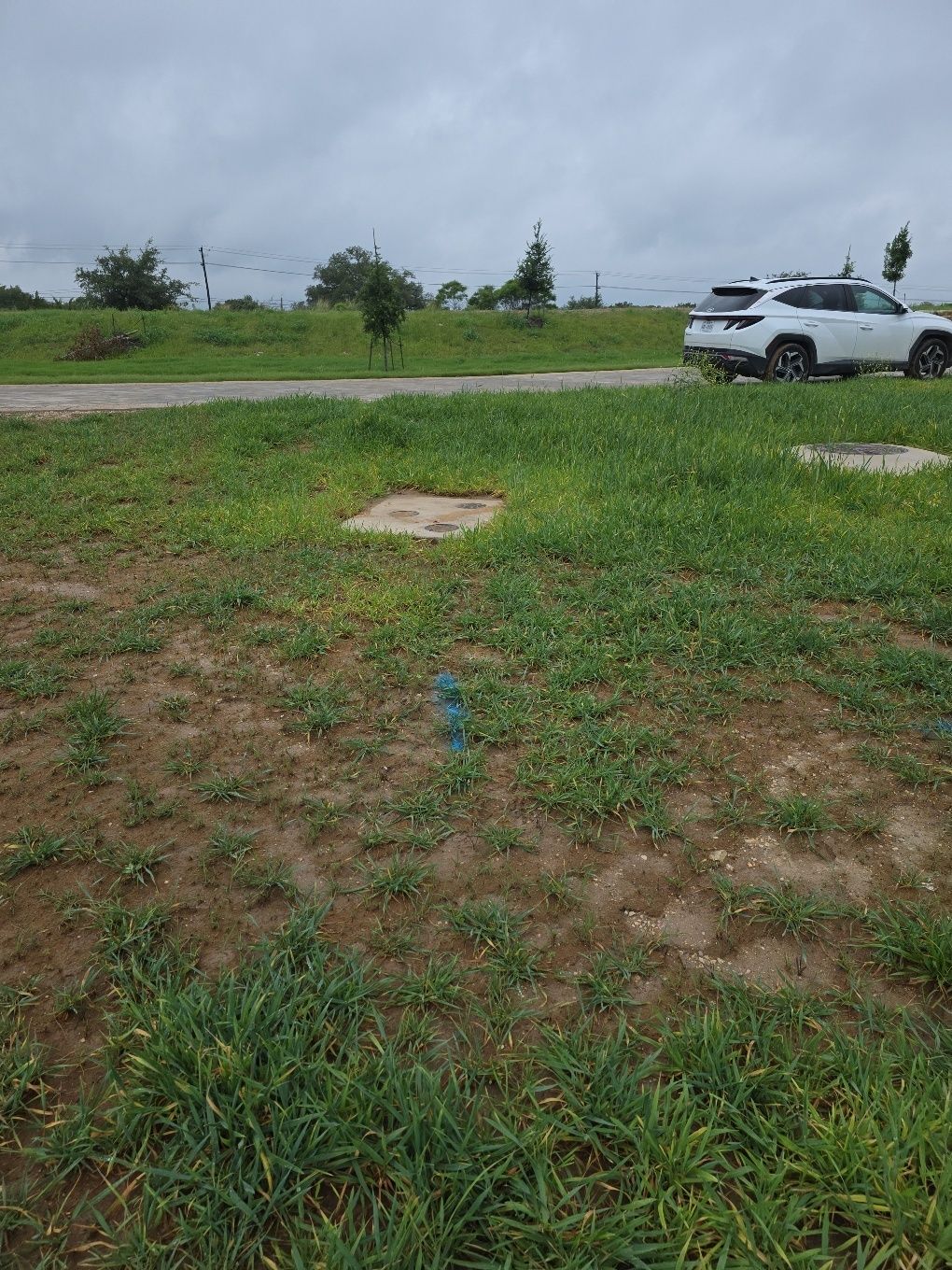
There is no single required depth for a septic tank in Texas. State rules don't set how deep a tank has to be buried. They set what has to happen when it's deep: any septic tank buried more than 12 inches below the ground needs risers over its openings, and systems permitted since September 1, 2023 need those risers to reach at least 2 inches above grade. The real depth of your tank depends on how deep the sewer line leaves your house, how far the tank sits from the foundation, and what has happened to the yard since it was installed.
Why septic tanks don't have one standard depth
A conventional septic system runs on gravity. Wastewater leaves the house through the building sewer, flows downhill into the tank, and then moves on to the drain field or treatment unit. Nothing pumps it into the tank, so the tank has to sit low enough for the pipe to keep falling the whole way there.
That means the depth of the tank is set by three things:
- How deep the pipe leaves the house. On a slab, the drain line exits through or under the foundation at whatever depth the plumbing was roughed in. That starting point is different on every house.
- How far the tank is from the house. The pipe drops a little with every foot it runs, so a tank set farther out usually sits deeper. Our post on how deep sewer lines are buried walks through how that slope adds up.
- How the tank itself is built. The inlet pipe enters the tank higher than the outlet pipe leaves it. TCEQ's installation checklist looks for an inlet flowline at least 3 inches above the outlet, so the wastewater keeps moving through the tank.
Then the yard changes. Landscaping, fill dirt, new flower beds, and regrading all change the surface without moving the tank. A lid that was 8 inches down when the system was installed can be 2 feet down after a few loads of topsoil, or poking out of the ground after a yard is cut down.
What Texas rules actually require
Septic systems in Texas are on-site sewage facilities, or OSSFs, and the Texas Commission on Environmental Quality writes the rules in Chapter 285 of the Texas Administrative Code. Your county or city may be the authorized agent that issues permits and inspects installs, and some local programs add their own requirements.
The parts that matter for depth:
- Risers on deeper tanks. Under 30 TAC §285.32, a septic tank buried more than 12 inches below the ground surface must have risers over the port openings. A riser is a sealed collar that brings the access opening up toward the surface so the tank can be inspected and pumped without digging.
- Risers that reach the surface. For systems permitted on or after September 1, 2023, TCEQ's rule update requires those risers to extend at least 2 inches above grade. On a newer system, you should be able to see the lids.
- A second layer of protection. 30 TAC §285.38 requires risers to be fastened to the tank and fitted with a secondary plug or restraint under the cap, so a person or animal can't fall in if a lid is removed.
Those rules tell you a lot about older systems too. A tank installed before risers were required, or one that was never brought up to current rules, can have its lids buried with no visible marker at all. That's the case where people end up probing an entire backyard.
Lid depth vs. tank depth
When people ask how deep a septic tank is, they usually mean how deep the lid is, because that's what they need to reach. The tank itself goes much deeper.
Texas rules require a septic tank to hold a liquid depth of at least 30 inches, according to TCEQ's installation checklist. Add the air space above the liquid and the thickness of the lid, and the bottom of the tank sits several feet below its top. If you're planning anything that digs or drives near a tank, plan around the whole buried structure, not just the lid you can see.
It also helps to know that one system can have more than one opening. Many tanks have separate access over the inlet and outlet sides, and newer systems may have a pump tank or treatment unit next to the main tank. Finding one lid doesn't mean you've found everything in that part of the yard.
Aerobic systems are different
A large share of Texas homes don't have a conventional tank and drain field. They have an aerobic treatment unit, which uses air to treat the wastewater and then sprays it over a lawn area. According to Texas A&M AgriLife, aerobic systems have made up more than 40 percent of OSSF installs in Texas since 1999.
Aerobic units usually have several lids at or near the surface, an air pump or compressor, and a control panel mounted on the house or a post. That means two extra things are in the ground: an electrical line feeding the unit, and a pressurized line running out to the spray heads. Both are easy to cut with a post-hole digger or trencher. AgriLife's guide to living with an aerobic unit covers how these systems work and what owners are responsible for. Our post on how deep electrical lines are buried covers the power side.
How to find out how deep your tank is
You don't have to guess. These steps go from free to precise.
1. Pull the permit file
Most counties keep OSSF permits and site drawings, and the drawing usually shows where the tank was placed relative to the house. It won't always show depth, and the yard may have changed since, but it narrows the search. Our guide to finding your septic tank covers where to request those records.
2. Start at the cleanout
The cleanout is the capped pipe near your foundation where the sewer line leaves the house. Measure from the ground down to the bottom of that pipe. The tank's inlet sits lower than that point, because the line keeps falling on its way out. That one measurement gives you a floor for how shallow the tank can be.
3. Probe carefully
A thin steel probe pushed into the ground every couple of feet along the expected line can find the hard, flat top of a tank. Probe gently and stop at the first solid contact. Don't open a tank yourself and never lean into an open one. The gases that build up inside septic tanks are dangerous, and lids on older systems are not always secure.
4. Have it located
Sewer lines and septic tanks are usually plastic or concrete, so a standard metal locator has nothing to follow. Two methods work better:
- Sonde tracing. A small transmitter is pushed through the cleanout on a camera or rod. A receiver above ground follows the signal down the line to the tank and gives a depth reading along the way. Our sewer camera inspection service records the inside of the line on the same visit.
- Ground penetrating radar. GPR scanning can pick up the tank and nearby lines without any access point. Wet clay limits how deep radar can see, which is common across much of Texas. We cover that in our post on how deep GPR can see.
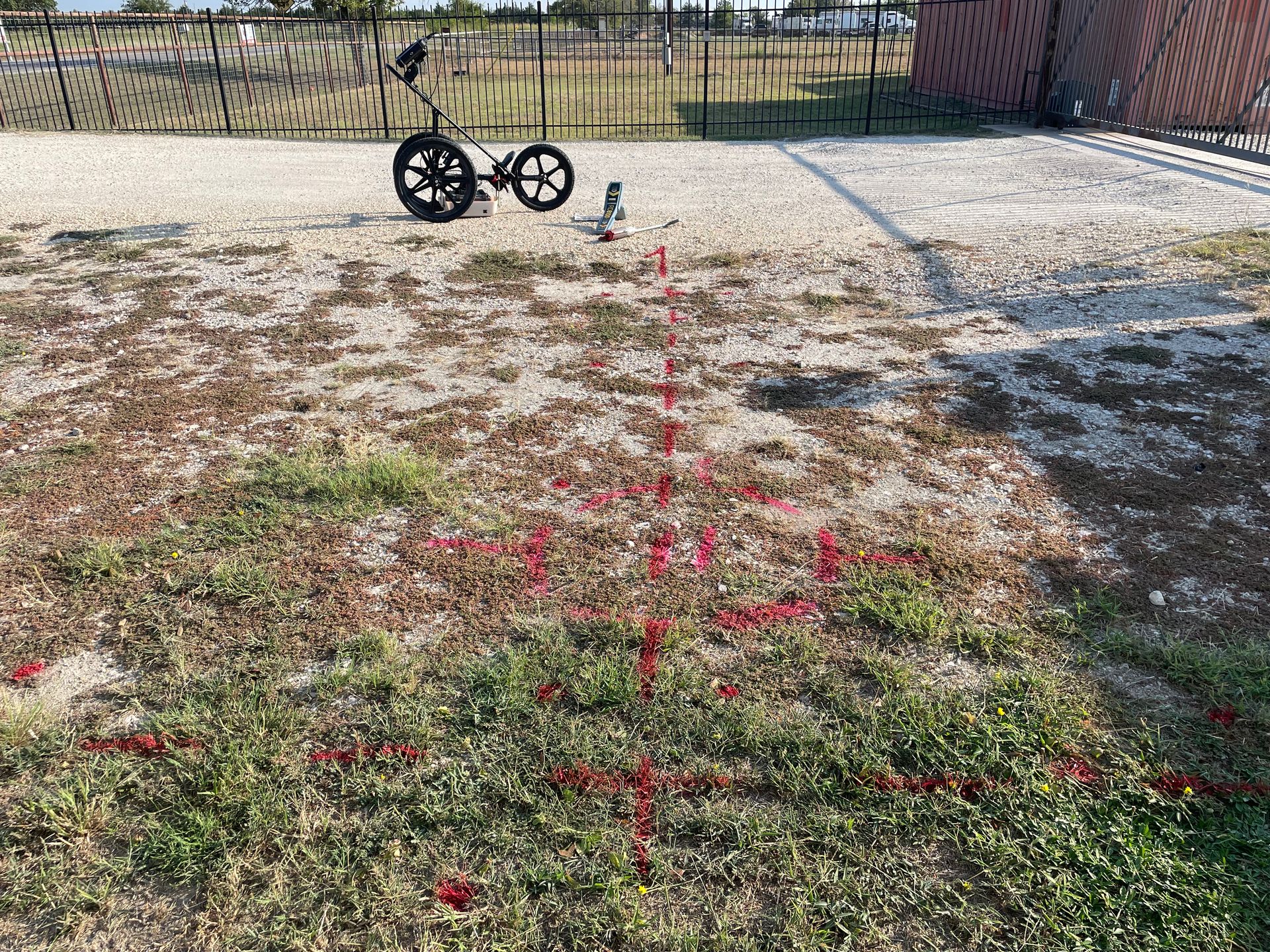
Every depth reading from a receiver or radar is an estimate. If you're about to dig close to the tank or cross the line to it, expose it first.
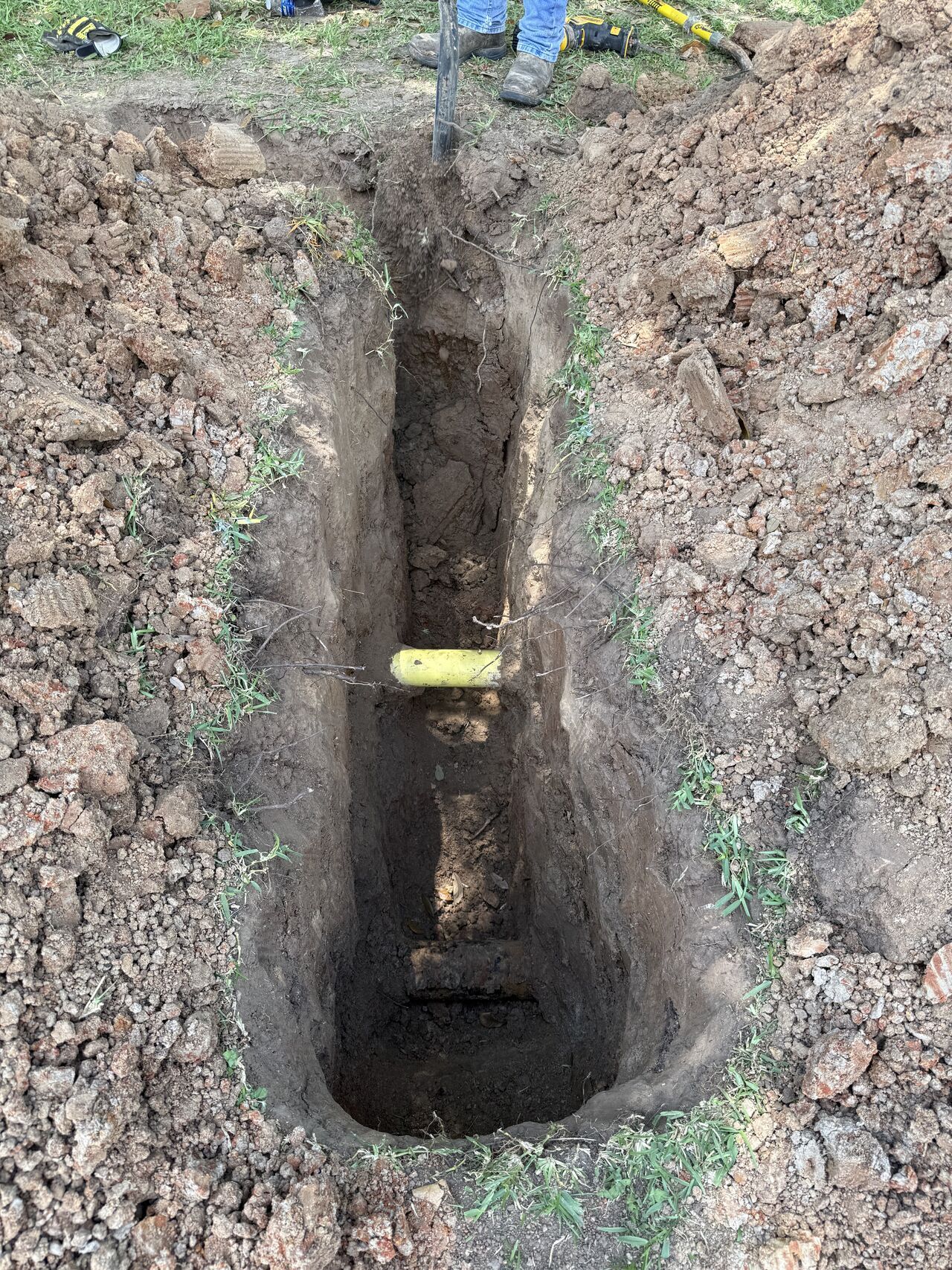
5. Verify by exposing it
Hand digging or vacuum excavation opens a small hole so you can see the lid or pipe and measure its actual depth. It's the only way to turn an estimate into a number you can build around.
Why the depth matters before you dig
Septic systems tend to get damaged during projects: a pool, a fence, a driveway extension, a patio, an addition, a tree, or a new irrigation zone. Each one involves digging, heavy equipment, or added weight over ground that may hold a tank, the line to it, or the drain field beyond it.
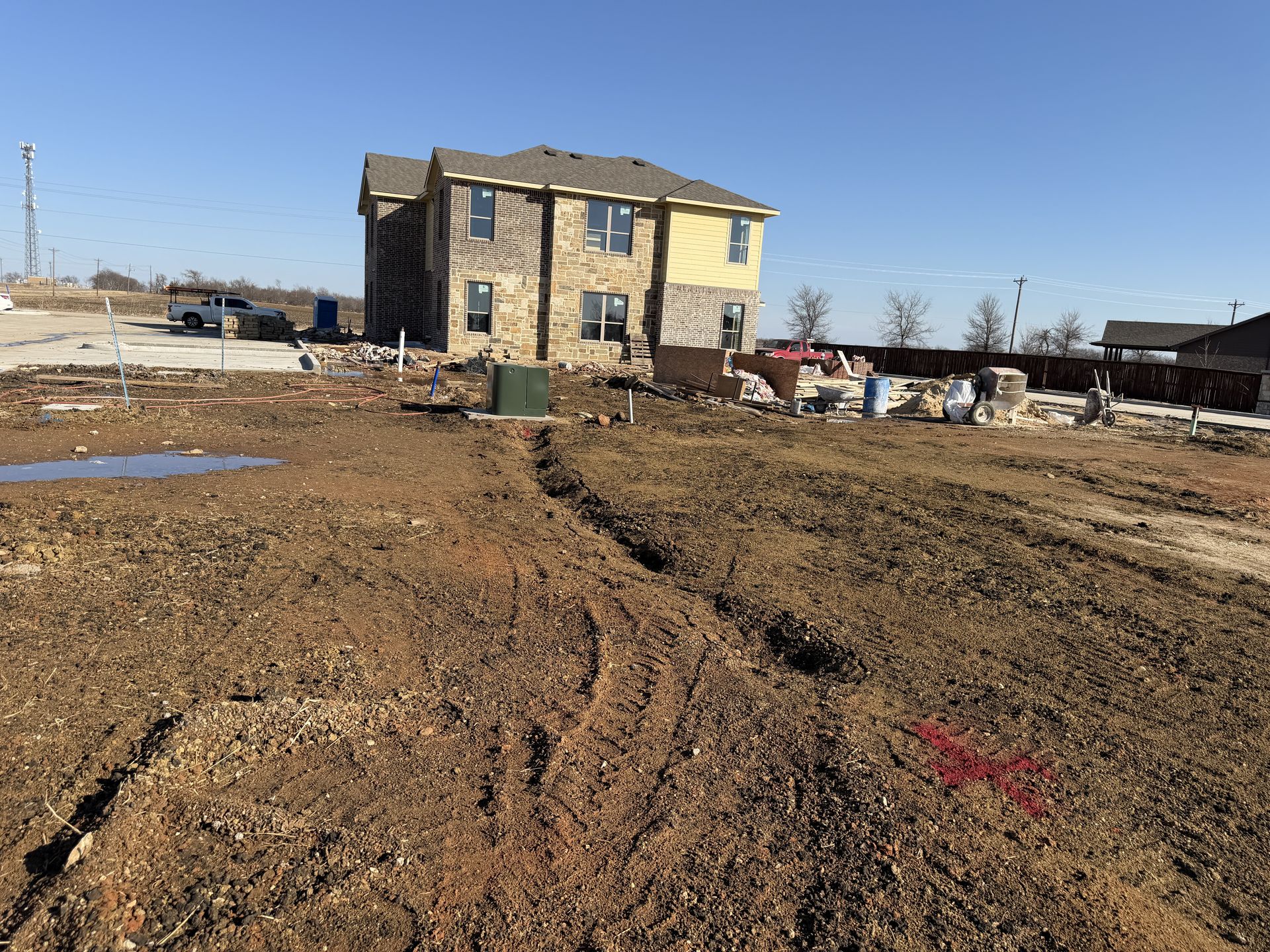
Before work starts, it's worth knowing:
- Where the tank sits and how big it is, not just where one lid is.
- The path of the sewer line from the house to the tank.
- Where the drain field or spray area is. Our post on finding your septic drain field covers that part of the system.
- Any electrical or water lines running near the system. See how deep water lines are buried.
Pool builders deal with this constantly, because a backyard pool often lands right where the septic system was placed. We wrote a page on utility locating for pool and outdoor builders for that reason.
811 won't mark your septic system
When you call 811, the utility operators in the area mark the lines they own. Your septic tank, the sewer line to it, the drain field, and the wiring to an aerobic unit all belong to you, so nobody is notified to mark them. Our guide to 811 vs private utility locating explains what each one covers, and our homeowner's guide to utility locating covers when a private locate is worth it. For the other buried lines on a property, start with our guide to how deep utilities are buried in Texas.
Quick answers
How deep is a septic tank buried in Texas?
Texas doesn't set one burial depth. The tank has to sit low enough for the sewer line to drain into it by gravity, so its depth depends on the house and the lot. Any tank buried more than 12 inches deep is required to have risers over its openings.
How deep is the septic tank lid?
On a system permitted since September 1, 2023, the riser lids should reach at least 2 inches above the ground. On older systems, lids can be at the surface or buried, and yard changes since installation can make them deeper than they started.
How do I find my septic tank lid?
Check the county permit drawing, measure the depth at your sewer cleanout, and probe gently along the line from the house. If that doesn't find it, a locator can trace the line from the cleanout to the tank.
Does 811 mark septic tanks?
No. A septic system is privately owned, so 811 doesn't mark it. A private utility locator can.
Planning to dig, build, or install a pool near a septic system? SiteTwin locates septic tanks, sewer lines, and the buried lines around them across Texas, including Georgetown, New Braunfels, Conroe, and Tyler. Request a locate or call 512-610-8824.