
How Deep Are Gas Lines Buried?
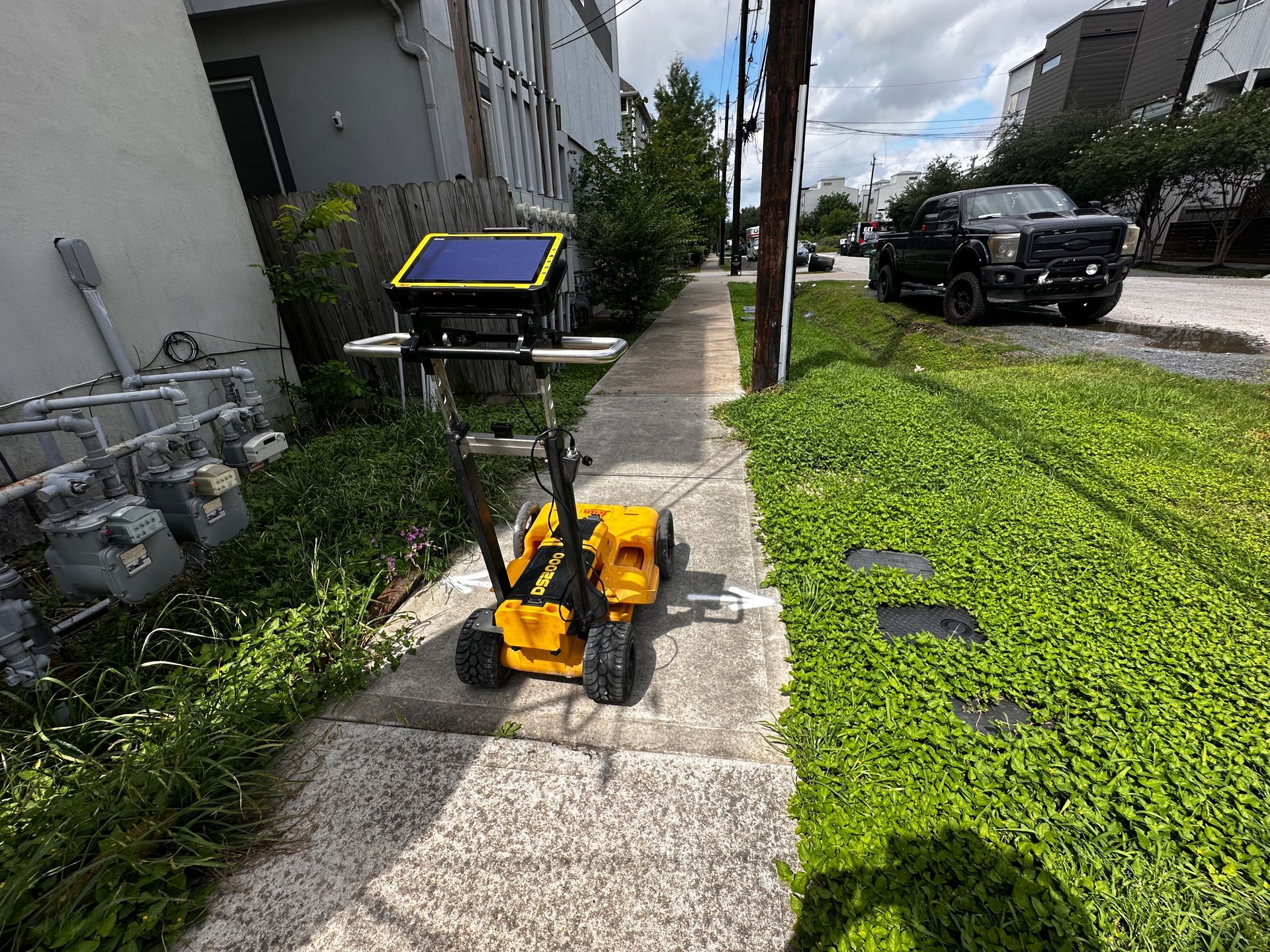
Federal pipeline rules require at least 24 inches of cover over gas mains and at least 12 inches over service lines on private property, or 18 inches under streets. Past the meter, both model fuel gas codes set a 12 inch minimum for the customer's yard line.
Those are minimums set when the pipe goes in. The depth under your shovel today can be shallower, and the pipe closest to the house is the one most likely to be. Here is how it breaks down, section by section.
Gas line depth by type of line
Depth is measured as cover: the soil between the top of the pipe and the surface.
- Transmission pipelines. The large, high-pressure lines that move gas across the state need at least 30 inches of cover in normal soil in sparsely built areas (Class 1 locations) and 36 inches in more developed areas (Class 2, 3, and 4). In consolidated rock, the minimums are 18 and 24 inches.
- Distribution mains. The pipes under streets and easements that feed a neighborhood need at least 24 inches of cover.
- Service lines. The line from the main to your meter needs at least 12 inches of cover on private property and 18 inches in streets and roads.
- Customer yard lines. Piping from the meter to the house and out to gas appliances follows the fuel gas code your city has adopted. The International Fuel Gas Code and the Uniform Plumbing Code both set a 12 inch minimum. The IFGC allows individual lines to outdoor lights, grills, and similar appliances at 8 inches where approved and protected from damage. The UPC calls for 18 inches where external damage is likely.
Notice the pattern. The deeper rules apply to the utility's pipe, and the shallowest rules apply to the pipe the property owner is responsible for. If you work around transmission pipelines, see our oil, gas, and pipeline locating page.
Who sets the rule for each section
The gas utility's pipe, from the transmission line down to your meter, falls under the federal pipeline safety rules in 49 CFR Part 192. In Texas, the Railroad Commission adopts those rules by reference for intrastate gas pipelines and enforces them. The federal rules allow less cover in a few limited cases, such as where another underground structure is in the way and the pipe gets extra protection.
Everything past the meter belongs to the property owner. It falls under whichever fuel gas code the city has adopted, along with any local amendments, and it was installed by whoever the owner hired at the time.
The yard line past the meter is the one to watch
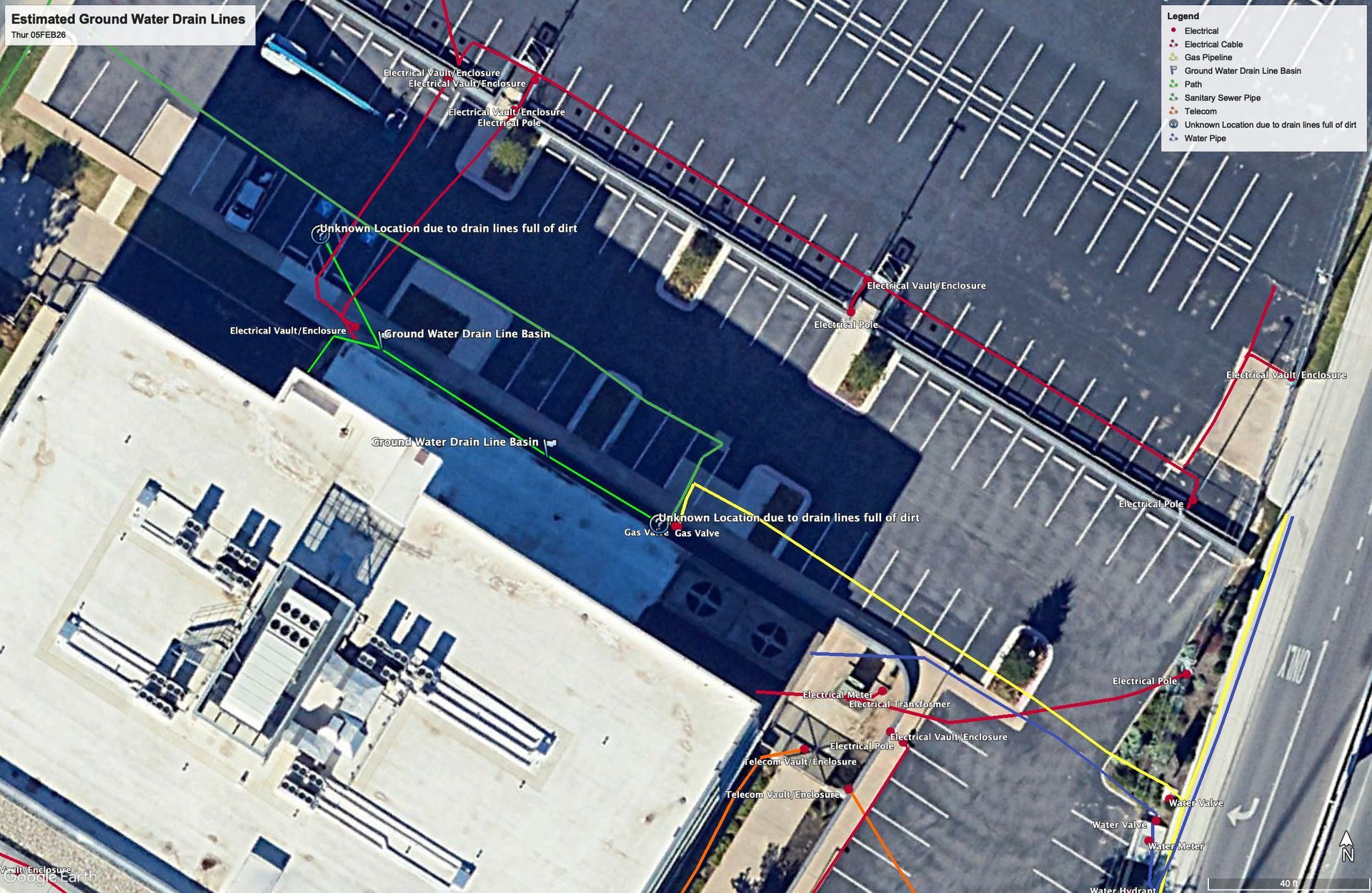
Federal rules require gas utilities to send customers a written notice about this pipe. Under 49 CFR 192.16, the notice has to say that the utility does not maintain the customer's buried piping, that unmaintained pipe may corrode and leak, and that when excavating near buried gas piping, "the piping should be located in advance, and the excavation done by hand."
Put plainly, the utility tells you in writing that finding this line is your job.
That yard line is also invisible to 811. Texas law exempts lines that serve only the owner and sit only on the owner's property from the one-call system, so the gas utility marks its main and service up to the meter and stops. We explain the statute in How Deep Can You Dig Before Calling 811 in Texas? and 811 vs. Private Utility Locating covers what each one marks.
On a typical property, the private gas piping can include:
- The yard line from the meter to the house
- Lines to a pool or spa heater
- Lines to an outdoor kitchen, grill, fire pit, or gas lights
- Lines to a standby generator
- Lines to a detached garage, shop, or guest house
With a 12 inch minimum, and 8 inches allowed for some appliance lines, a post-hole auger or a trencher reaches these lines on its first pass.
Why the real depth may not match the code
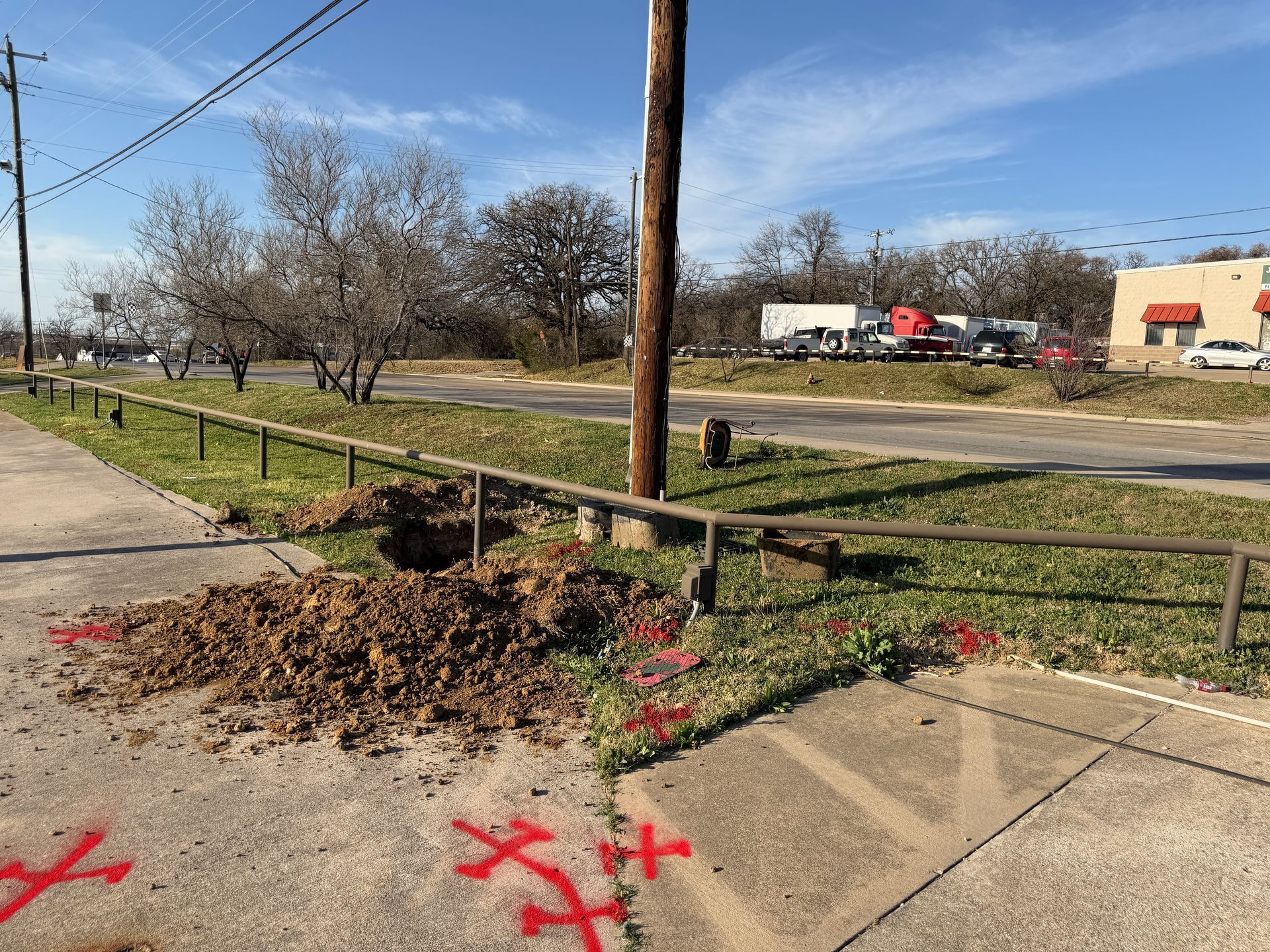
A code minimum describes what was required on the day the pipe was buried. Several things move the actual number afterward:
- Regrading, landscaping, and erosion take cover off a line
- Driveways, patios, and new beds change the surface above it
- Repairs and reroutes go in at whatever depth the crew dug that day
- Older piping can predate the current rules entirely
Use code depths for planning. When a trench or bore has to cross a gas line, expose it and measure it. Our vacuum excavation and potholing service exists for exactly that step, and our post on locating a gas line before you dig walks through how we find the pipe in the first place.
If you build pools or outdoor kitchens, our utility locating for pool builders page covers the locate before excavation starts.
Every other line on the property works the same way. Our overview of how deep underground utilities are buried covers water, electric, sewer, and communication lines.
Use code depths for planning. When a trench or directional bore has to cross a gas line, expose it and measure it. Our vacuum excavation and potholing service exists for exactly that step, and our post on locating a gas line before you dig walks through how we find the pipe in the first place.
Digging near a gas line in Texas
For the utility's gas lines, the Railroad Commission of Texas sets damage prevention rules in 16 TAC Chapter 18. They define a tolerance zone of half the pipe's nominal diameter plus at least 18 inches on either side of the pipe's outside edge.
Inside that zone, the excavator has to take the care needed to avoid damaging the pipe. The rule lists the methods to consider: hand digging when practical, soft digging, vacuum excavation, and pneumatic hand tools. Other mechanical methods need the operator's approval.
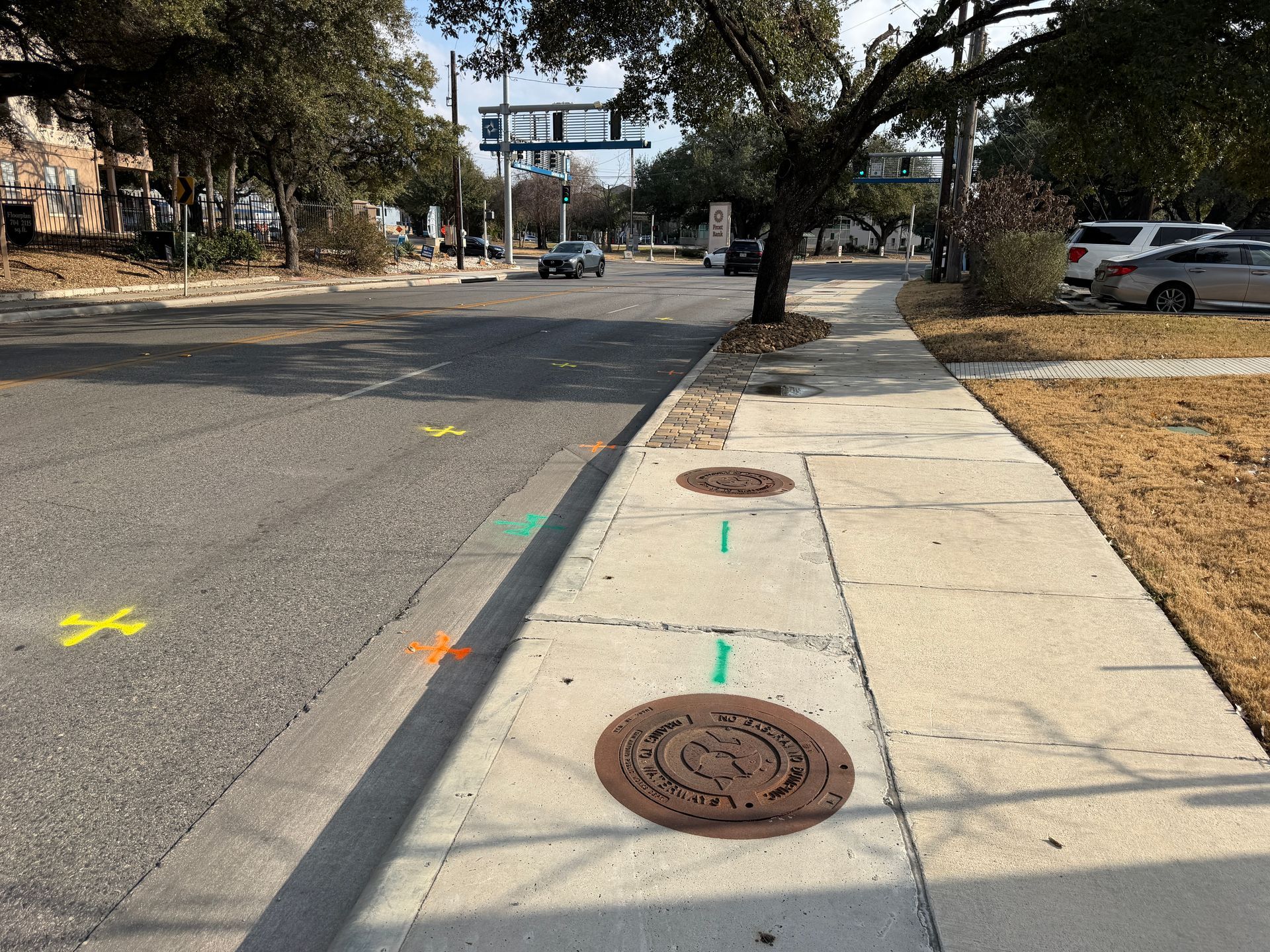
Gas is marked in yellow under the APWA uniform color code. If you see yellow paint or flags, the gas utility has marked its line. If the marks stop at the meter, the yard line beyond it is still in the ground.
Quick answers
How deep is the gas line from the meter to the house?
The minimum is 12 inches under both model fuel gas codes. It was installed by the owner's plumber or contractor, so the real depth can be shallower. Locate it before you dig.
How deep should a gas line be buried?
It depends on the section: 24 inches for mains, 12 inches for service lines on private property and 18 inches under streets, and 12 inches for most customer piping past the meter.
How deep are natural gas lines buried in Texas?
The federal minimums apply, adopted and enforced by the Railroad Commission of Texas for intrastate pipelines. Past the meter, the local fuel gas code applies.
How close can you dig to a gas line?
For utility pipelines in Texas, the tolerance zone is half the pipe's diameter plus at least 18 inches on each side. Inside it, the Railroad Commission rules point excavators to hand digging, soft digging, vacuum excavation, or pneumatic hand tools. Our guide to potholing explains how a crossing gets exposed.
If you are planning a pool, outdoor kitchen, addition, or any trench near a gas meter in Texas, we locate the private gas piping 811 leaves unmarked and mark it before the equipment shows up. We work across Texas, including Houston, Dallas, Austin, and San Antonio. Get in touch or read more about our private utility locating.