
How to Set Up Utilities on a Construction Site in Texas
Setting up utilities on a construction site means getting temporary power, water, sanitation, and drinking water running for the crew, then trenching in the permanent service lines the finished building will use. In Texas, the safe order is the same on every job: find what is already in the ground, lay out the site around it, set up temporary services, and map every new line before it gets buried.
This guide walks through each step, the rules that apply, and where a private utility locate fits so the first trench of the job does not hit a line nobody marked.
Step 1: Find what is already underground
Every utility you add to a site has to be trenched or bored past the ones that are already there. A vacant-looking lot can still hold a live electric feed, an abandoned water service, a gas line to a demolished building, or a fiber line along the frontage. Before any temporary pole goes in or any trench is cut, those lines need to be found and marked.
Start with an 811 ticket. Texas law requires excavators to notify the one-call center no earlier than 14 days and no later than 48 hours before excavation begins, not counting Saturdays, Sundays, and legal holidays. Participating utility operators then mark their lines in the work area. Our post on how long 811 takes walks through the timeline.
811 only covers part of the picture. Texas811 explains that member utilities mark public utilities, and that private lines, usually the ones between the meter and the building, generally are not marked. Its examples include water and sewer lines, private lighting, sprinklers, fire mains, and secondary electric lines. On a commercial or redevelopment site, much of what your excavator can hit sits past the meter or the property line: private electric between buildings, site lighting, irrigation, private sewer and storm lines, and fuel lines. Our guide to 811 vs private utility locating explains where that line falls.
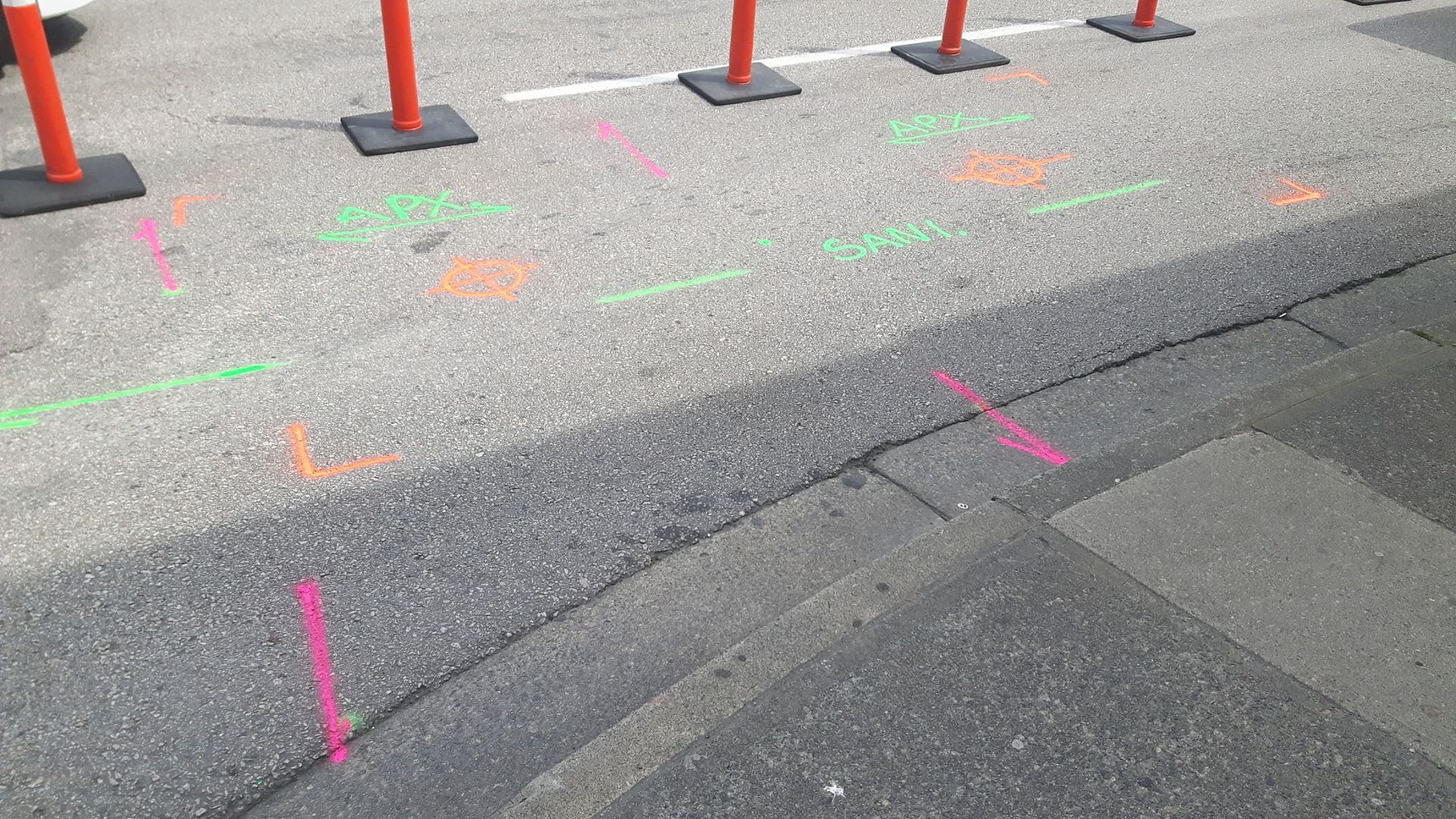
Federal excavation rules point the same way. OSHA 1926.651 requires the estimated location of sewer, telephone, fuel, electric, water, and other underground installations to be determined before an excavation is opened, and the exact location to be determined by safe and acceptable means as the digging gets close.
Step 2: Lay out the site around the marked lines
Once the existing utilities are marked, plan where every temporary service will sit before anything is delivered. Mark the locations for the temporary power pole or pedestal, the construction water connection, portable toilets, handwashing stations, the job trailer, material storage, and haul routes. Then check each one against the locate marks.
A few habits save time later:
- Keep temporary trenches short. Put the temporary power drop close to the utility's source so the temporary feed does not cross half the site.
- Stay out of the building footprint and the permanent utility corridors. Temporary lines placed where the permanent water, sewer, or electric will go have to be moved once that work starts.
- Keep heavy traffic off shallow lines. Route loaded trucks, cranes, and material drops away from marked lines with little cover.
- Mark proposed digging in white. Under the APWA uniform color code, white paint shows proposed excavation. Outlining the temporary trench routes in white before the locate tells the locator exactly where the digging will happen.
Plan the permanent water and sewer corridors with the same care. Texas rules for public water systems require new potable water distribution lines to be installed no closer than nine feet in all directions to wastewater collection facilities, with parallel lines in separate trenches. The rule allows specific exceptions when nine feet cannot be met, and your engineer of record decides how they apply to your plans.
Step 3: Get temporary power to the site
Temporary construction power comes from the electric utility that serves the site, and each utility sets its own process, paperwork, and lead time. Call the utility early, because the inspection and scheduling steps take longer than most crews expect.
Austin is a good example of how the steps stack up. Austin Energy's design criteria require the job to pass the City of Austin's temporary electrical inspection before Austin Energy installs or energizes the service, and ask for notice of the passed inspection three regular working days before the service can be energized. The customer furnishes and installs the meter socket, a separate application to Austin Energy is required, and temporary construction power is disconnected when the permanent meter is set.
Before your electrician sets the temporary service, check its location and the route of any temporary feed against the locate marks. A temporary power trench is still excavation, and it is often the first one dug on the site.
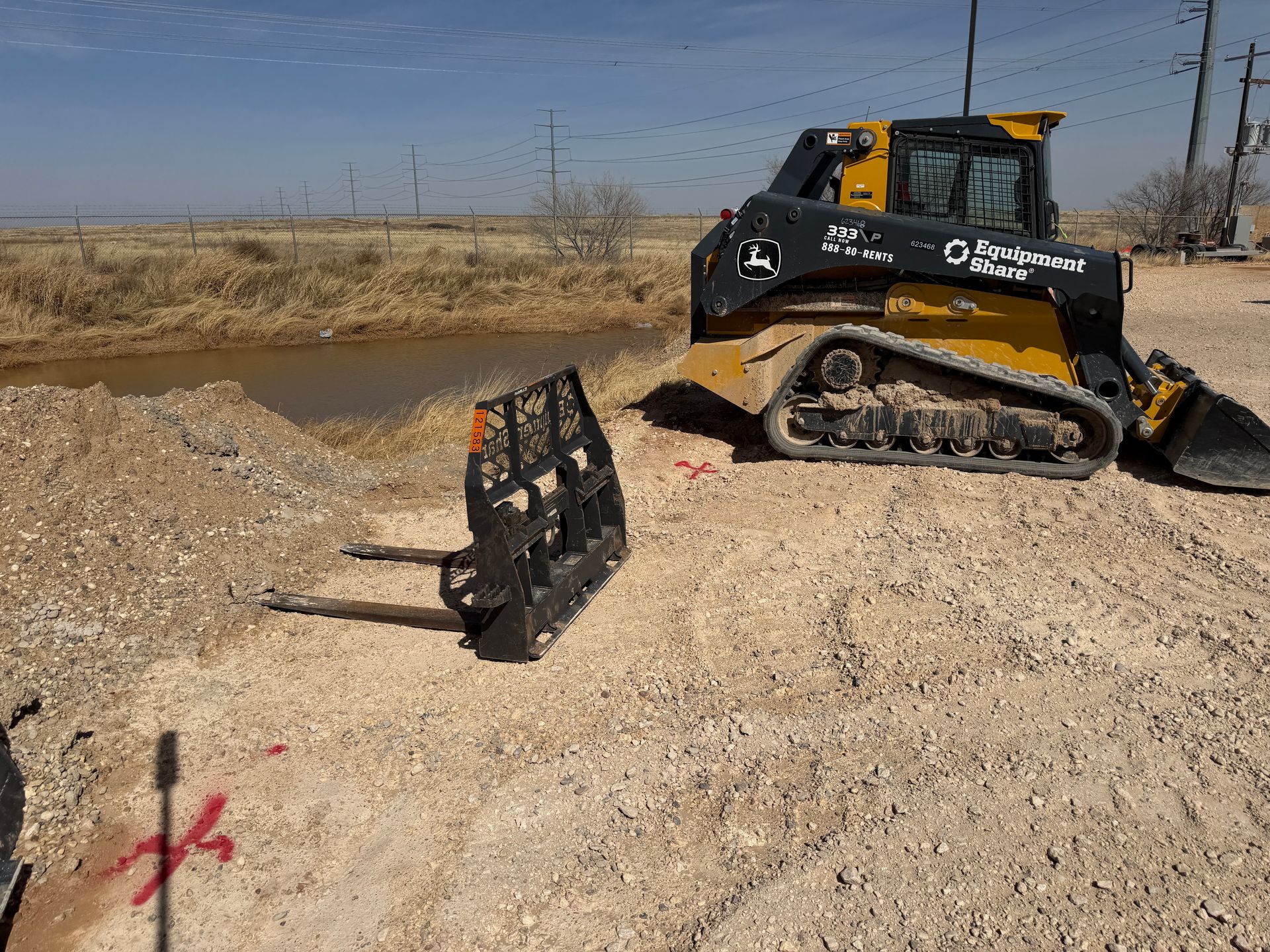
Once power is on, OSHA rules for the temporary wiring apply. OSHA 1926.404 requires either ground fault circuit interrupters on 120 volt, single phase, 15 and 20 amp receptacles that are not part of the permanent building wiring, or a written assured equipment grounding conductor program. OSHA 1926.405 requires temporary wiring to be removed as soon as the construction or purpose it was installed for is complete.
Step 4: Set up construction water
Before the permanent water service is connected, most sites need water for dust control, compaction, concrete work, cleanup, and the crew. Many Texas water utilities let contractors draw construction water from a fire hydrant through a metered connection rather than an unmetered tap.
San Antonio Water System is one example. SAWS allows a contractor to connect a meter to a fire hydrant during construction under a fire hydrant meter contract. The contractor pays a deposit, is responsible for the meter, fitting, and hydrant, and must comply with SAWS backflow prevention requirements. SAWS also charges for unauthorized hydrant withdrawals that its staff document. Check with the water utility for your site, because each one runs its own program.
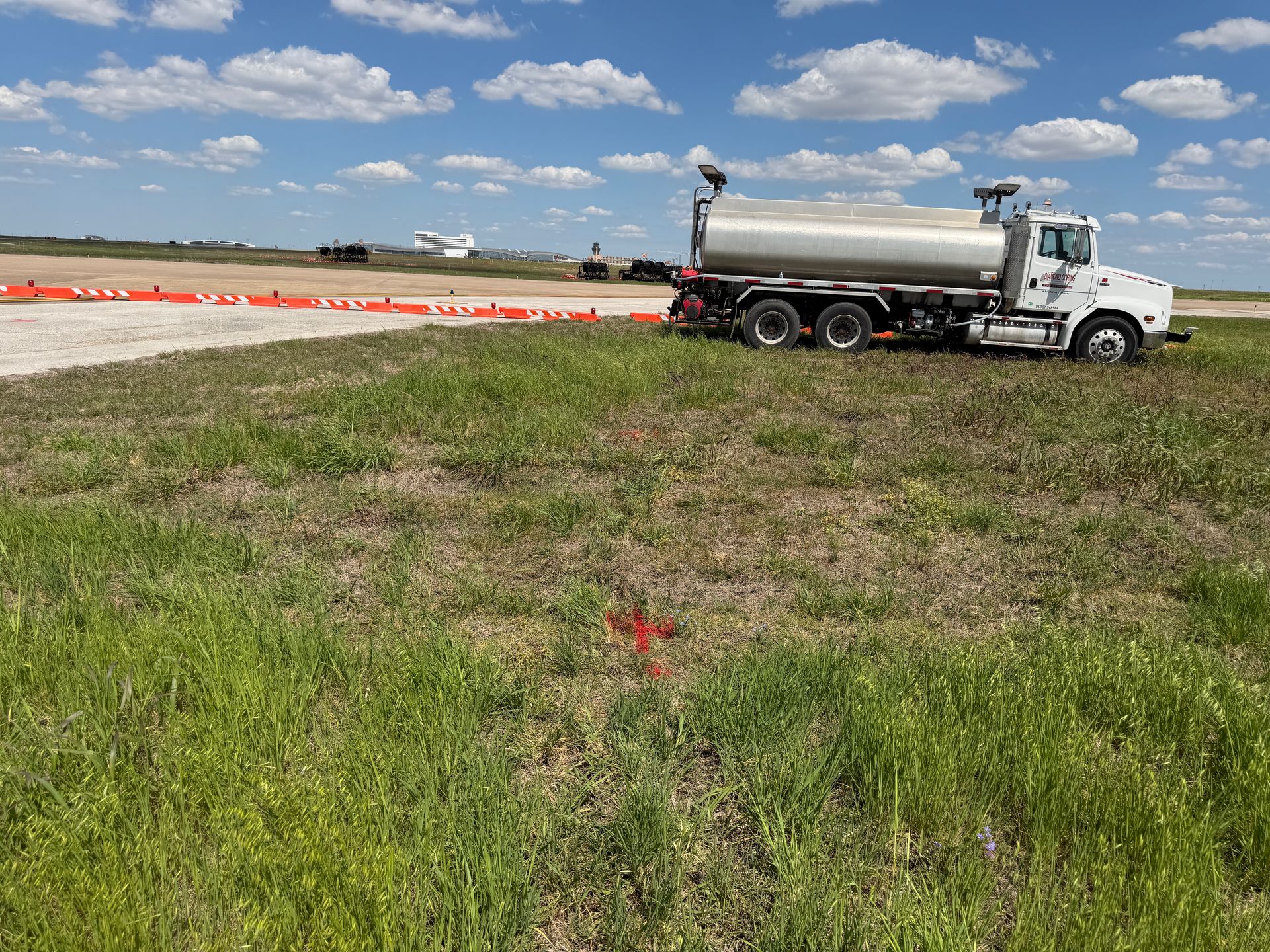
Water trucks are another common source on sites that need water for dust control or compaction before a permanent connection exists. Wherever the water comes from, keep the fill point and the truck's path clear of marked lines.
Step 5: Provide toilets and drinking water for the crew
Sanitation is the setup item crews forget until the first inspection. OSHA 1926.51 sets the minimum number of toilets by crew size:
- 20 or fewer employees: 1 toilet.
- 20 or more employees: 1 toilet seat and 1 urinal per 40 workers.
- 200 or more employees: 1 toilet seat and 1 urinal per 50 workers.
Where there is no sanitary sewer, the same rule allows privies and chemical, recirculating, or combustion toilets unless local codes prohibit them. Place portable units where the service truck can reach them without driving over marked lines.
The same section requires an adequate supply of potable water at every place of employment. Portable drinking water containers must close tightly, have a tap, and be clearly marked, and common drinking cups are not allowed.
Step 6: Trench the permanent service lines
The permanent water, sewer, electric, gas, and communication services are where most construction-phase utility strikes happen, because the site has changed since the first locate. Grading moves cover, spoil piles bury paint, and earlier trades add lines that were not there on day one.
Treat each new trench or bore as its own locate:
- Re-mark before each new phase of digging. Texas811 says you must notify the center again if the start of work is delayed beyond fourteen days, and request an update or remark when marks are destroyed or no longer visible. Private locates need the same refresh as the site changes.
- Locate the lines your own crews installed. Temporary power runs, irrigation sleeves, and early conduits are private lines that 811 will not mark.
- Expose crossings before you cross them. A locator's depth reading is an estimate. Where a new trench or bore crosses an existing line, vacuum excavation exposes the line and gives you a measured depth.
- Use the color code. Red is electric, yellow is gas and oil, orange is communication, blue is potable water, green is sewer and drain lines, purple is reclaimed water and irrigation, pink is temporary survey markings, and white is proposed excavation. Our post on utility marking colors has the full chart.
Depths vary by utility and by site, so plan each crossing from measured depths rather than typical numbers. Our guide to how deep utilities are buried in Texas covers water, sewer, electric, and gas separately.

On private property, a GPR scan alongside electromagnetic locating helps find plastic water and sewer pipe that a standard locator cannot trace. When a line cannot be confirmed, a good locate says so and marks the area, so the crew knows where to slow down and dig by hand.
Step 7: Map every new line before it is buried
The cheapest time to document a utility is while the trench is still open. Once it is backfilled, the only record is the drawing, and drawings drift from the field. Lines get shifted around a footing, a service gets added in a change order, or an abandoned pipe stays in the ground but drops off the sheet.
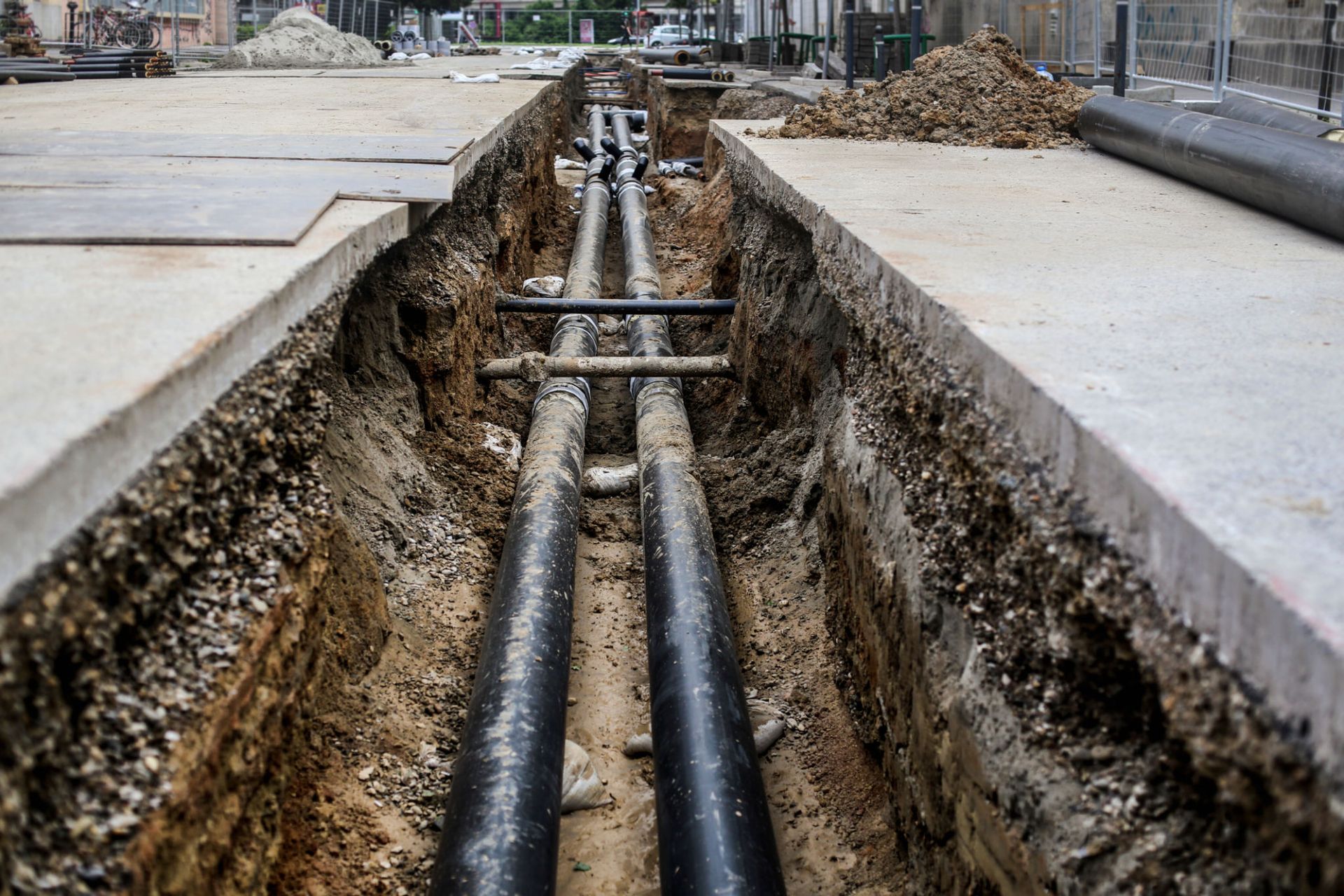
Shoot the open trench with GPS before backfill, or have the finished lines located and mapped before the site is turned over. GPS/GIS utility mapping ties each line to real coordinates and delivers it as a PDF map and a KMZ file for Google Earth. That record serves the owner, the next tenant, and every contractor who digs on the property later. If the site already has old drawings, utility as-built mapping checks them against the ground and flags where they disagree. We explain why that matters in records vs reality.
Construction site utility setup checklist
- Submit the 811 ticket no earlier than 14 days and no later than 48 hours before digging, not counting weekends and holidays.
- Schedule a private utility locate for everything past the meter or property line.
- Lay out the temporary power, water, toilets, trailer, and haul routes around the marks.
- Order temporary power from the electric utility and line up the electrician, permit, and inspection.
- Arrange construction water through the water utility's hydrant meter program or a water truck.
- Place enough toilets and drinking water for the crew size.
- Re-mark before each new phase of trenching or boring, and pothole critical crossings.
- GPS-map new lines before backfill and hand the map to the owner at closeout.
Quick answers
Who sets up temporary power on a construction site?
Your electrician builds and connects the customer side of the temporary service, the city inspects it, and the electric utility energizes it. In Austin, for example, Austin Energy requires a passed city temporary electrical inspection before it installs or energizes the service, and the customer furnishes the meter socket.
How far ahead do I call 811 in Texas?
Texas law requires notice to the one-call center no earlier than 14 days and no later than 48 hours before excavation begins, not counting weekends and legal holidays.
How many portable toilets does a construction site need?
Under OSHA 1926.51, a crew of 20 or fewer needs at least 1 toilet. Larger crews need 1 toilet seat and 1 urinal per 40 workers, and crews of 200 or more need 1 toilet seat and 1 urinal per 50 workers.
Does 811 mark private utilities on a construction site?
Usually not. 811 notifies the operators that participate in it, and those operators mark their own facilities. Lines owned by the property owner, including services past the meter and lines installed during the build, need a private utility locator.
Setting up a site in Texas? SiteTwin locates and maps utilities before mobilization and at closeout for general contractors across Austin, Dallas, Fort Worth, Houston, and San Antonio. Send the address and scope or call 512-610-8824.